
What Is Opiumwear? The Complete Guide (2026)
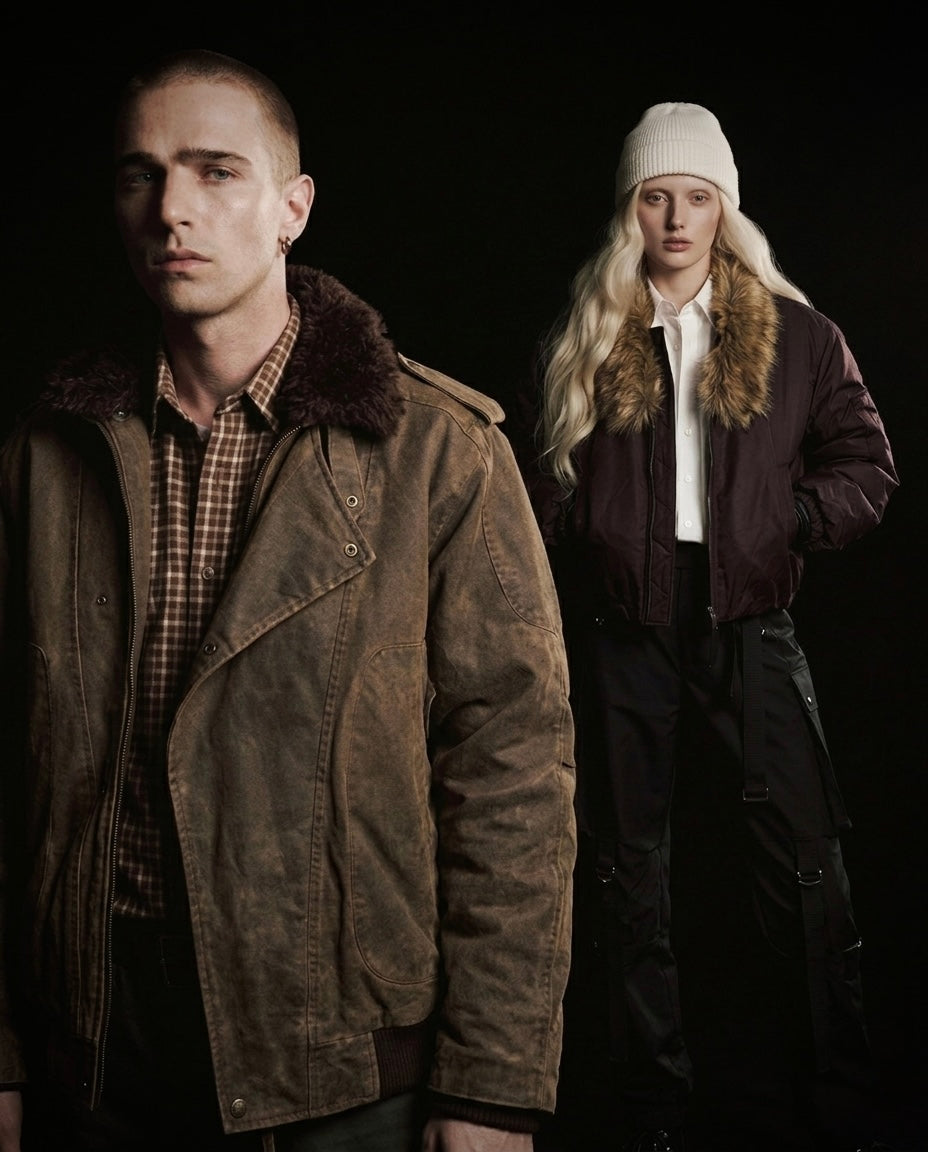
Somewhere in the last few years, a certain kind of all black outfit stopped reading as goth and started reading as something else. Heavier at the bottom. Tighter at the top. Matte where goth was shiny, structured where grunge was slack, and completely uninterested in explaining itself. People needed a name for it, and the name that stuck was opiumwear.
If you found this page, you have probably seen the look a hundred times without knowing what holds it together. This guide is the answer. What opiumwear actually is, where it came from, the five elements that define it, how it differs from the styles it gets confused with, and how to build it with pieces that will still matter to you in five years. Most of what has been written about this aesthetic treats it as a trend to copy. We are going to treat it as a system to understand, because that is what it is. Everything referenced here lives in our darkwear and opiumwear collection, which was built on the same logic this guide explains.
The short answer
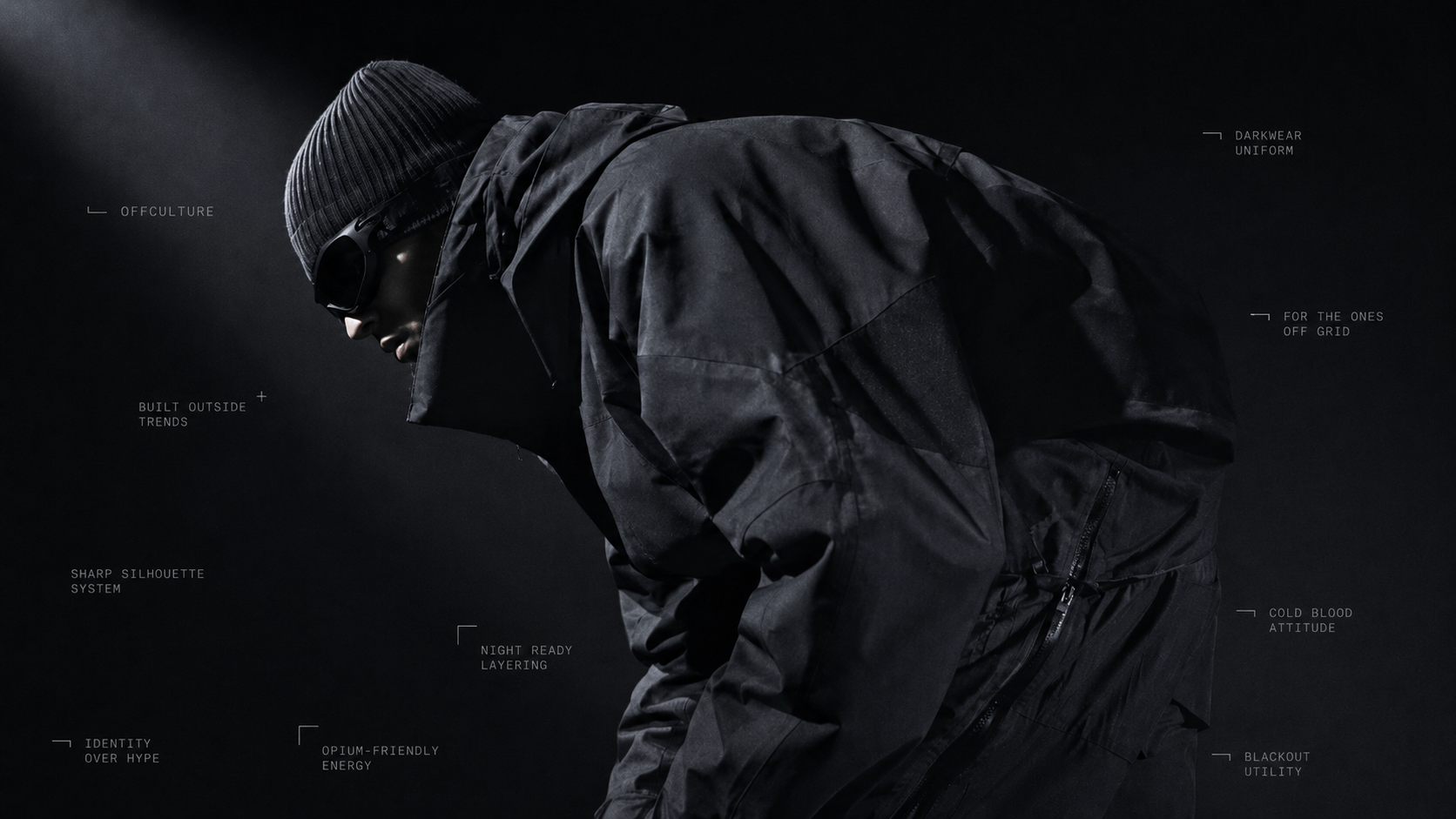
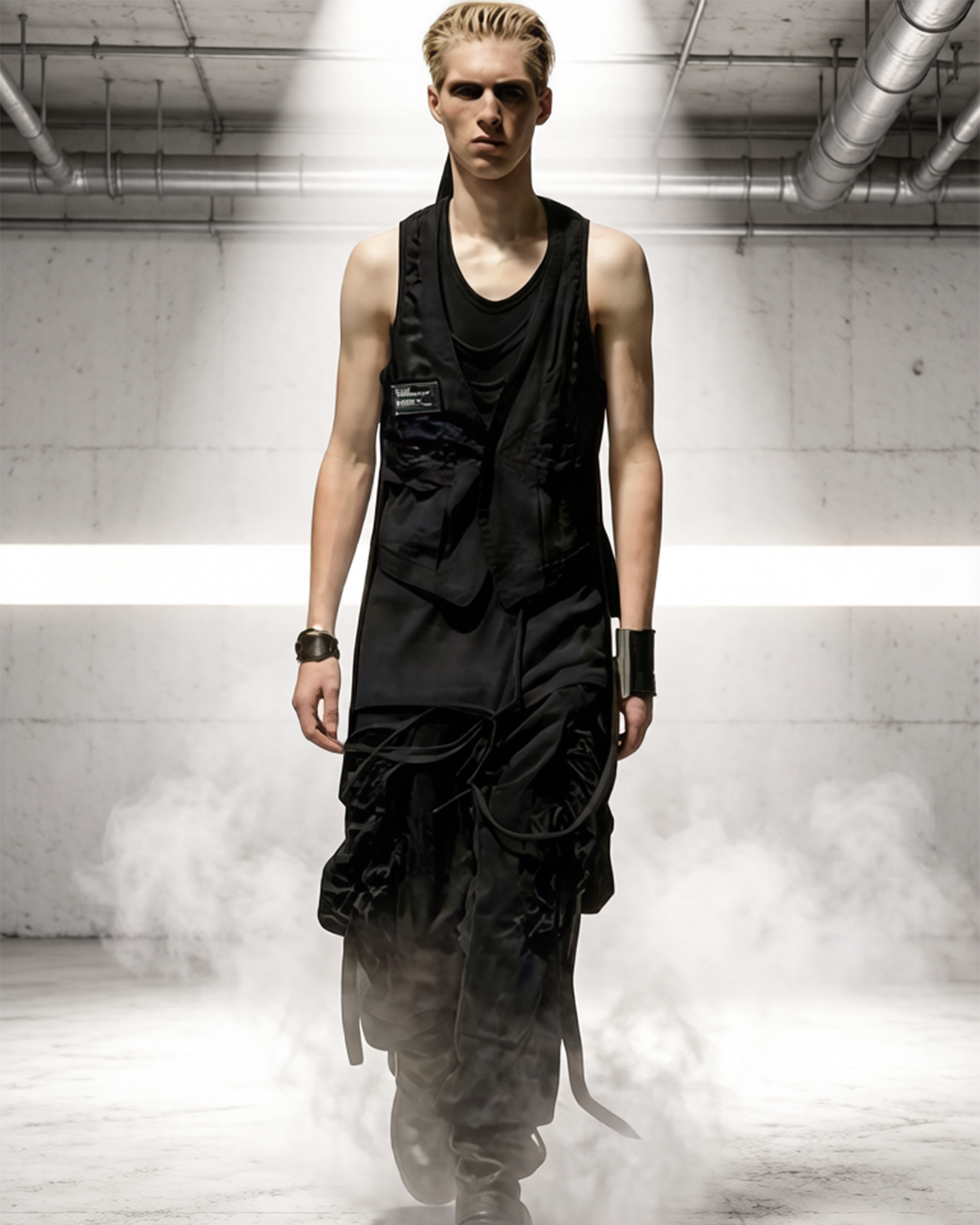
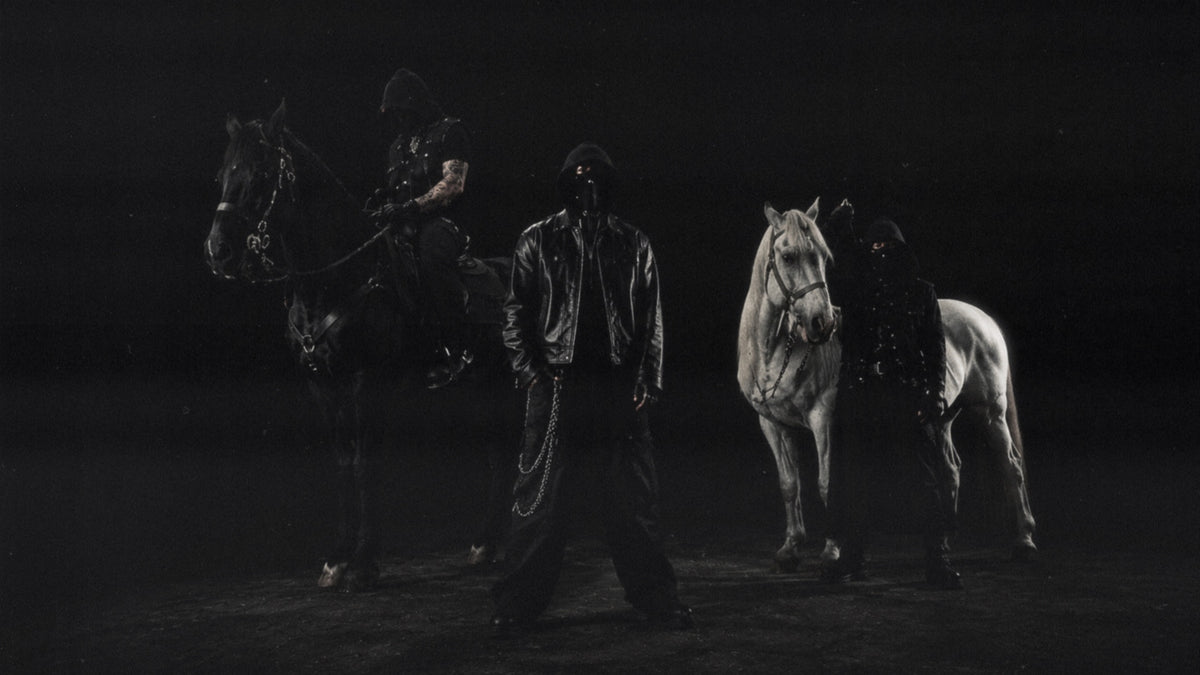
Opiumwear is a dark streetwear aesthetic built on matte black clothing, a silhouette that runs fitted through the torso and heavy through the legs, distressed and textured fabrics, metal hardware used as construction rather than decoration, and boots instead of sneakers. It borrows the palette of goth, the attitude of punk, and the discipline of avant-garde tailoring, then strips away everything theatrical. The result looks less like a costume and more like a uniform for someone who has already made up their mind.
That is the definition. The rest of this guide is about why each part of it exists, because the difference between wearing opiumwear and wearing a pile of black clothes is understanding the reasons behind the rules.
Where it came from
The name traces back to the underground rap scene of the early 2020s, where a wave of artists and their audiences developed a shared visual language: black on black, leather and denim beaten into texture, silver hardware catching stage light, boots that could survive a pit. The music gave the aesthetic its name and its momentum, and there is no honest history of the style that skips that.
But the clothes themselves are older than the name. The tight top and heavy bottom silhouette comes out of decades of avant-garde menswear. The love of distressed texture runs back through Japanese deconstruction and further back to punk, where destroying a garment was the point. The all black discipline belongs to goth, to certain corners of the art world, to every subculture that ever decided color was a distraction. Opiumwear did not invent any of these ideas. What it did was compress them into a single wearable code and hand that code to a generation raised on streetwear proportions.
This matters for a practical reason. Trends named after scenes tend to die with those scenes. Aesthetics built on older foundations tend to survive their own hype. Opiumwear is the second kind, which is why it rewards buying well over buying often.
The five elements of opiumwear
Every real opiumwear outfit is answering five questions at once. Here they are, in the order they matter.
1. Matte black as discipline
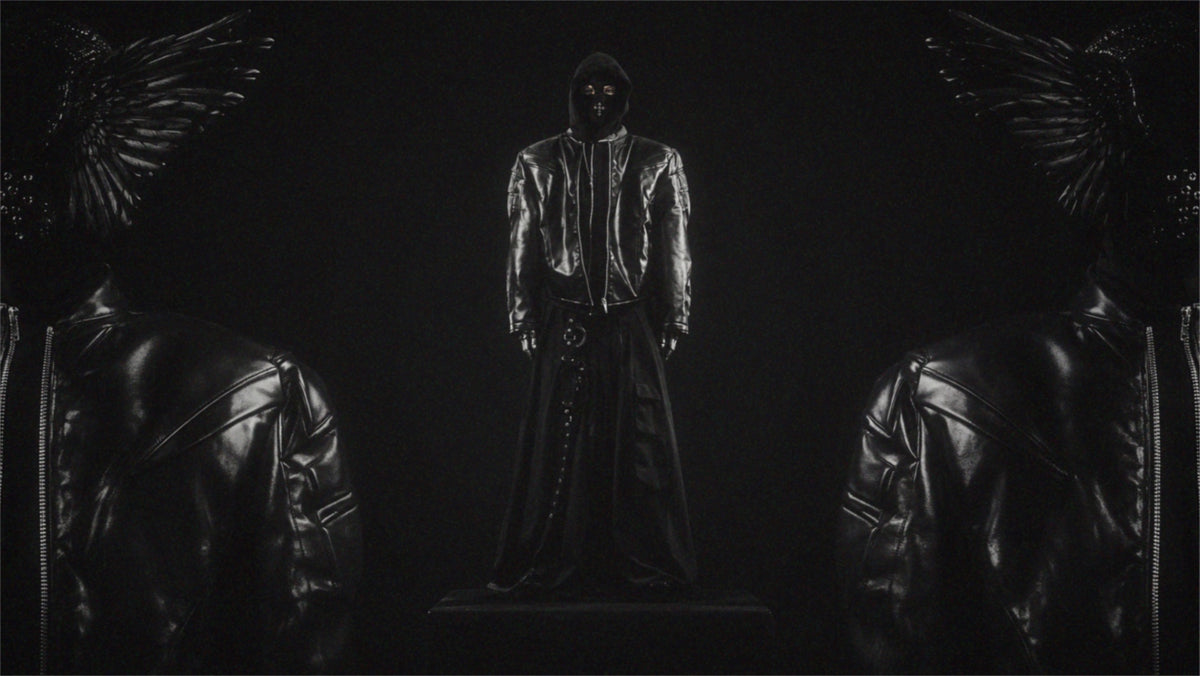
Black is the foundation, but the finish is the actual rule. Opiumwear runs matte. Cracked leather instead of polished leather, washed and faded black instead of jet black fresh off the rack, waxed cotton instead of vinyl shine. A faint sheen at a hardware point or a leather panel is fine. A whole outfit that catches light is not. The reason is tonal. Shine performs for an audience, and this aesthetic is built on the opposite instinct, which is looking like you dressed for yourself and would be wearing this whether anyone saw it or not.
Charcoal, oxblood, and deep faded grey all live inside the palette. Anything brighter than that is a different outfit.
2. Silhouette: tight above, weight below
This is the proportion that makes the look recognizable from across a street. The torso stays close. A fitted mock neck, a slim long sleeve, a henley that follows the body, and over it a jacket with real structure in the shoulder. Below the waist, everything opens up. Wide leg denim, flared leather, heavy cargo silhouettes, fabric with enough weight to move like it means it. A piece like wide leg or flared black bottom carries the lower half. The contrast is the point. A loose top over loose bottoms reads as sloppy, and tight over tight reads as a decade ago. Tight over volume reads as intentional, and intention is the entire currency of this aesthetic
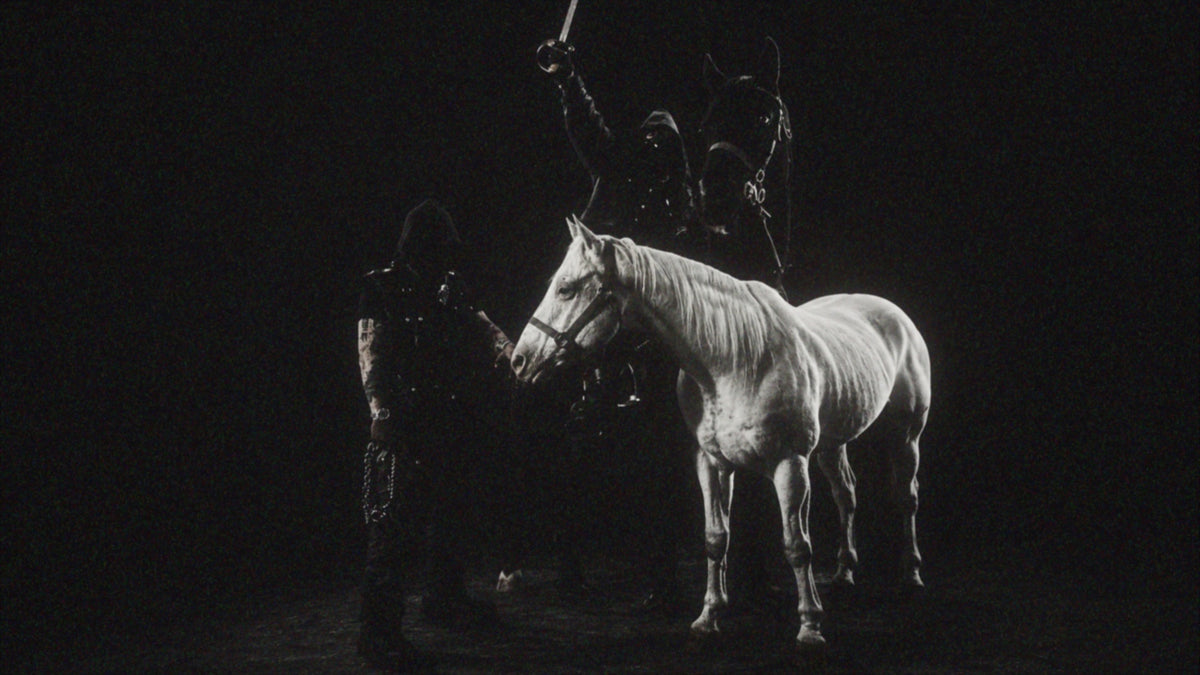
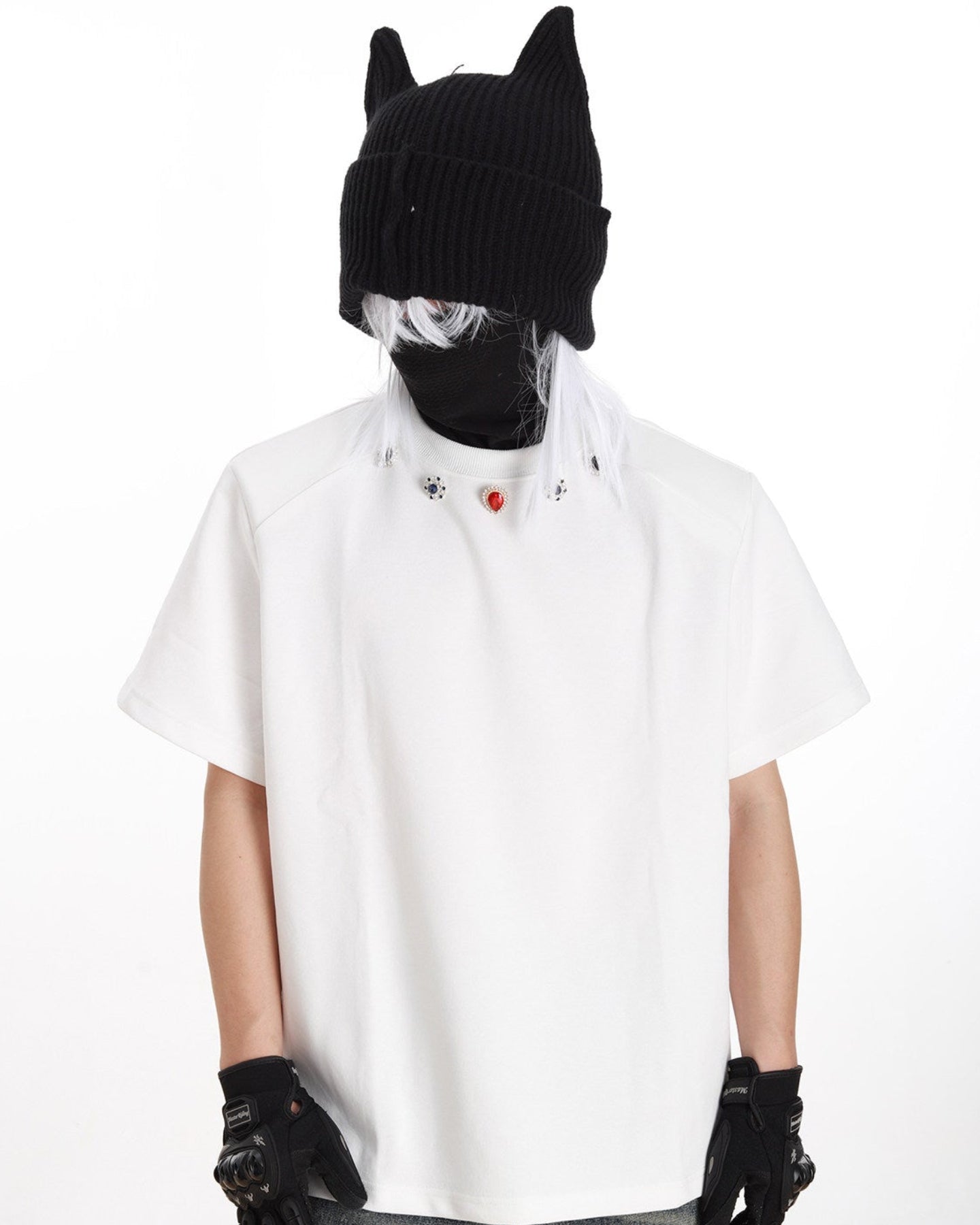
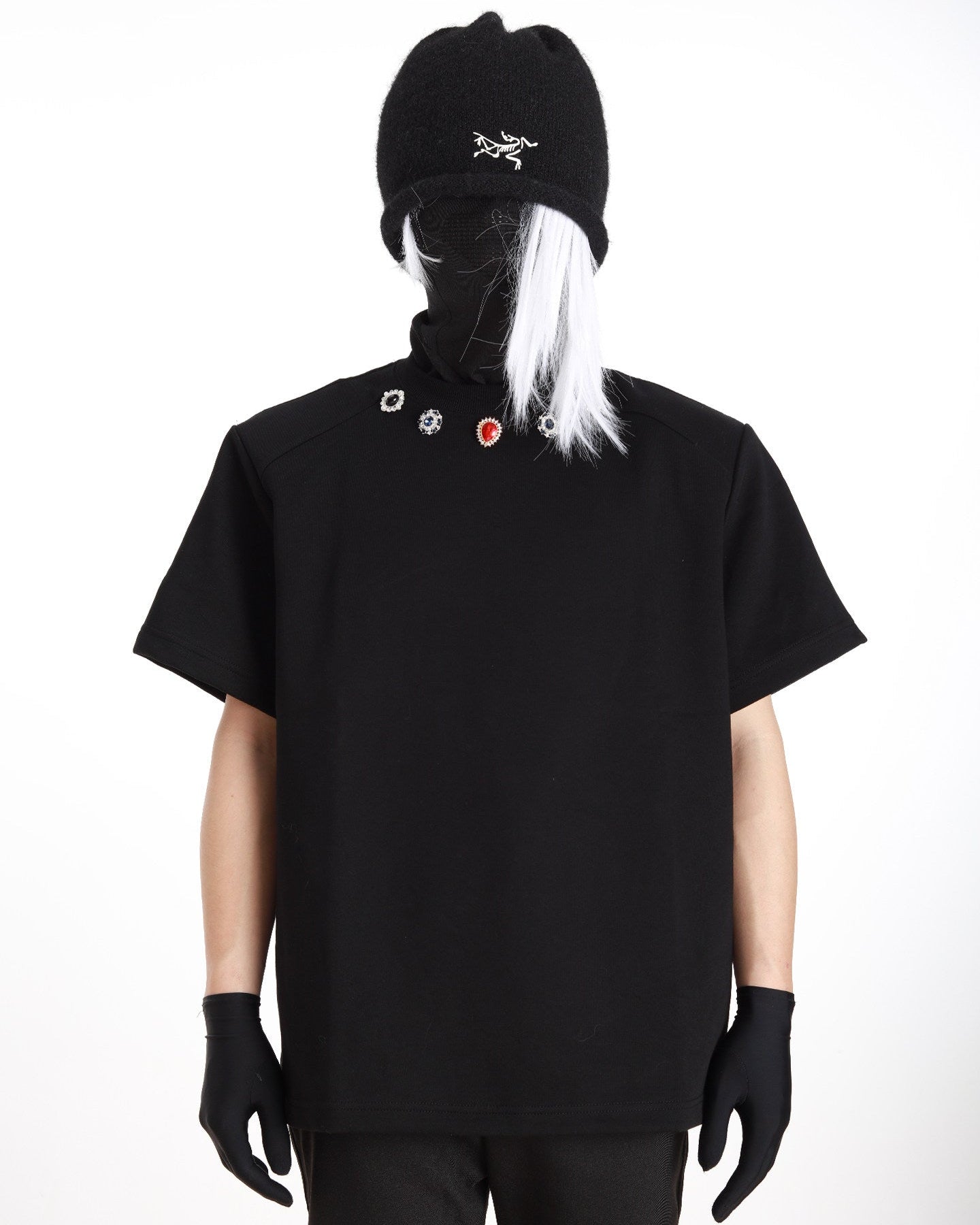
Not every tee is built the same. Ours start where basics end — heavyweight cotton, structural cuts, washed textures, deconstructed details, and silhouettes that hold presence whether layered under a jacket or worn alone. Built for darkwear, streetwear, and people who treat every layer as a decision.
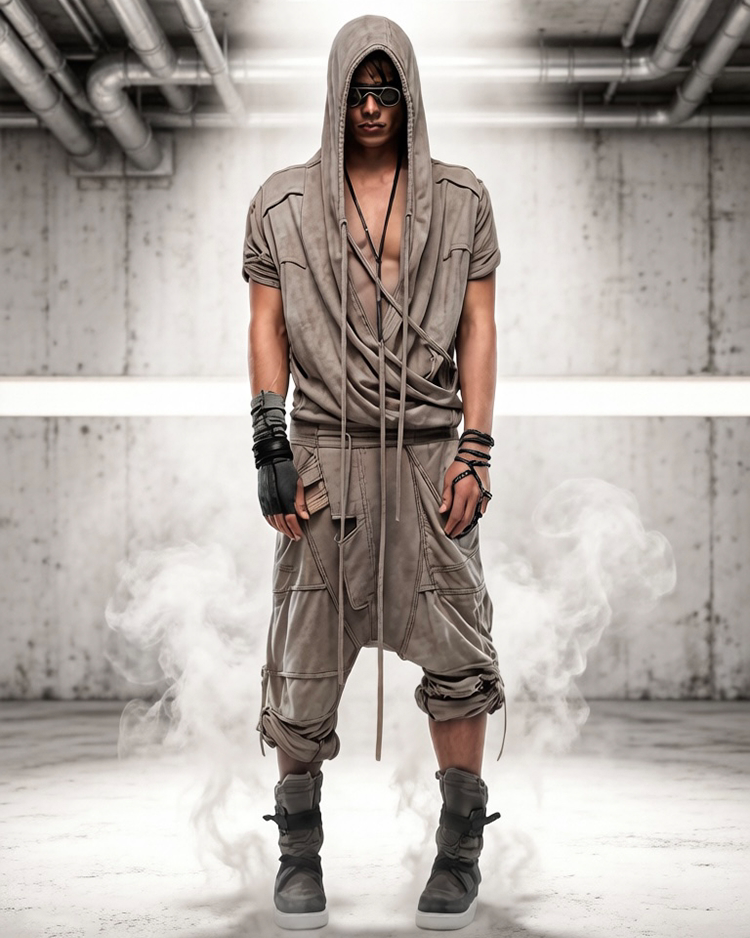
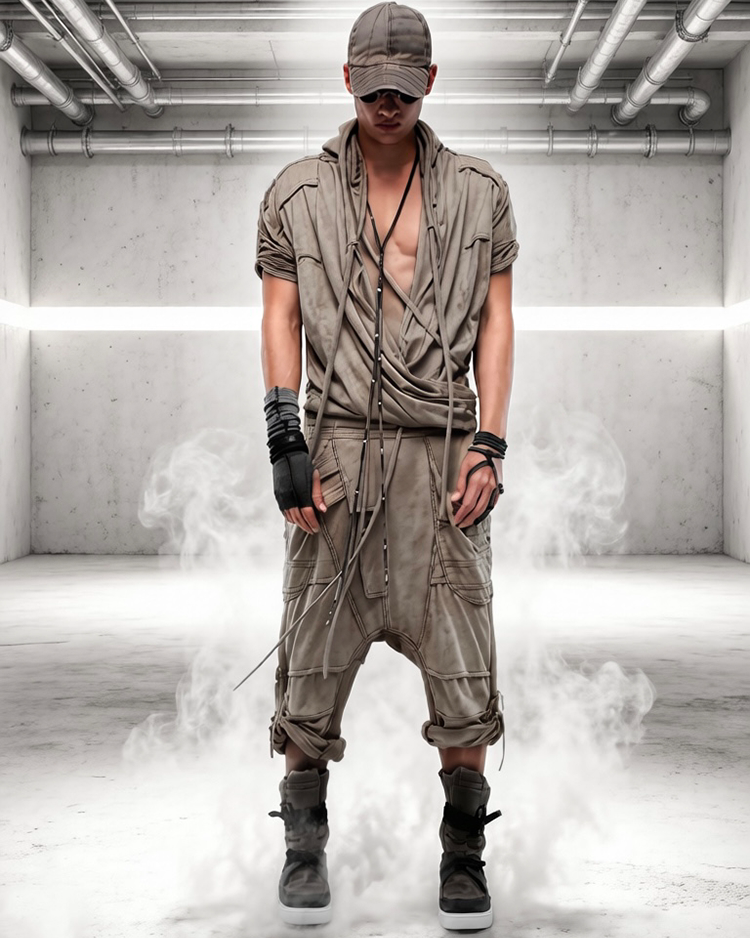
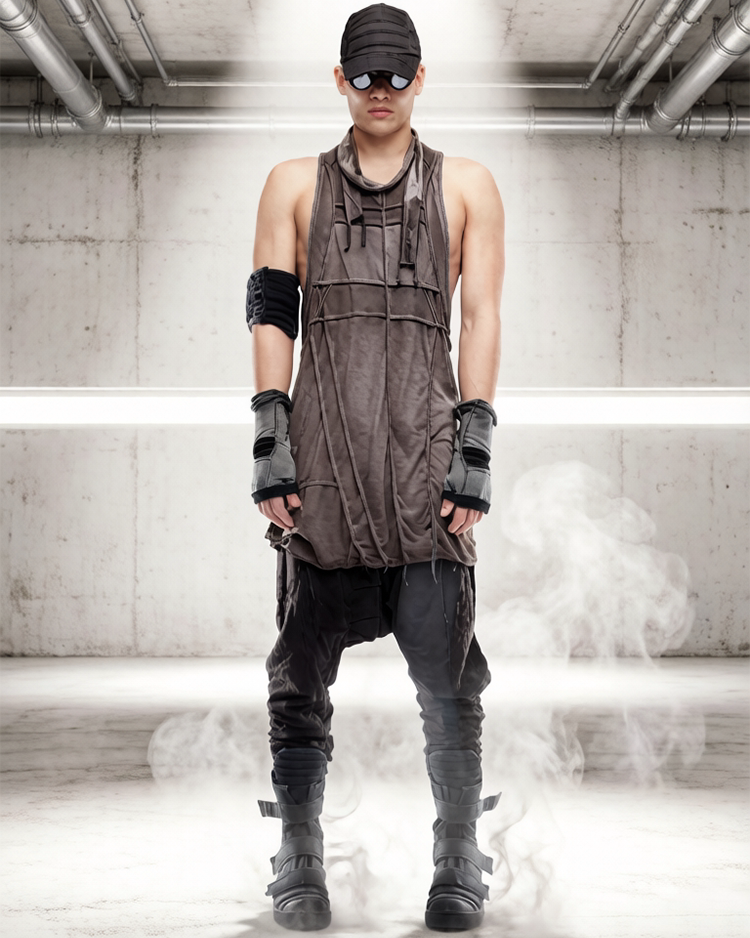
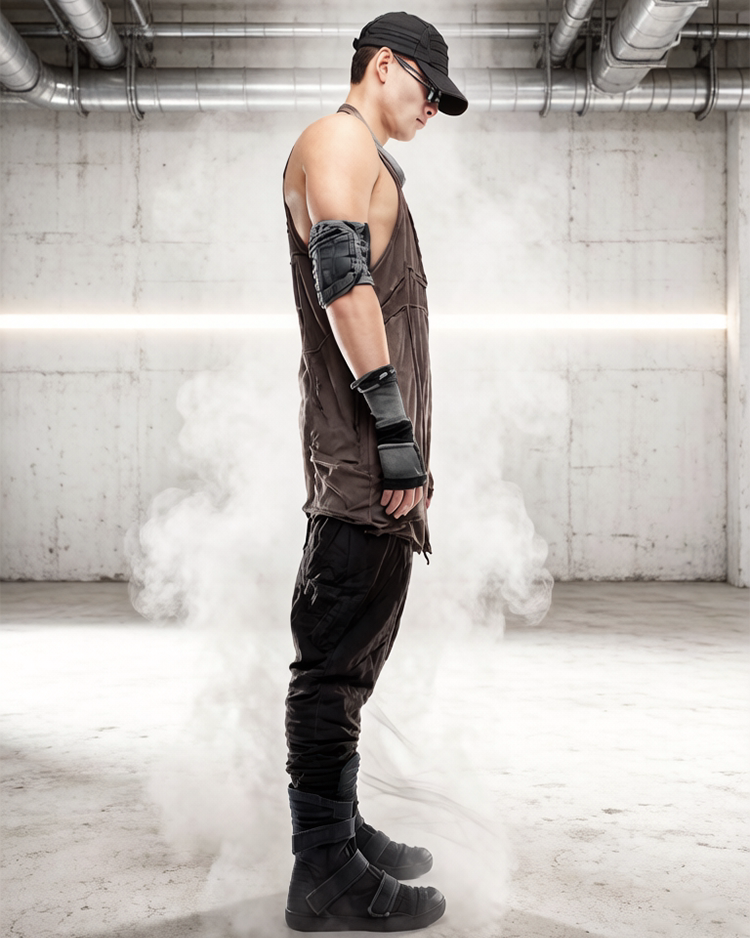
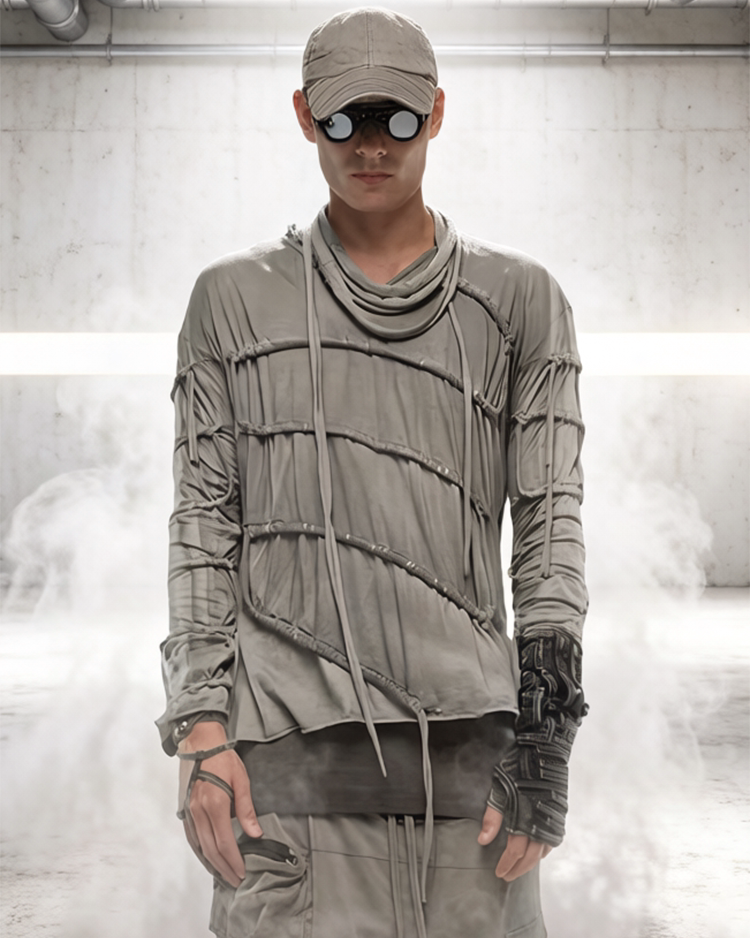
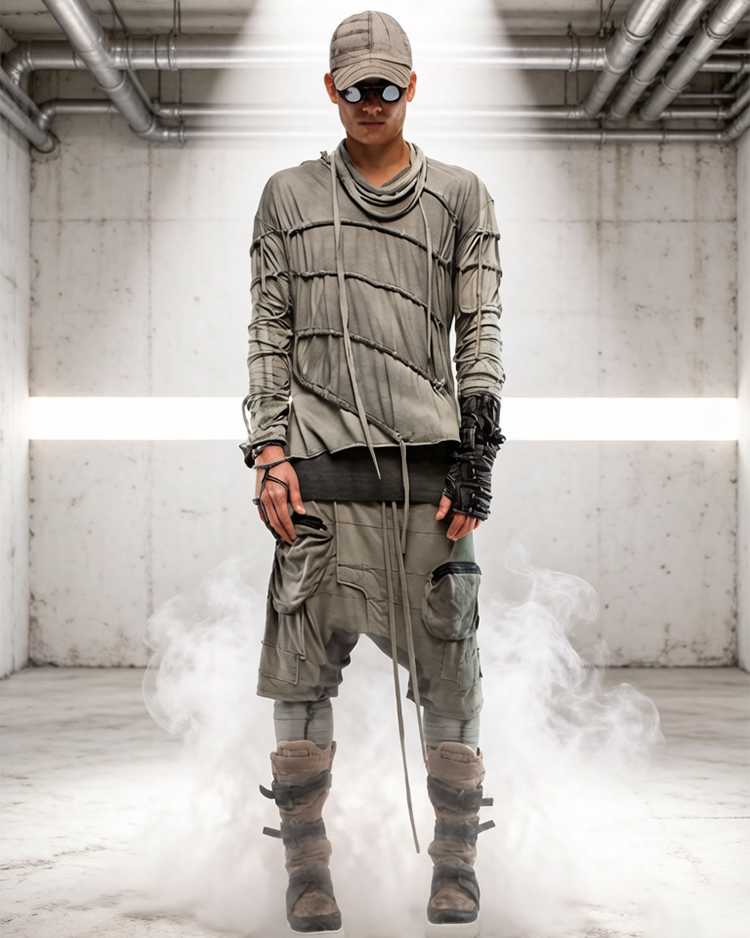
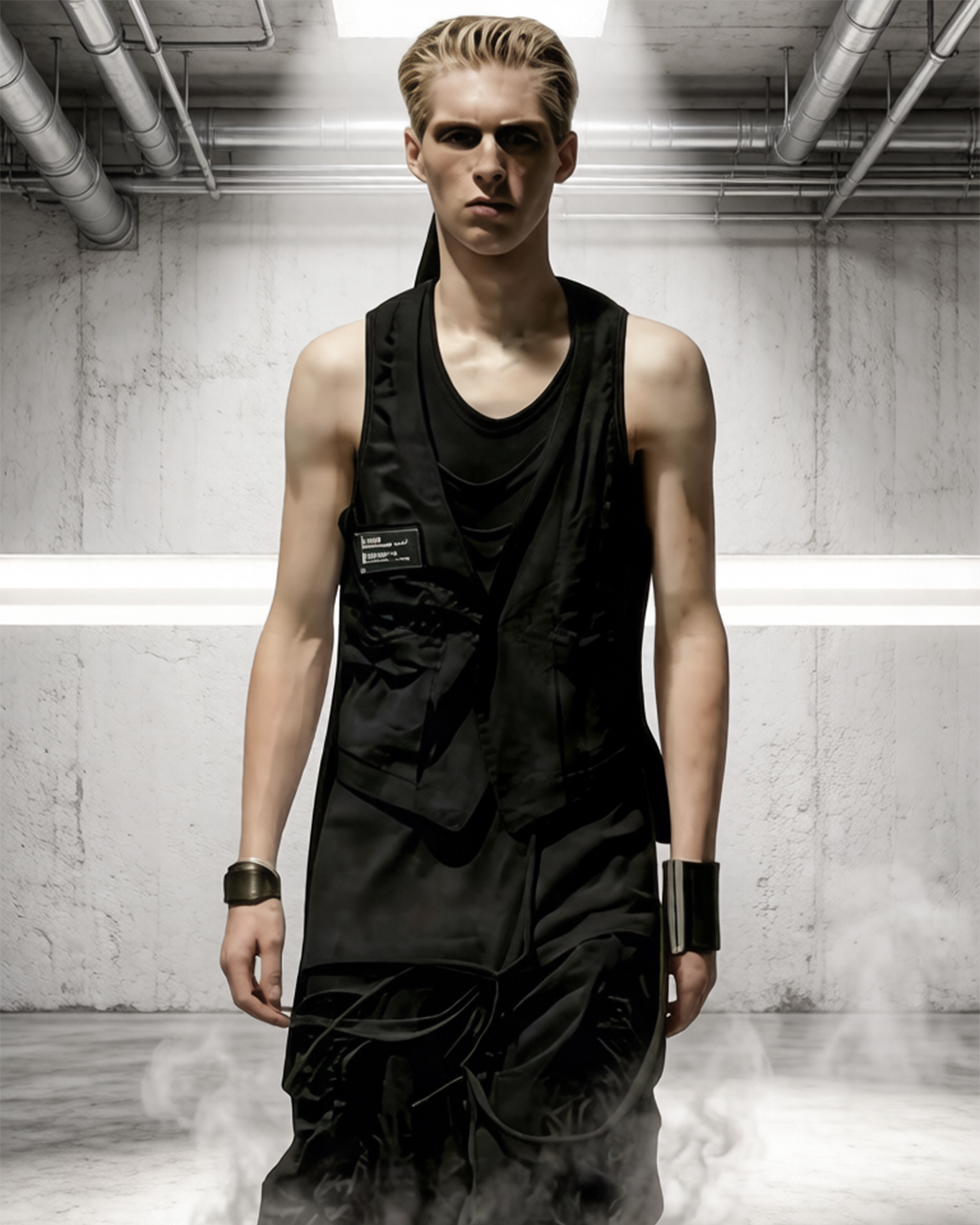
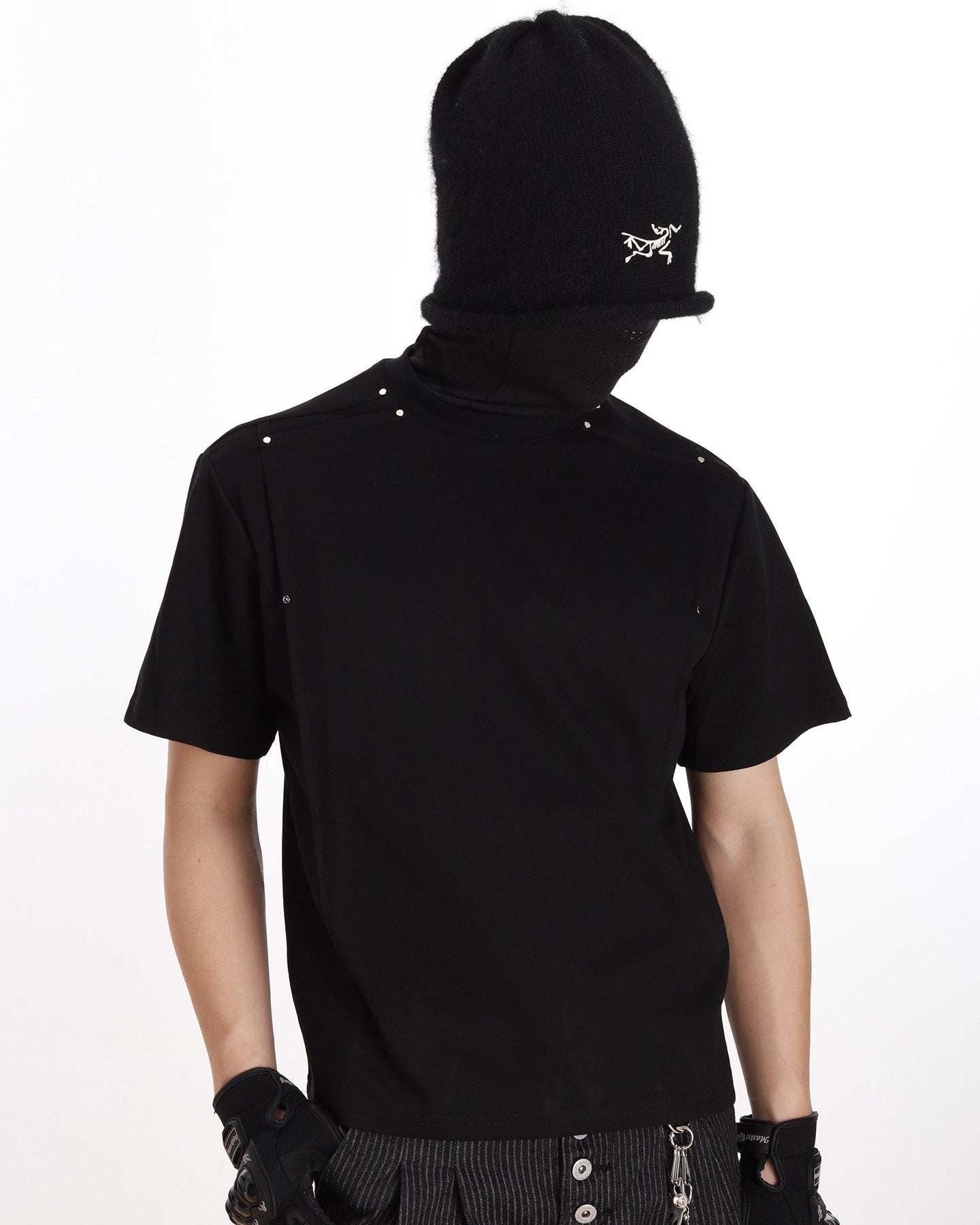
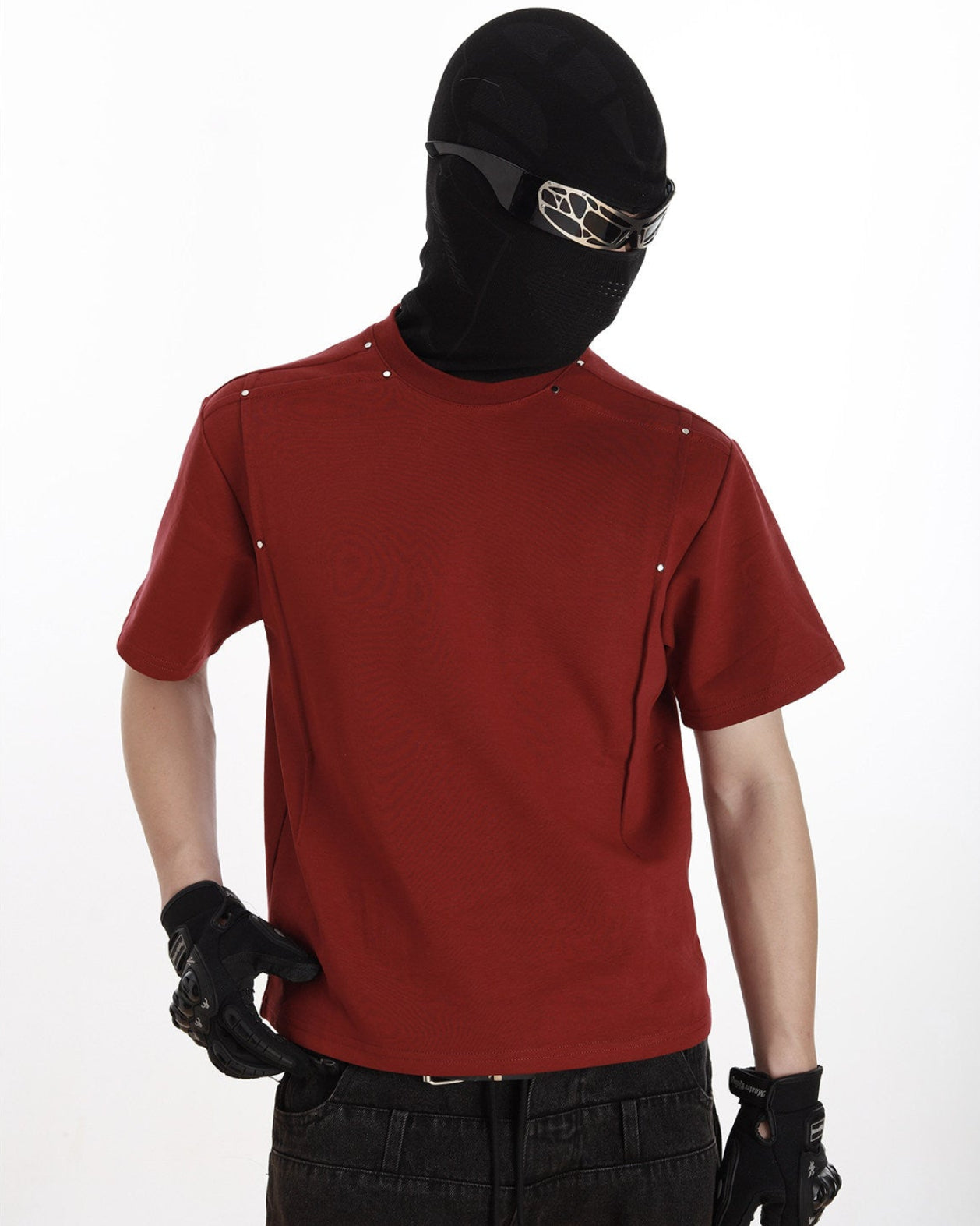

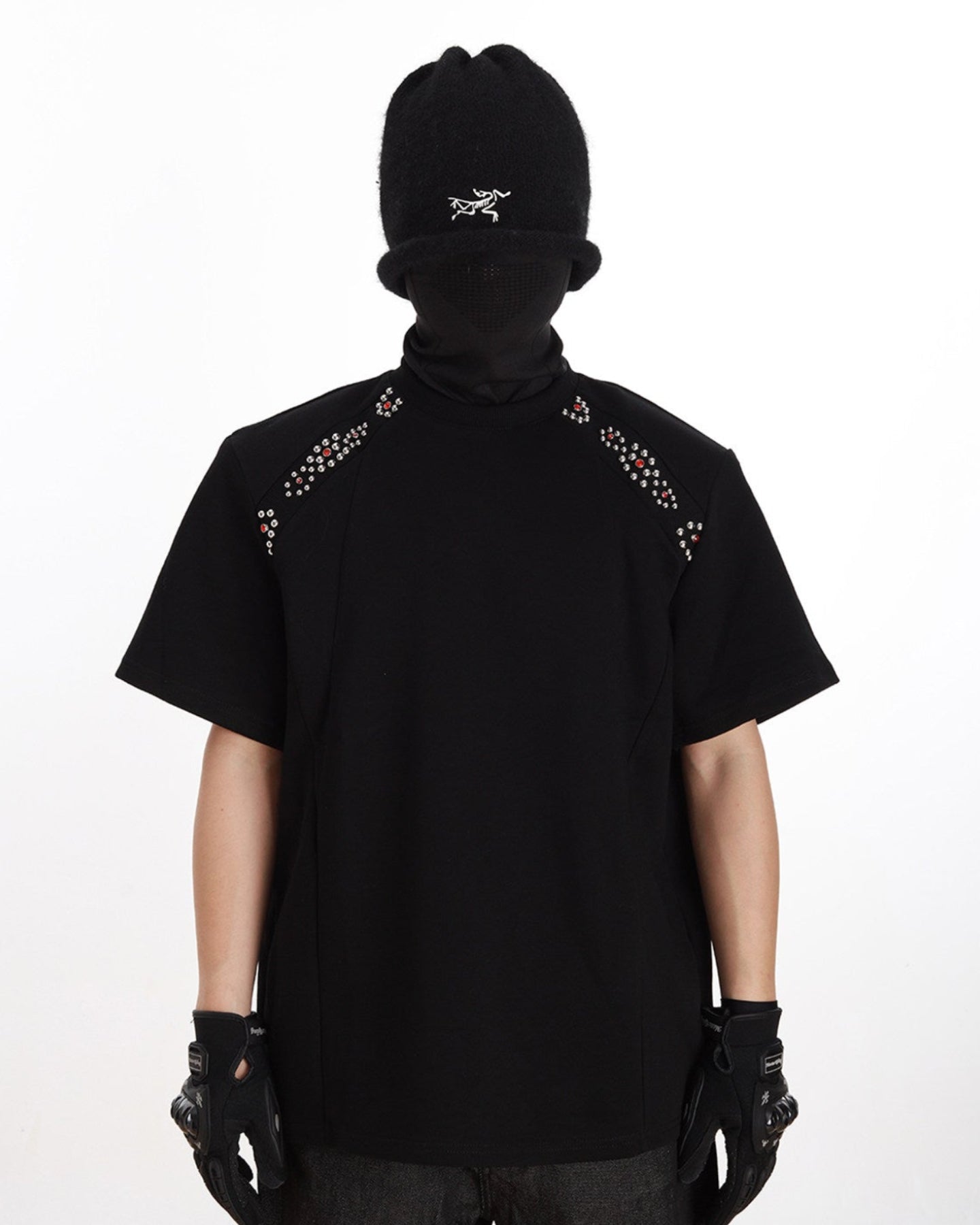


3. Texture: distressed, waxed, cracked
An all black outfit lives or dies on texture, because texture is the only thing left doing visual work once color is gone. Opiumwear leans on fabrics that carry their own history. Cracked leather that looks lived in on day one. Waxed denim that develops creases where you actually move. Knits with deliberate distress, tees with raw hems and off placed seams. Two or three different black textures in one outfit will always look more expensive than one flat black repeated head to toe, and this single idea will improve your outfits more than any purchase.
4. Hardware as construction, not decoration
Silver is the metal, and it appears at points where hardware would genuinely exist. Zips, buckles, studs along a stress line, a belt that actually holds weight, one ring or one chain at most. The test is simple. If the metal looks like it is doing a job, it belongs. If it looks like it was applied to make the garment louder, it tips the outfit toward costume. A piece like studded jacket or hardware-heavy piece shows the difference immediately, because on a well built garment the studs sit where reinforcement would sit.
5. The boot is the anchor
Sneakers end the conversation. It does not matter which ones. The visual weight of this silhouette needs a heavy termination point at the ground, and only a boot provides it. Square toe, buckle, high shaft, a Chelsea with real height, all in matte black with hardware kept honest. Wide hems are built to stack and break over a boot shaft, and the whole lower half of the outfit collapses without one. If you own one piece from this entire guide, make it square toe or buckle boot.