

How to Layer a Leather Jacket for Early Fall
How to Layer a Leather Jacket for Early Fall
Early fall has a talent for making a simple outfit feel like a negotiation. The morning asks for a jacket; the afternoon suggests you have overreacted. A leather or leather-look layer is useful precisely because it gives an outfit some shape without insisting on a winter’s worth of insulation. But the jacket is only part of the calculation. What sits beneath it, where the hem lands, how much room the sleeves allow, and what happens at the trouser break all decide whether the result feels considered or merely warm enough to leave the house.
The most dependable approach is to build from the body outward, starting with the layer you are least likely to remove. A thin tee, tank, fine knit or cardigan each behaves differently under a jacket, even when the jacket is unchanged. Then look at the full silhouette, not only the upper half. A cropped jacket with cargo trousers creates a different centre of gravity from a roomy jacket with pleated trousers; a straight jean lets the shoe show its outline, while a wide leg asks the shoe to hold its ground. Small adjustments to length can matter more than another accessory.
The five outfits here offer distinct ways into the season, not a uniform to copy piece for piece. They range from a light biker over a fine crewneck to a tank beneath a minimal zip jacket, with room for utility trousers, faded denim and tailoring along the way. Treat each as a set of useful proportions: check what can be worn indoors without the jacket, what can accommodate a real day of movement, and what will still look right when the weather changes its mind.
A quiet starting point: light black biker, fine grey crewneck and straight denim

A light black biker, fine grey crewneck and straight denim make a persuasive case for restraint. The grey knit gives the black outer layer a softer boundary than a high-contrast white tee would, while the straight denim keeps the outfit grounded in familiar territory. Nothing here needs to perform a trick. The interest comes from the meeting of surfaces and lines: a jacket with a sharper attitude over a fine, close-fitting layer, then a trouser shape that neither clings nor balloons.
The word “fine” matters. A bulky sweatshirt beneath a close jacket can pull at the arms, distort the front and make the shoulder line feel crowded. A finer crewneck is more likely to sit smoothly, though the actual fit of both pieces decides the result. Try the jacket over the knit you intend to wear, rather than judging either item alone. Reach forward, lift your arms and sit down. If the knit bunches under the jacket or the sleeves tug when you move, the combination may be better with a thinner base or a roomier outer layer.
Straight denim gives this look its everyday usefulness. It provides enough width to balance the jacket without hiding the shoe, and its relatively direct line makes the outfit easy to read. A clean break at the top of the footwear keeps the hem from becoming an afterthought. A low-profile sneaker or simple boot can work, depending on how much visual weight you want at the bottom; the point is not to prescribe a single shoe but to avoid a shoe that disappears beneath the denim or overwhelms the jacket.
This is the most adaptable of the five combinations for a day that moves between indoors and outdoors. The crewneck can remain presentable when the jacket comes off, and the straight jean is unlikely to feel as occasion-specific as a cargo or wide trouser. Its tradeoff is that the silhouette depends on fit being quietly right. If the jacket is too tight, the knit becomes a problem; if both jacket and denim are loose without a clear line, the outfit can lose its definition. Adjust the layer closest to the body first, then check the hem and footwear together.
Utility with a shorter line: cropped leather-look jacket, breathable tee and cargo trousers

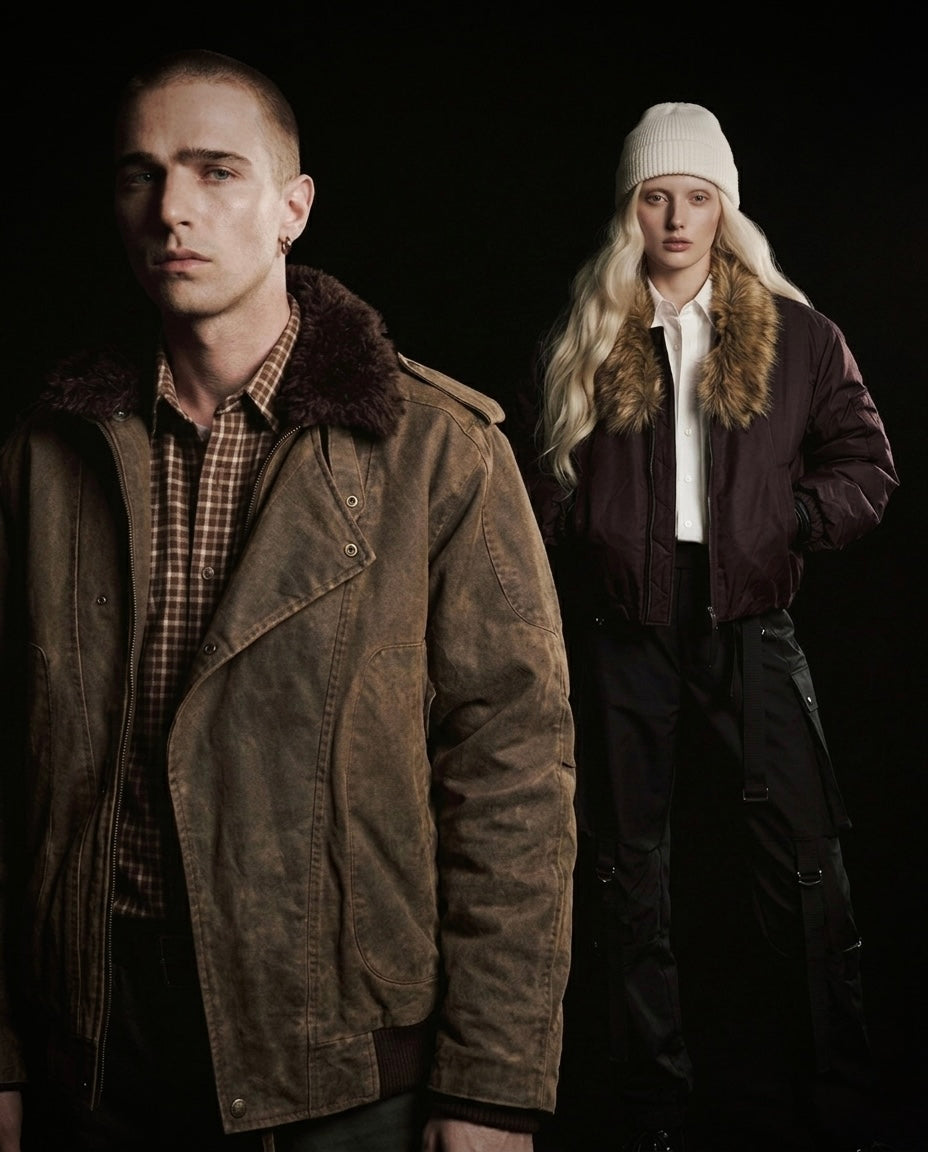
A cropped leather-look jacket, breathable tee and cargo trousers shift the focus downward and outward. The shorter outer layer creates a clear break above the trouser, while the cargos bring pockets and additional shape into the lower half. That can make a simple tee feel deliberate without requiring a complicated stack of layers. It also means the outfit has more going on than the first look: the jacket hem, cargo details and trouser volume all compete for attention unless their proportions are handled with some care.
Start with the tee. A breathable, uncomplicated base is useful when the day is mild or when you expect to take the jacket off, and it avoids adding bulk where a cropped cut may already feel close. Its hem should sit comfortably with the jacket open and closed. If a long tee extends far below the jacket, it introduces another horizontal line and can weaken the cropped effect. That does not make a longer base wrong; it simply changes the intention, pulling the outfit toward a layered, less sharply divided silhouette.
Cargo trousers are an especially practical counterpoint to a neat, short jacket, but their pockets add visual weight around the hips and thighs. Consider where those pockets sit and how much the trouser fabric gathers when you move. A straight or moderately roomy leg can keep the utility element legible without turning the whole outfit into one continuous mass of volume. Footwear should meet the trouser with enough presence to feel connected to it. A slim shoe can look clean, but if the hem falls heavily over it, the shoe may seem undersized; a chunkier profile can balance the leg, provided it does not make the lower half feel cumbersome.
This is a good choice for walking, errands or a casual afternoon when the jacket is doing more for silhouette than for serious cold protection. “Leather-look” describes an appearance, not a guarantee of composition, warmth or weather resistance, so treat the outfit accordingly. The principal tradeoff is mobility and bulk through the lower half: cargo pockets and a cropped outer layer work best when each has room to do its job. If the trousers already have a generous cut, resist adding unnecessary volume underneath the tee. Let the jacket provide the sharper line and the cargos provide the practical one.
A softer temperature: brown jacket, cream cardigan and faded jeans

Brown jacket, cream cardigan and faded jeans make early fall look less like a uniform of black layers. The palette is warm without becoming precious: cream gives the centre of the outfit a little light, brown keeps the outer layer grounded, and faded denim brings in a worn-in quality. The cardigan is the key change from a crewneck. It adds another opening and another possible line through the body, so the outfit can feel relaxed and personal rather than neatly sealed.
How the cardigan is worn will affect the whole balance. Left open, it can form a vertical strip between jacket and tee or whatever base layer sits beneath; buttoned, it creates a more continuous block of cream. Fastening a few buttons rather than all of them can preserve the ease of the look, but the best choice depends on the cardigan’s length and how much fabric gathers under the jacket. A bulky knit may be uncomfortable beneath a closer outer layer. A thinner one is generally easier to layer, though its actual weight and cut should be judged in person. Put the complete combination on before deciding the jacket size works.
Faded jeans are a natural partner because they keep the outfit from becoming too polished. Their lighter, irregular tone also gives the brown-and-cream layers something to play against. Straight or gently relaxed denim will let the knit and jacket remain the main story; a much wider leg makes the outfit more deliberately expansive and shifts attention toward the shoes. With a softer palette, dark footwear can provide a quiet anchor. A lighter shoe can work too, but check that the trouser hem does not swallow it or create a shapeless break.
This is a useful combination for a long day with changing indoor and outdoor temperatures, particularly when you want a layer that can be removed without leaving only a thin base. The cardigan offers more flexibility than a single knit, though it also means more fabric to manage beneath the jacket. Avoid treating the apparent heft of the outfit as proof of warmth: the jacket’s finish and the cardigan’s look do not establish insulation or rain protection. The advantage is tonal depth and versatility; the cost is a slightly more involved fit check. Make sure the sleeves do not bunch and that the cardigan can sit comfortably whether the jacket is open or fastened.
More room, cleaner centre: roomy black jacket, mock neck and pleated trousers

A roomy black jacket, mock neck and pleated trousers take the leather-jacket idea somewhere more composed. The mock neck gives the upper body a clean, uninterrupted centre, while pleats introduce a subtle formality beneath the jacket. The result can suit an informal dinner, a gallery visit or any occasion where tailoring would feel a little too dutiful. It is not formalwear disguised as streetwear; it is a way of borrowing the clarity of tailoring without asking the whole outfit to behave.
Room in the jacket should be purposeful rather than simply oversized. There needs to be enough space for the mock neck and comfortable movement, but excess fabric can overwhelm the neck’s neat line and make the jacket look detached from the body. The mock neck works best when its collar sits comfortably without folding or fighting the jacket’s neckline. It already gives the outfit a strong vertical accent, so scarves and additional collars are not necessary unless the weather genuinely calls for them. In mild conditions, restraint lets the difference in shape do the work.
Pleated trousers offer movement and a different kind of volume from cargos or denim. Their shape begins at the waist, so an excessively long top can cover the pleats and obscure the reason for choosing them. Let the waistband and front fall remain visible where possible. A wider cut can be elegant with the roomy jacket, but it needs a clear relationship to the shoe. A defined hem break keeps the trouser from looking accidental; footwear with enough visual weight can support the leg without turning the outfit into a heavy block. If the trousers are more tapered, the overall look becomes sharper and less expansive.
The important test is what remains when the jacket comes off. A mock neck and pleated trousers can form a complete outfit on their own, which makes this a particularly useful layered option for places where outerwear is temporary. The tradeoff is that both the jacket and trousers have a point of view. If the jacket is very generous and the trousers are also wide, fit elsewhere needs to be calm: no unnecessary bulk at the neck, no excess fabric gathering at the shoe. Try sitting and walking in the full combination. Pleats should fall naturally rather than be crowded by a top that is too long or a jacket that shifts whenever you move.
Barely layered, deliberately wide: minimal zip jacket, tank and black wide jeans

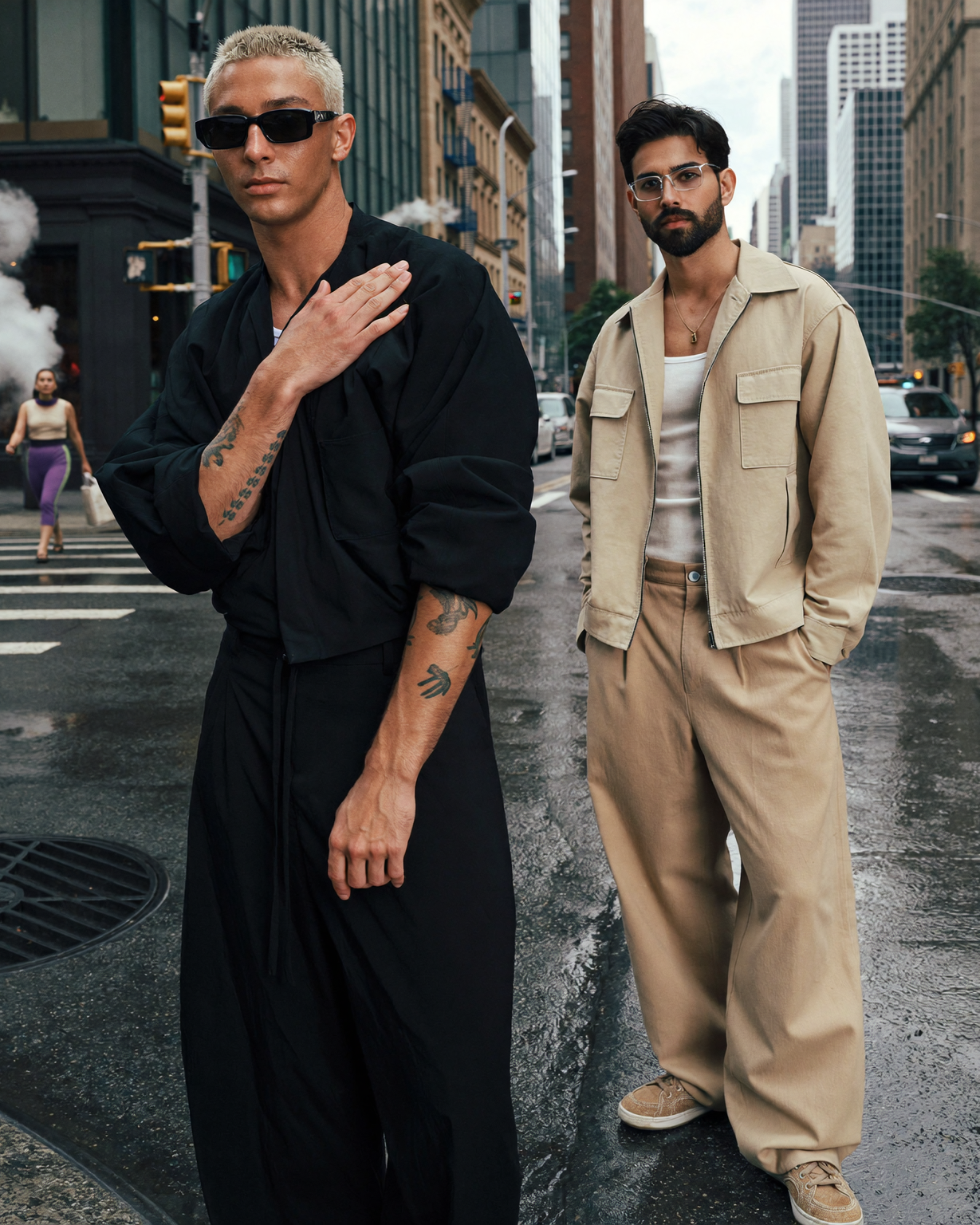
A minimal zip jacket, tank and black wide jeans are the most pared-back combination here, and also the one most dependent on the day being mild. The tank removes visual and physical bulk beneath the jacket, while the wide black denim makes the lower half the main event. A simple zip-front layer can keep the upper body from feeling too bare without introducing a second strong neckline or a competing pattern. The effect is spare, not necessarily effortless: minimal outfits have fewer places to hide a poor fit.
The jacket’s sleeves, collar and hem deserve a close look because there is little underneath to soften them. A tank should sit comfortably beneath the neckline and remain a useful layer if the jacket comes off. If you would not want to spend time indoors in it, the outfit may be better reserved for a short trip or adjusted with a tee. The decision is about the day, not an abstract rule that tanks belong only to summer. Early fall can offer a warm afternoon, but a bare base is not a substitute for reliable insulation once the temperature drops.
Wide black jeans establish the silhouette from the waist down. Their volume can make a simple jacket feel more intentional, but the hem has to meet the footwear cleanly. A shorter break reveals more of the shoe and gives the leg a defined endpoint; extra pooling can look relaxed if controlled, but fabric dragging or folding heavily risks making the jeans appear too long. Footwear with a clear profile helps. A slight visual heft can balance the trouser, while an extremely delicate shoe may be swallowed by it.
This combination is particularly good for someone who likes a longer, broader leg and wants the outer layer to remain quiet. Its tradeoff is weather flexibility: the tank offers less coverage than the fine knit or cardigan in the other looks, and the jacket’s appearance alone cannot tell you how warm it will be. Keep a removable mid-layer in reserve if the day is uncertain, or choose a different base when you expect to be outside for longer. The strength of the outfit is its clarity. With only a few visible elements, proportion does the talking, so check the jacket length against the rise and volume of the jeans before adding anything else.
The useful middle: warmth, movement and the layer you can remove
Layering works best when the outfit still makes sense in more than one state. The jacket may be essential outside and unnecessary in a heated room; the base layer should not feel like an apology once it comes off. That is why the crewneck-and-straight-denim combination is so dependable, and why the brown jacket with cardigan can be practical when the cardigan itself is comfortable indoors. The tank look is a more deliberate exception: it offers the least coverage beneath the jacket, so it suits a narrower range of temperatures and occasions.
Think in terms of adjustment rather than piling on. A thin tee beneath a jacket is easy to manage, while a cardigan creates the option of opening or removing a layer. A fine crewneck adds coverage without a lot of visual interruption. A mock neck gives a strong, tidy neckline but may feel too warm once indoors. None is automatically right for “fall”; the useful question is whether you can regulate your comfort without dismantling the outfit. If removing one piece leaves the rest looking unrelated, reconsider which layer is carrying the look.
Movement is part of that calculation. A jacket that sits well while standing still can pull when reaching for a bag or leaning across a table. Try it over the actual knit or cardigan, then raise your arms, sit, turn and walk. Check the sleeve opening and shoulder comfort, not just whether the jacket closes. A close fit can look clean, but if it compresses the layer underneath, the outfit will feel less polished as the day goes on. Room does not mean shapelessness; it means enough ease for the layers and motions you expect.
Weather also asks for honesty. A leather-look surface, a heavy-looking jacket or a thick cardigan does not, by appearance alone, establish warmth, water resistance or a particular fibre content. Read garment details and care information rather than treating a styling photograph as a technical specification. On a breezy but dry afternoon, a light jacket over a knit may be enough; on a colder or wet day, you may need a more protective layer or a different outfit altogether. A good early-fall combination is adaptable, not magical.
Hemlines have a conversation with shoes
The lower half is often where a layered outfit either settles into place or starts to argue with itself. A straight jean usually offers a clear view of the shoe, which is one reason it works so easily with a light biker and crewneck. A wide jean or pleated trouser takes up more visual space and may cover more of the footwear. Cargo trousers introduce pockets and seams into the same area, adding detail before a shoe enters the picture. Each shape asks for a slightly different ending.
The useful test is not whether a particular shoe is “correct,” but whether its scale makes sense with the trouser. A sleek, low-profile shoe can sharpen a straight leg; under a very wide hem it may disappear. A heavier shoe can hold its own beneath volume, but it can also make an already generous outfit feel bottom-heavy. Stand naturally and look at the full line from jacket hem to shoe. Then walk a few steps. A trouser that looks balanced in a mirror may twist, drag or catch once it moves.
Trouser length can often fix a proportion more cleanly than adding another accessory. If a wide leg is pooling heavily, the issue may be its hem, not a lack of visual interest. If the shoe is barely visible beneath a straight jean, a small change in length may restore the relationship. The same principle applies at the top: a cropped jacket creates a distinct break above the waistband, while a longer jacket shifts the eye downward. Try the outfit with the footwear you expect to wear, because swapping a slim sneaker for a substantial boot can change how the hem reads.
There is no requirement for every line to be sharp. A little softness at the break can make a casual outfit feel relaxed, and a pleated trouser can move rather than hang like a diagram. The aim is to make that softness look chosen. If the lower half is generous, let the upper layers stay comparatively simple; if the jacket is the most forceful shape, a straighter trouser can give it room. These are not commandments. They are ways to diagnose why a promising combination feels off before reaching for another layer.
Buying by shape, not by the name of the category
When comparing jackets, look beyond whether a listing calls the piece a biker, zip jacket or leather-look style. Check the garment measurements and photographs for the length, shoulder shape, sleeve room and overall cut, then compare them with a jacket you already wear comfortably. A named silhouette gives you a starting point, not a promise about how it will sit on your body. The NVRSAINT asymmetric biker jacket is one piece to consider while thinking about the sharper lines of a biker silhouette; judge its details and fit from its own product information rather than assuming it will reproduce any of the outfits here.
For a broader comparison, Shop OFFCULTURE® jackets and browse compatible separates with the complete outfit in mind. A jacket that works over a tee may not have the same ease over a cardigan. A pair of trousers that looks balanced beside a cropped hem may feel quite different beneath a longer, roomier layer. Product photographs can suggest proportion, but garment measurements, fit notes and care information are more useful for deciding whether the piece suits your wardrobe. These pages are places to compare real garments, not evidence that every photographed combination is sold as an identical set.
Consider what you already own before treating a new jacket as the start of a whole new uniform. A fine crewneck, straight denim and familiar shoes can reveal whether a jacket’s length works for you more clearly than a carefully styled product image. Then test a second outfit, perhaps a cardigan or wider trouser, to see whether the piece has range. For further ways to evaluate outerwear with other layers, read our jacket guide and the streetwear silhouette guide. Use them as perspective, not as a substitute for checking the actual cut and measurements of a garment.
Questions worth asking before you leave
What should I choose first: the jacket or the layer underneath?
Start with the piece that sets the silhouette for the day. If the jacket is cropped or especially roomy, that shape will influence what works beneath it and which trouser line feels balanced. If you already know you want to wear a cardigan or mock neck, fit the jacket over that exact layer before deciding. In either case, the complete combination matters more than the label size on any one piece.
Can I wear a leather jacket over a cardigan?
Yes, provided the layers sit comfortably together. A thinner cardigan is generally easier to wear beneath a close jacket, while a more substantial knit may need a roomier outer layer. Check the sleeves, shoulders and front closure with the cardigan on, and make sure it still feels comfortable when you reach, sit and move. If the cardigan bunches or pulls, try a finer layer or a different jacket fit.
What footwear goes with wide jeans or pleated trousers?
Choose footwear with enough presence to meet the leg, then check the hem rather than relying on a rule about shoe types. A sleeker shoe can sharpen a wider trouser, while a heavier profile may balance extra volume. Either can work if the trouser breaks cleanly and does not hide the shoe unintentionally. Try the outfit standing and walking, since the hem can behave differently once it moves.
Is a tank enough under a jacket in early fall?
It can be, on a mild day and for an occasion where the jacket stays on or the indoor setting suits a tank. It gives the least coverage of the five combinations, so it is less adaptable if the temperature drops or you plan to remove the outer layer. If the forecast is uncertain, choose a tee or carry a light removable layer rather than expecting the jacket’s appearance to tell you how warm it will be.
A good layer leaves room for the day
The most useful leather-jacket outfit is not necessarily the boldest one. It is the one that moves comfortably, works with the trousers and shoes you actually wear, and still feels like an outfit when the jacket comes off. Choose a clear silhouette, let the layers earn their place and give the hemline a final check. Early fall rarely needs a complicated answer; it does reward a thoughtful one.
Leer más

Make a blazer and jeans feel personal rather than business casual. Five combinations range from a black jacket with washed denim and boots to faded wide jeans, subtle stripes, cropped tailoring and...

A hoodie brings ease; a cardigan changes the shape around it. Across five outfits, from open black knitwear with straight trousers to cropped hoodies beneath long cardigans and layered coats, this ...