

Black Leather Jacket Outfits for Autumn Weather
Black Leather Jacket Outfits for Autumn Weather
Autumn has a way of making an outfit feel unfinished just as you leave the house. The morning asks for a layer; the afternoon makes you carry it; by evening, you are glad you brought it. A black jacket is useful in that uncertain stretch, but its usefulness is not the same as its styling. Black can sharpen an outfit, flatten it, or make everything below it feel like an afterthought. The difference is usually proportion.
Start by noticing where the jacket ends, how much room the layer beneath it needs, and what the trousers do at the shoe. A cropped shape makes the rise of the trousers part of the composition. A roomier jacket can accommodate a knit, but may ask for a cleaner line below. Faded denim, charcoal cargos, grey wide legs and dark pleats each change the mood without requiring a new colour story.
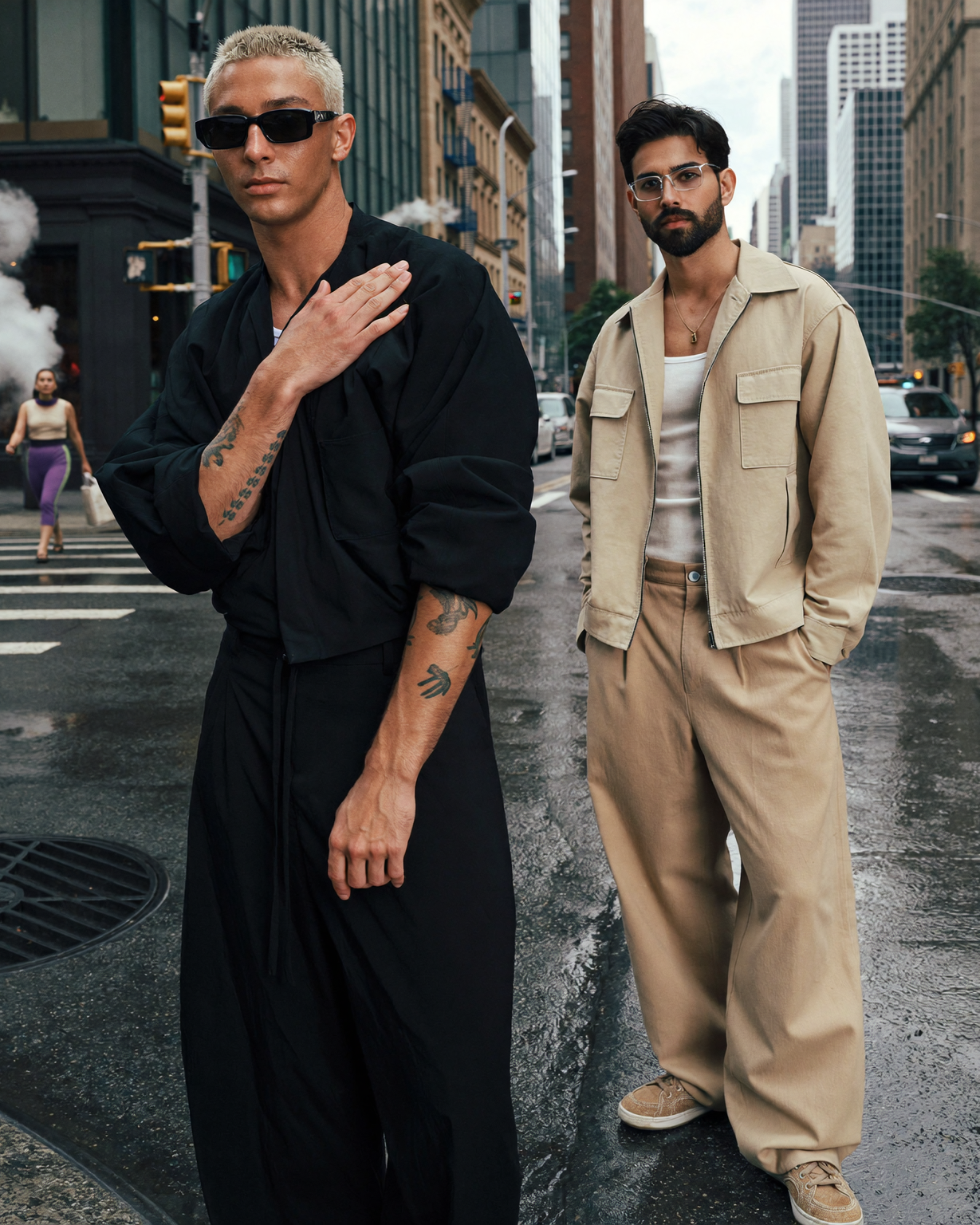
The five outfits here use the OFFCULTURE black Redline leather biker jacket in natural streetwear photographs. They are not prescriptions to reproduce exactly. Treat them as studies in balance: what a pale knit does beside a dark surface, how a roomy trouser can be grounded, why a plain boot sometimes says more than a conspicuous accessory. The jacket is the common element; the character comes from what surrounds it.
Autumn dressing also means thinking beyond the mirror. Can you sit, walk and raise your arms comfortably? Does the outfit still make sense indoors with the outer layer off? Is there enough space for the clothes you actually want to wear underneath? Those practical questions are not a compromise with style. They are how a good-looking outfit becomes one you reach for.
Five Ways to Wear the Redline
1. Faded blue jeans and plain boots

A black biker jacket, faded blue jeans and plain boots is a familiar combination, but familiarity is precisely what makes its proportions easy to misjudge. The jacket brings a concentrated dark shape to the upper body. The faded denim interrupts that block, adding a lighter, less formal plane beneath it. Plain boots finish the line without asking to become another focal point. Each element has a clear job, and none needs to perform twice.
The wash of the jeans matters more than it might seem. A pale, visibly faded pair makes the outfit feel relaxed and lived in, while a darker wash would pull the lower half closer to the jacket and make the whole look more continuous. Neither is inherently better. Choose based on the mood you want and on what is already in your wardrobe. A simple tee or fine knit beneath the jacket can keep the contrast legible. If the jacket is open, the inner layer creates a vertical strip that breaks up the black. When zipped or closed, the jacket reads more like a single shape, so the rise of the jeans and the jacket hem become especially important.
Boots give the outfit a firm endpoint. Check where the jeans meet them in motion, not only when standing still. A hem that catches awkwardly on the boot or gathers in a thick stack can make the leg look shorter and busier. A cleaner break preserves the relaxed denim character while letting the footwear do its quiet work. If your jeans are long, a small adjustment to the hem may improve the whole silhouette more than changing the jacket.
This is a useful city outfit because its pieces are easy to understand separately. The jeans and boots can carry on without the jacket; the jacket can work with other trousers. That matters when the day includes warm interiors or a change in temperature. Keep accessories restrained if the jacket already has visible hardware or a strong cut. A scarf, bag or belt can be useful, but each should answer a practical need rather than compete for attention.
The Redline is the visual anchor here, not an instruction to make every other piece black. Faded blue gives it room to stand out, while the boots connect the outfit to the ground. For a related silhouette, compare this shape with the OFFCULTURE biker jacket. Look at its measurements and styling details alongside clothes you own; the most successful version is the one that sits comfortably over your usual first layer and ends at a point that works with your jeans.
2. Charcoal cargos and a thin mock neck

Charcoal cargos and a thin mock neck shift the biker jacket away from its familiar denim setting. The trousers introduce utility through their pockets and more substantial outline, while the high neckline gives the upper body a composed centre. This combination works through controlled contrast: the jacket can carry the sharper, more directional note; the cargos bring ease; the mock neck makes the space between them feel deliberate.
The word “thin” is important. A close, light layer beneath a jacket with visible structure avoids unnecessary bulk around the neck and arms. It can also make the outfit more adaptable indoors, where the jacket may come off. Check that the mock neck sits comfortably rather than bunching beneath the collar. If you want a scarf, try it with the outfit on and see whether it adds warmth without crowding the neckline. There is no styling virtue in piling on layers that you will spend the day adjusting.
Cargo pockets already create visual activity on the lower half. That is a reason to keep the jacket relatively compact in relation to the trousers, not necessarily to wear something tight. The useful distinction is between room and excess: you want enough space to move, but the combination should still show where the jacket ends and the trousers begin. If both pieces are generously cut, a clear waistband or a visible strip of mock neck can help define the shape. If the cargos are straighter, the jacket can take a little more volume without making the outfit feel crowded.
Pay attention to the hem. A cargo trouser that pools heavily can make pockets and folds compete with each other. A cleaner break over a boot or sneaker allows the leg to retain its character without swallowing the shoe. Footwear with a little presence can balance the trousers, but it does not need exaggerated detail. The point is proportion, not a contest between large pieces.
This look has an easy path from an afternoon outside to dinner: remove the jacket and the mock neck still gives the outfit a finished upper line. That is a worthwhile test for any autumn combination. Try sitting and reaching forward as well as standing in front of a mirror. Pockets can pull when filled, and sleeves that feel fine with arms down may restrict movement over a second layer. Choose the size that works with your actual day, rather than relying on the visual effect of a photograph alone.
3. Wide grey trousers and a belt

A cropped black jacket with wide grey trousers is an exercise in proportion, not simply a contrast between short and long. The jacket hem brings attention to the waistband; the trousers carry more volume through the leg. A belt can make that meeting point visible and purposeful, particularly when the top layer is open. Grey softens the transition from the black jacket without making the outfit feel pale or delicate. The result is composed, but not overly polished.
The key is where the jacket ends on your body. “Cropped” describes a relative length, not a guarantee that the hem will meet your trouser rise in the right place. Try the jacket with the trousers you plan to wear and look at the space between hem and waistband. If the jacket covers the belt entirely, the belt may become a private detail rather than part of the outfit. If the hem stops far above the waistband, the gap may feel accidental. Small differences in rise and torso length can change the effect, so use your own clothes as the measure.
Wide trousers need room to move, but they also need a considered hem. A full leg can fall cleanly over a substantial shoe or reveal more of a slimmer one. What matters is avoiding an unplanned pile of fabric at the floor. Walk, sit and check the trousers from the side. A length that looks dramatic when standing still can become cumbersome in motion. If the shape feels too expansive, adjusting the trouser hem or choosing a slightly neater shoe may restore balance without changing the jacket.
The belt is useful because it gives the eye a point of orientation. It need not be conspicuous. A simple buckle can do the job, while a highly decorative belt may introduce a separate story that distracts from the clean relationship between jacket and trousers. The same principle applies to the inner layer. A fine tee or knit keeps the central area calm; extra volume beneath a short jacket can blur the waistband and make the proportions harder to read.
This outfit rewards movement. Raise your arms, reach for something and sit down to check whether the cropped hem remains comfortable and the trousers stay in place. If you layer a knit underneath, repeat the test with it on. A silhouette can look excellent at rest and still be impractical in a crowded train or through a full working day. Here, fit is not a technical afterthought. It is what makes the contrast between compact jacket and generous trouser feel intentional.
4. Cream knit and straight denim

A roomy black jacket, cream knit and straight denim is quieter than a biker jacket with cargos, but quiet does not mean without shape. The pale knit draws attention to the face and creates a soft interruption beneath the dark outer layer. Straight jeans provide a familiar, steady line below. The jacket can feel less severe beside the warm-looking cream, while denim keeps the outfit grounded in everyday clothes rather than turning the contrast into something formal.
Think about the knit’s role as more than a colour choice. A fine knit can sit close to the body and leave room beneath the jacket. A thicker one takes up space in the sleeves and across the chest, which may change how the jacket falls. Try the two pieces together before deciding that a roomier jacket automatically solves the problem. Extra fabric can make layering comfortable, but too much can bunch at the underarm or push the jacket away from the shoulders. The right amount of ease lets you move without hiding the knit’s line.
Cream works because it gives black a softer neighbour. It does not have to be stark white, and it need not be the only light element in the outfit. A natural variation in tone can make the look feel less graphic. If you prefer a dark inner layer, the outfit becomes more continuous and the jacket less distinct. That is a valid alternative, but it changes the visual emphasis. Here, the knit earns its place by giving the upper half some openness.
Straight denim is a reliable counterweight to a roomy top because it adds shape without either clinging or spreading widely. Check that the jeans fall cleanly over the footwear. A long hem can soften the line; a shorter one can show more of the shoe and make the outfit feel lighter. Neither effect is universal. A low-profile sneaker keeps the mood relaxed, while a boot can add weight and make the look more grounded. Let the trouser length and the shoe work together rather than treating either as an afterthought.
Consider the outfit without the jacket. If the cream knit and jeans still feel like a complete combination, you have a useful indoor version. If the knit needs more definition, a belt or a small tuck can clarify the waist, depending on the rise and cut of the jeans. The jacket should add to an outfit, not rescue one. That is especially important when autumn weather makes taking layers on and off part of the day.
5. Dark pleats and low-detail sneakers

A minimal black jacket, dark pleats and low-detail sneakers give the biker silhouette a more restrained setting. The pleats bring movement and a dressier reference, while the sneakers keep the outfit from becoming formal. The jacket links those registers: it can lend edge to the trousers without making them look like an attempt at occasionwear. Because the palette stays dark, shape and texture have to do more of the talking.
Start with the waistband. Pleats create their own line and volume, so avoid covering them with a top that falls too low unless that is the proportion you want. A shorter inner layer or a neatly managed hem can let the pleats open from the waist. If the jacket is worn open, its sides frame the central line of the trousers. If closed, it may obscure that detail and make the upper body read as a more solid block. Try both in a mirror, then walk around. The better choice is the one that feels natural as well as visually clear.
The sneakers should be low in detail, not necessarily delicate. A clean, understated shape gives the trousers a casual landing point. A heavier sole can balance a boxier jacket or a fuller trouser leg; a slimmer profile may make the outfit feel more refined. Watch the break of the trouser over the shoe. Pleats already create movement higher up, and excessive gathering at the ankle can make the lower half look busy. A tidy hem leaves the fabric free to move without dragging attention down.
This is a particularly adaptable combination for a day that changes character. The jacket can make the pleats feel less formal outdoors, while the sneakers keep the outfit practical for walking. Indoors, the trousers and inner layer should still make sense on their own. A fine knit, plain top or relaxed shirt can each work, but they produce different levels of polish. Choose according to where you are going, rather than assuming the jacket will set the entire dress code.
Dark-on-dark dressing can look flat if every surface and shape merges. The answer is not automatically a bright accessory. Let the pleats, jacket construction and shoe profile create variation first. If the outfit needs a break, a small shift in tone or a visible inner layer can be enough. The restraint is part of the appeal: one strong silhouette, a considered trouser line and footwear that supports rather than interrupts the whole.
Layering for an Autumn Day
Autumn is not one temperature, and a photograph cannot tell you how a particular jacket will feel on your walk, at your desk or under changing conditions. Treat the jacket as one part of a system rather than assuming its appearance indicates warmth, insulation or weather resistance. Check the garment’s own description and care information, then decide what you need beneath it. A close first layer, a knit with more room, or a scarf you can remove each serves a different purpose.
Layering also changes the outline. A thicker knit can fill the jacket’s space and make a cropped silhouette appear shorter. A thin mock neck can keep a high collar neat, while a cream crew neck softens the same black surface. If a scarf is necessary, consider how it sits with the jacket’s collar and lapels. You do not need to preserve a perfect neckline at the expense of comfort, but it is worth avoiding a pile of competing folds when a simpler arrangement will do.
Plan for the moment the jacket comes off. A useful autumn outfit should not depend on one layer to make every other piece look intentional. The cream knit and straight denim offer an obvious independent outfit; the mock neck and cargos do the same. If your chosen inner layer feels unfinished on its own, a small adjustment such as changing the tuck, adding a belt or selecting a more considered top may help. Weather changes. The best outfit can respond without falling apart.
Fit, Length and the Shoe
When an outfit feels wrong, the instinct is often to add something: another accessory, a stronger shoe, a second layer. Before doing that, look at the lengths. Jacket hem, trouser rise, trouser break and shoe height form a connected sequence. Altering one can make the others look different. This is why a biker jacket that seems perfectly proportioned with straight denim might feel unexpectedly short over wide trousers, or why a pair of boots can give a familiar jeans-and-jacket combination a heavier mood.
The shoe completes the lower line. A plain boot can anchor faded jeans, a clean sneaker can relax pleated trousers, and a more substantial shoe can give wide legs a deliberate endpoint. Check the combination from the side as well as the front. From the front, a hem may appear neat; from the side, it may catch at the heel or sit awkwardly above the shoe. Take a few steps, then look again.
Choosing Pieces That Earn Their Place
A jacket is a considered wardrobe purchase when it works with clothes you already wear, not only with an imagined complete look. Before choosing one, note the approximate length of your favourite tops and the shape of your most-used trousers. Think about whether you often layer knitwear, whether your sleeves need room for cuffs, and whether you prefer to wear the jacket open. Those observations are more helpful than buying solely by a familiar category name.
Photographs can show attitude and styling, but they cannot substitute for garment measurements or your own fit check. Compare the listed measurements with a jacket you like, paying particular attention to chest, shoulder and sleeve. Consider the layers you expect to wear underneath. Check the product description and care guidance for information about composition and upkeep instead of drawing conclusions from a surface or finish. For a wider view of the available shapes, Shop OFFCULTURE® jackets and browse compatible separates. These are places to compare individual pieces, not a promise that every outfit in this article is sold as a set.
If the attraction is a sharper biker line, compare it with oversized and biker-style leather jackets. A cropped cut can make a strong relationship with high-rise or wide trousers; a roomier shape may be more accommodating over knits. The Cracked Leather Cropped Biker Jacket offers another cropped direction. Read its product information and measurements carefully, especially if you want to layer it over anything substantial.
There is value in alternatives. A dark denim jacket, a bomber or a simple coat may suit the same trousers while changing the mood. You do not need several nearly identical black jackets if one already serves your life well. Explore our jacket guide for related outerwear ideas, and use the streetwear silhouette guide to think more broadly about shape and seasonal dressing. The best choice is not the most versatile in theory; it is the one that fits your actual habits.
Questions People Ask About Black Leather Jacket Outfits for Autumn Weather
How do I keep an all-black outfit from looking flat?
Vary the shapes and surfaces before adding colour. Dark pleats bring movement; a matte knit can sit differently beside a smoother-looking jacket; a visible waistband can create definition. A small tonal difference between layers may be enough. If the outfit still feels too continuous, try an open jacket or a lighter inner layer rather than introducing several accessories at once. The goal is a clear relationship between pieces, not maximum contrast.
Which trousers work best with a biker jacket?
Straight denim is an easy starting point, but it is not the only answer. Wide grey trousers make a cropped jacket feel deliberate, while cargos bring utility and dark pleats offer a more considered mood. The best choice depends on the jacket’s length and your preferred volume. Check the rise, hem and shoe together. A trouser that looks excellent alone may need a different jacket length or footwear to balance it.
What should I wear underneath when the temperature changes?
Choose a layer that works both beneath the jacket and on its own. A thin mock neck gives a clean line without adding much around the collar; a knit offers a softer, potentially roomier layer; a simple tee keeps the outfit light. Try the full combination before leaving, and check how it moves. Do not assume warmth or weather performance from appearance alone. Consult the garment information and dress for the conditions you expect.
How can I tell if the jacket fits over a knit?
Try it on over the knit you actually intend to wear. Move your arms forward and overhead, then sit and stand. The shoulders should not feel uncomfortably pulled, and the sleeves should allow movement without forcing the underlayer into a tight bundle. Notice whether the jacket closes comfortably if you plan to wear it that way. Measurements help you compare options, but wearing the complete outfit is the most useful final check.
The Outfit Is in the Relationship
A black biker jacket does not dictate one kind of autumn outfit. Against faded denim and plain boots, it feels direct and familiar. With charcoal cargos and a mock neck, it becomes more composed; over cream knitwear, it softens; with wide grey trousers or dark pleats, it takes on a different proportion altogether. The jacket may stay the same, but the balance shifts around it.
That is the useful lesson in these photographs. Look beyond the item at the way its hem meets a waistband, the way a trouser falls over a shoe, and the way an inner layer holds its own when the outer one comes off. Try the combinations with clothes you already trust. Make room for movement, changing temperatures and ordinary plans. When the proportions feel considered and the pieces still make sense in real life, the outfit is yours, not merely a reference to someone else’s.
Read more

Wide-leg pants anchor five dark outfits, including a boxy black jacket with charcoal trousers and heavy boots, and a long coat over loose pants and a slim rollneck. The guide explains how to keep d...

Winter layers work with baggy pants when warmth does not bury the shape. Five combinations pair roomy bottoms with compact puffers, boxy bombers or a long coat, using hoodies, knits and thermals un...