
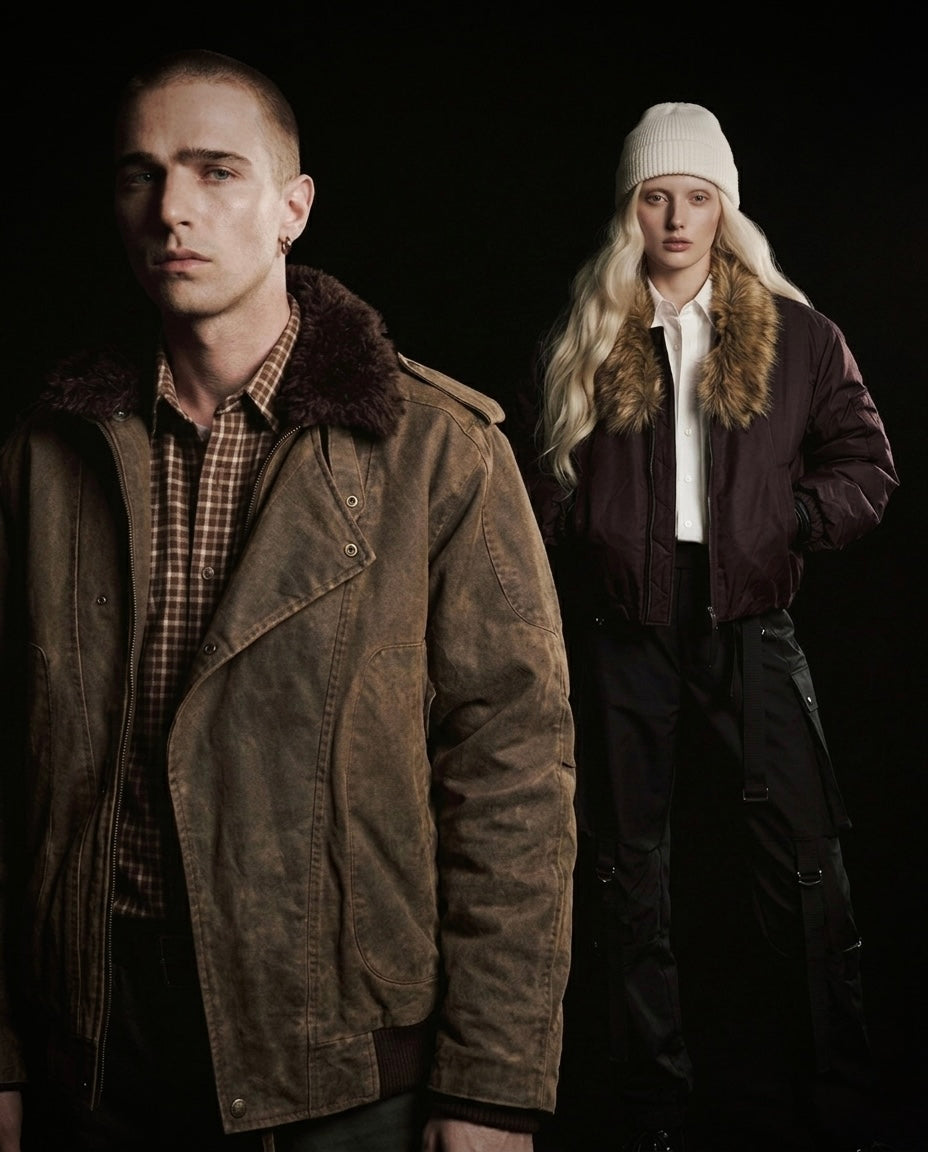
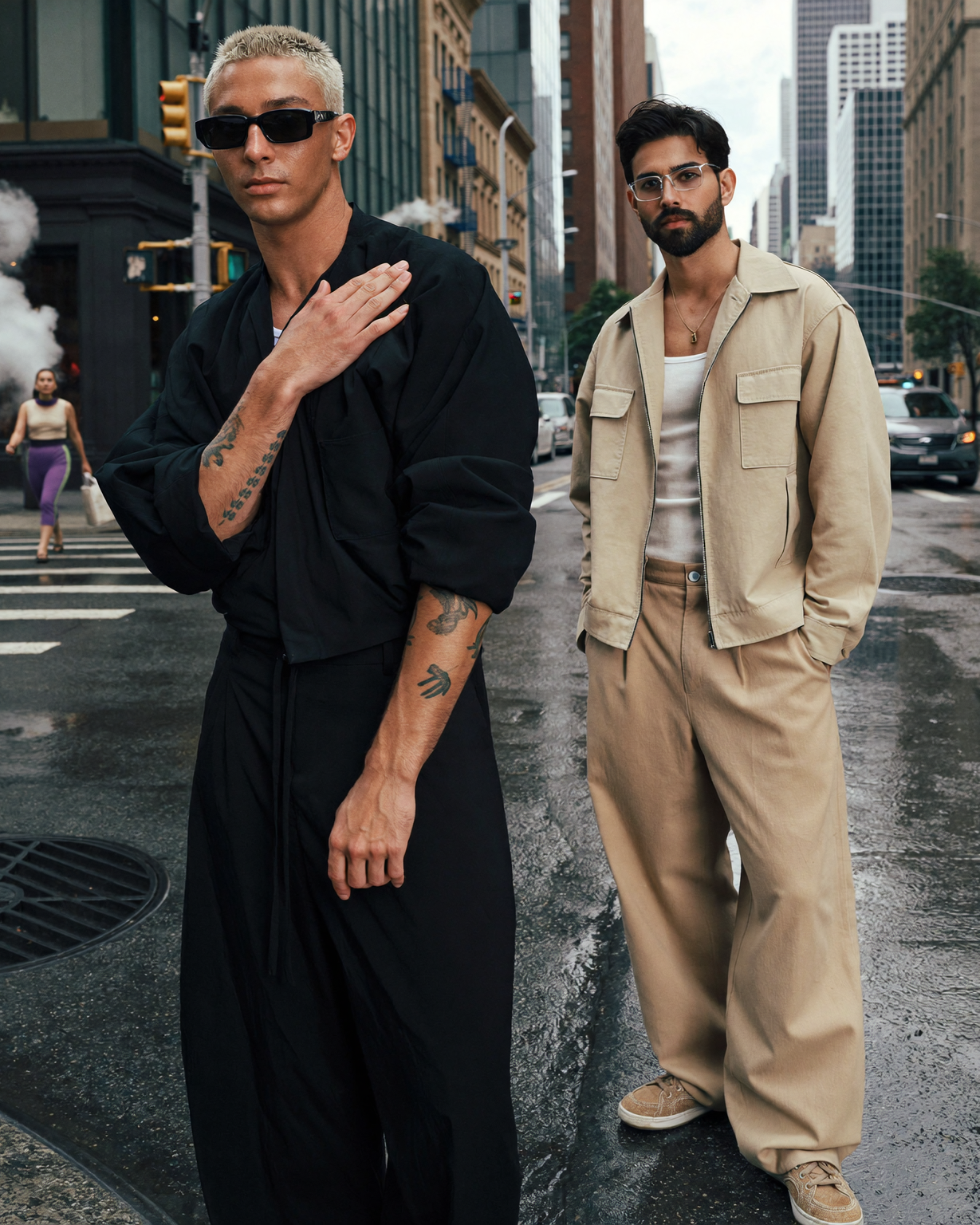

Men's Winter Streetwear Outfits With Knit Cardigans
The cardigan is not the sensible part
Winter streetwear has a reputation for solving weather by adding more of everything: more volume, more black, more pockets, more fabric gathered around the neck. A cardigan offers a quieter kind of complication. It is a layer with a front, an opening and a choice to make: button it, leave it open, or let it sit between those two states while the rest of the outfit gets on with the day. That small amount of negotiation is what makes knitwear useful. It can soften the hard line of denim, sit under a coat without turning the torso into a sealed block, or give a hoodie a less predictable companion.
The five outfits here are not five versions of one uniform. A long dark cardigan and washed, baggy jeans ask for a different balance than a cropped knit over high-waisted denim. A chunky cardigan over a thermal has a different job from a patterned one layered over a hoodie. Those distinctions matter more than a seasonal rule about what “goes” with knitwear. The leading silhouette, the weight of the layers as they actually fit, and the way a trouser hem meets a shoe will decide whether an outfit feels deliberate or merely assembled.
Treat the photographs as studies in proportion, not shopping lists. No single outfit needs to be copied exactly, and a category name cannot tell you whether a particular garment will be warm, comfortable or right for your build. Check measurements, consider what you will wear beneath and above the knit, and judge the whole outfit standing, walking and sitting. Winter clothes should look considered, certainly. They should also let you reach for the train without conducting a private negotiation with your sleeves.
A long line, with room to move

Long dark cardigan, white tee and baggy washed jeans
The first outfit brings together three clear shapes: a long dark cardigan, a white T-shirt and baggy washed jeans. Its appeal lies in the contrast between the cardigan’s extended line and the denim’s width. The white tee gives the dark knit a simple centre; the washed surface of the jeans keeps the lower half from reading as one unbroken dark mass. Nothing here depends on elaborate styling. The proportions are doing the work, which is usually a good sign.
An open cardigan can frame the T-shirt and draw the eye down the front of the body. That vertical opening is useful when the jeans are generous through the leg, because it introduces direction without asking the trousers to become slimmer. Buttoning the cardigan changes the effect: the torso reads more like a single layer, and the waist may feel more defined. Neither option is automatically better. Try both with the jeans on, rather than deciding from the cardigan on a hanger. If fastening it makes the front pull or bunch when you sit, the outfit has offered a practical answer.
The T-shirt is more than a placeholder. Its visible area gives the knit a break and keeps the combination from becoming too enclosed. A neat, relatively simple tee works especially well when the denim has a strong wash or a lot of visual character. Pay attention to its length: a hem that extends far below the cardigan can interrupt the long line and add an accidental third proportion. A small amount of contrast is useful; a second competing hem is not always.
Baggy jeans need a considered relationship with footwear. A hem that rests cleanly over the shoe can make the width feel intentional, while excess pooling can obscure the shape and collect on the ground. A more visible shoe gives the outfit a firmer finish, but the aim is not to force a narrow trouser break onto a loose cut. Check how the denim behaves as you walk. This is a comfortable direction for a weekend, a casual work setting where denim is welcome, or a long day that includes time indoors. The cardigan can come off without leaving an elaborate system behind; the tee and jeans remain a coherent outfit. That test is worth more than an outfit that only makes sense with every layer in place.
A heavier knit, a lighter base

Chunky cardigan, thermal top and black cargo trousers
A chunky cardigan has presence before it is buttoned. Put it over a thermal top and pair it with black cargo trousers, and the outfit becomes less about adding decoration than managing volume. The knit is the largest visual element up top; the cargo trousers bring a different kind of utility below. Keeping the trousers black gives the lower half a quieter field, which helps pockets and seams read as part of the silhouette rather than a second headline.
The thermal is the sensible counterweight. A close, relatively low-bulk base is easier to layer beneath a substantial knit than another loose top, especially at the sleeves and neck. That is a question of fit, not a claim about insulation: the warmth of any particular thermal or cardigan depends on the garment itself and the conditions. Wear the base you would actually keep on indoors, then put the cardigan over it. If the knit pulls across the shoulders, crowds the underarm or makes the sleeves difficult to move, the combination is too much regardless of how convincing it looks in a still photograph.
Cargo trousers already bring volume and detail. Their fit can range from relatively straight to generously wide, so there is no universal instruction to pair them with a particular cardigan length. What matters is where the knit ends in relation to the trouser rise and where the pockets sit. If the cardigan and trousers both feel oversized, look for a point of control: a clearer shoulder fit, a more contained base layer, or a trouser hem that does not swallow the footwear. The objective is not to make every piece narrow. It is to give the eye at least one clean route through the outfit.
Footwear should be chosen after the trouser hem, not as a finishing thought. A shoe with enough visual presence can sit comfortably beneath a substantial cargo leg; a very slight profile may disappear, particularly if the hem falls low. A visible ankle is not required, but the fabric should not drag or fold into an indistinct heap. This outfit suits cold, casual days when the cargo pockets and layered feel are welcome. It is less persuasive when the day calls for a trim, formal line. That is not a failing. Clothes are allowed to have a point of view, and this one does not pretend to be a suit.
The coat does the outside work

Knit cardigan under a roomy black coat with straight jeans
The cardigan under a roomy black coat is a layered argument for restraint. The coat supplies the outer frame; the knit gives the layer beneath it a softer transition; straight jeans keep the lower half legible. That last part matters. Straight denim does not compete for attention in the way a very wide leg might, and it gives the outfit a comparatively direct route from coat hem to shoe.
Room in the coat is practical only when it remains usable. The relevant test is not whether it looks roomy on its own, but whether it can go over the cardigan without compressing the shoulders or trapping the arms. Wear the actual layers together and reach forward, cross your arms, and sit down. A coat that hangs well over a T-shirt may behave quite differently over a knit. If the sleeves bunch or the front strains, sizing up indiscriminately may create excess elsewhere; comparing the coat’s measurements with a layer you already like is a better starting point.
Under the coat, the cardigan has to work as an outfit in its own right. An open front can give the eye a vertical route through the layers, while a closed front creates a more continuous torso. With straight jeans, either can be convincing. The open version exposes more of the base and makes the outfit feel less sealed; a buttoned cardigan can bring more order when the coat is worn open. Consider what happens when the coat comes off in a heated room. If the remaining combination looks complete, the middle layer is earning its place.
Straight jeans are a useful partner here because they neither amplify nor erase the coat’s volume. Their hem should meet the chosen footwear cleanly, with enough room for the leg to fall without collapsing onto the shoe. A more visible shoe can lend definition; a slimmer one may make the outfit feel quieter. This is a strong option for commuting, a day with changing indoor and outdoor temperatures, or an informal evening where a coat is genuinely needed. The limitation is straightforward: a roomy coat over a substantial cardigan can become cumbersome in close quarters. If you spend much of the day carrying the coat over an arm, reduce bulk in the layer beneath rather than assuming another accessory will fix it.
Cropped knit, longer denim

Cropped cardigan, high-waisted baggy denim and boots
The cropped cardigan and high-waisted baggy denim make their proportions explicit. A shorter knit meets a higher rise, and the generous jean leg carries that line down towards the boots. The combination does not need a tucked-in shirt to establish the waist; the relationship between cardigan length and trouser rise already does that. It is a useful reminder that “oversized” is not a single silhouette. A wide leg can be balanced by a shorter upper layer rather than by narrowing the trousers.
The crop changes the cardigan’s job. It does not create the same long, enclosing line as the first look; instead, it gives the denim room to be noticed and keeps the waist area from being buried in knit. Check where the cardigan ends when you move, not only where it falls while standing. Reaching overhead, sitting, or carrying a bag can shift a short layer. The outfit should feel comfortable without requiring constant tugging. If you prefer more coverage, a simple base beneath the cardigan can provide it, but its length and colour will influence the proportions. A long visible hem may interrupt the cropped line; a closer match may keep it quieter.
Baggy denim has enough volume to make the hem an important decision. The boots give the lower edge a substantial counterpart, but the jeans still need to fall in a way that allows the footwear to register. Too much pooling can obscure both; a hem that stops much higher than intended can make the transition feel abrupt. Try the jeans with the boots you plan to wear, because a change in sole or shaft can alter how the leg sits. Tailoring the hem, or choosing a different denim length, often solves more than adding a belt or another layer.
This outfit is a natural choice for informal gatherings, weekends and days when you want room through the leg without losing a sense of shape. It can feel less adaptable under a long outer layer, where the cardigan’s shorter length may disappear and the outfit’s central proportion becomes invisible. That is not a reason to avoid a coat; it is a cue to check the layers together. A coat that can open comfortably may preserve the line indoors and out. The boots add a grounded finish, though a heavier-looking shoe can make the bottom of the outfit more assertive. Let the jeans and the occasion decide how much presence is useful.
Pattern in the middle

Patterned cardigan, plain hoodie and dark jeans
Patterned knitwear already has something to say. A plain hoodie beneath it keeps the conversation from becoming a panel discussion. Dark jeans continue that restraint below, creating a grounded base for the cardigan without asking another garment to compete with its surface. The combination works through hierarchy: one piece carries the visual interest, while the hoodie and jeans give it context.
Layering a hood under a cardigan can be comfortable, but the neck and shoulder area deserve a closer inspection than a mirror shot usually allows. A bulky hood may sit awkwardly beneath the cardigan or bunch when the outer layer is closed. Try the outfit with the hoodie hood resting naturally, then with the cardigan open and closed. If fastening the knit crowds the neckline, wear it open or reconsider the thickness of the hoodie. A plain design helps keep the pattern in focus, but plainness alone does not guarantee a clean fit.
The cardigan’s pattern can also influence what kind of hoodie feels right. A simple, quiet base lets the knit remain the main event; a prominent graphic or another assertive surface can divide attention. That is not forbidden, but it does create a different outfit. For this particular balance, keep the hoodie uncomplicated and make sure its hem does not extend so far below the cardigan that the two lengths appear accidental. The aim is not to conceal the layering, just to make the edges look considered.
Dark jeans are a flexible partner, though their shape still matters. A straight cut can keep the line direct; a looser cut introduces more streetwear volume and asks for a deliberate break over the shoe. Choose footwear for the jeans’ width and the day’s demands rather than assuming dark denim requires a dark shoe. This is an appealing option for a cold evening or a casual meet-up, especially when a graphic-heavy sweatshirt would feel too loud. Its practical tradeoff is that the hoodie and cardigan may both gather around the upper body. Try sitting, reaching and moving your arms before heading out. If the layers shift into a knot at the neck or waist, simplify one of them. A comfortable outfit should not need to be repeatedly rearranged to preserve its good manners.
Proportion is a conversation, not a size label
The five combinations make a useful comparison because each gives the knit a different role. In the long-cardigan look, the opening can create a vertical frame above baggy denim. In the cropped version, the shorter hem sets up the high rise. A chunky cardigan over a thermal needs room in the sleeves and shoulders; a cardigan under a coat must fit twice, first as a garment and then as part of a stack. Pattern changes the equation again, since a patterned knit already draws the eye and may not need a graphic base competing beneath it.
This is why buying the same nominal size across different cuts is not a reliable shortcut. Compare garment measurements with something you own and wear comfortably, paying particular attention to body length, shoulder width and sleeve length. Then think about how much space the garment needs around the layer beneath it. A cardigan worn over a T-shirt may feel right at one size; the same fit over a thermal or hoodie may restrict movement. The point is not to size up by habit. An overly large cardigan can lose its line, and extra sleeve length is not a substitute for ease through the shoulders.
The trousers need equal attention. Baggy washed denim and high-waisted baggy denim may both be generous, but they behave differently because the rise and upper proportions change where the volume begins. Cargo trousers add pockets and seams; straight jeans keep a cleaner path down the leg. Before altering a trouser hem, wear the footwear you expect to pair with it. Check the front, side and back, then walk a few steps. Fabric that looks tidy while standing can catch beneath a heel or collect at the toe in motion. Adjust the hem before adding accessories to solve a problem that is, stubbornly, at the hem.
Let the layer earn its place
A middle layer should work when the outer layer is removed. That is especially important with a cardigan: it is often the piece you see indoors, rather than a detail hidden beneath a coat. Wear a base layer you would be comfortable in on its own, and make sure the cardigan does not depend on the coat to make the proportions coherent. The reverse matters too. If the cardigan will sit beneath outerwear, test the full arrangement. A clean-looking knit can become restrictive when a coat compresses its sleeves or shoulders.
More layers do not automatically mean a warmer outfit. The warmth and weather protection of any garment depend on its actual construction and intended use, neither of which can be read reliably from a styling category. A knit cardigan is not a substitute for an outer layer suited to the conditions simply because the outfit looks winter-ready. Check the garment information, account for the weather where you are going, and choose appropriate protection when needed. The same practical care applies to footwear. Boots may suit a cropped cardigan and baggy denim aesthetically, but comfort, grip and weather suitability are questions for the actual boots, not for the outfit formula.
There is also a difference between visual bulk and usable room. A chunky knit may look substantial yet feel restricted if the fit is wrong; a roomy coat may accommodate layers well, or it may turn every movement into a negotiation. Try the outfit in the actions that matter: walking, sitting, reaching, getting a bag on and off. Winter clothes are worn in motion, and layering has a way of exposing optimistic decisions about shoulder seams.
Choosing what to compare
If you are exploring knitwear, compare shape before colour. A longer cardigan gives more coverage and can frame a tee or thermal, while a cropped cut puts greater emphasis on the trouser rise. A patterned knit takes a more prominent role than a plain one, so consider whether your usual hoodies and T-shirts will support it or compete with it. The Script-X argyle knit cardigan is one reference point for considering a patterned knit in this kind of layered wardrobe. Check its product information and measurements rather than assuming it will sit like the cardigan in a styling photograph.
The same caution applies across a collection. When you Shop OFFCULTURE® knitwear, look at garment photographs and measurements together, and read the care information before deciding. Then compare those details with the trousers and outerwear you already wear. The point is not to assemble an editorial outfit as a matching set; these are separate ideas about proportion, and the pieces shown in a look should not be assumed to be sold together. You can browse compatible separates and build around what you own, starting with the garment whose fit is hardest to substitute.
For more ways to think about knit proportions and removable layers, read our knitwear playbook. If the bigger question is how to add outerwear without losing the shape underneath, the winter layering guide offers a useful companion perspective. In both cases, treat advice as a way to assess your own clothes, not as a promise that one formula will suit every body or forecast.
Questions worth asking before you leave
Can I wear a chunky cardigan under a coat?
Yes, if the coat has enough room over the cardigan at the shoulders, sleeves and chest. Try the complete outfit rather than judging the coat over a thin top. Raise your arms and sit down; if the knit bunches sharply or the coat restricts movement, the combination is not comfortable enough for a full day. A thinner base layer may help, but it cannot correct a coat that is simply too tight.
What trousers work best with a knit cardigan?
Several cuts can work, but they create different proportions. Straight jeans give a cardigan and coat combination a relatively direct line. Baggy denim adds volume and benefits from a deliberate hem over the shoe. High-waisted baggy jeans pair naturally with a shorter cardigan because the rise and knit length meet closer together. Cargo trousers bring extra detail, so a quieter top can keep the outfit balanced. Choose according to the cardigan’s length and your preferred silhouette, not by a rule that one cut is universally right.
Are these outfits warm enough for winter?
Not necessarily. A styling combination does not tell you how warm an individual garment is or whether it protects you from wind, rain or snow. Check product details and dress for the conditions you expect. You may need suitable outerwear over the cardigan, and the right choice will depend on your climate and plans. Treat the five looks as ways to arrange layers, not as guarantees of weather performance.
How do I stop the layers from feeling bulky?
Start with the layer closest to the body. A thermal or T-shirt that fits comfortably beneath a chunky knit is usually easier to manage than a second loose top. With a hoodie, check that the hood and sleeves sit naturally under the cardigan. Then test the outer layer over the complete outfit. If the combination feels crowded, remove or change one layer before adding accessories. Movement is the honest fitting room: reach, sit and walk before deciding.
Wear the idea, not the diagram
A cardigan earns its place by changing the shape of an outfit without making it precious. Let a long knit frame loose denim, give a cropped one room to meet a high rise, or use a patterned layer to make a plain hoodie feel considered. Then check the parts photographs cannot settle: how the clothes move, what happens when a layer comes off, and whether the trousers meet the shoes cleanly. The best winter combination is not the one with the most layers. It is the one that still feels like yours when you step outside.
Read more

A hoodie brings ease; a cardigan changes the shape around it. Across five outfits, from open black knitwear with straight trousers to cropped hoodies beneath long cardigans and layered coats, this ...

A coat sets the longest line in an outfit; everything underneath has to answer it. From long charcoal coat, wide black jeans and slim rollneck to belted coat, high-rise jeans and chunky boots, this...