

Men's Winter Streetwear Outfits Built Around a Black Jacket
You probably do not need another explanation of why a black jacket goes with everything. The useful question is why it looks great with one pair of trousers and strangely flat with another. Usually, the jacket's length, shoulder and surface are making decisions the rest of the outfit has not answered yet.
These men's winter streetwear outfits start with that black jacket and build the entire look around it. A cropped puffer gets a different lower half from a long coat; a plush collar needs a different neckline from a plain bomber. You can repeat the colour while changing the shape and mood.
The five combinations below give you complete outfits, realistic footwear and practical swaps. Choose the jacket suited to your weather first, then use its proportions to guide the layers. The aim is a winter wardrobe you can wear through a normal day, including the part when the jacket closes.
1. Black Cropped Puffer + Wide Black Jeans + Lug Boots

The shorter jacket makes the wide jeans part of the outfit immediately. You see the leg from the waistband down, while the puffer keeps the volume concentrated around the chest. A substantial boot gives that generous lower half a clear place to finish.
Choose jeans that sit securely at the rise you prefer. The puffer may finish high, so check that your base covers the waist when you lift your arms or sit. A close-fitting long-sleeve layer beneath a modest sweatshirt can protect that gap without adding a long visible stripe below the jacket.
Keep the jeans dark but consider a slightly washed finish. It separates them from the black puffer and lets the trouser shape show. A completely flat black set can also work if the jacket and denim reflect light differently enough to remain distinct.
Set the jean hem over the lug boot with a soft break. You want some toe and sole visible from the front, along with enough clearance to avoid stepping on the fabric. If the jeans pool heavily, adjust the length rather than relying on the boot to hold everything up.
Wear a close-fitting beanie if you need it and keep the bag compact. A small crossbody can sit over the jacket without filling the whole chest, provided the strap allows the shoulders to move. Tuck a scarf inside the collar when the garment and conditions make that comfortable.
For a quieter version, use relaxed straight jeans and the same boots. The short jacket still creates a clear waist-to-leg relationship with less fabric below. If your puffer runs longer, try a cleaner trouser line to balance the extra coverage.
This is an approachable starting point for men's winter streetwear because the colour stays simple and the fit does most of the work. Choose the actual insulation and weather protection for your day. The silhouette should remain comfortable when you close the jacket and head out.
2. Black Bomber + Charcoal Knit + Cargo Pants

A black bomber can make a textured charcoal knit look sharper without taking away its softness. Dark cargos bring a relaxed lower half, giving you a familiar streetwear shape with a little more depth than a hoodie-and-jacket combination. Keep the pocket details under control so the knit remains visible.
Choose a bomber with enough sleeve room for the jumper. A shorter hem works well over a knit that ends near the waistband or upper hip. Let a little charcoal show below the jacket if you like the layer, but avoid a deep band that covers most of the cargo pockets.
The knit can carry a modest rib, a subtle pattern or a soft mélange. Keep its neckline comfortable beneath the bomber collar, especially if the jacket closes high. A crewneck often gives the two pieces enough space around the face.
Wear cargo pants with a relaxed thigh and a leg that continues cleanly to the shoe. Black and charcoal keep the palette steady, while a muted grey can add a more visible break. Leave the pockets relatively flat and carry heavier items in a small bag.
Ankle boots give the outfit a firm finish; substantial trainers work for suitable conditions and routes. Check the cargo hem over whichever pair you choose. Tightening every drawcord can make the bottom feel overworked, so use adjustments only where they solve the fit.
Keep accessories simple enough that you can still see the collar and knit. A watch or one ring can add detail near the hands. If you need a scarf, choose a wrap that does not push the bomber neckline into your chin.
Swap the cargos for relaxed work trousers if you want less utility detail, or use a smooth grey sweater when the jacket already carries texture. You keep the same useful relationship between short outerwear, a visible knit and an easy leg. It is a good everyday version of winter streetwear outfits for men who want room without a fully oversized look.
3. Black Leather-Look Jacket + Hooded Sweatshirt + Relaxed Denim

Different finishes keep this familiar combination interesting. A smooth dark jacket over a soft hoodie and washed denim gives each layer a separate role. The jacket supplies the outer shape, the sweatshirt relaxes it and the jeans keep the lower half easy.
Choose the jacket's actual composition and construction with your conditions in mind. A leather-like appearance can come from different materials and does not establish insulation. Use the look for the conditions the specific garment supports, adding suitable protection when needed.
Keep the hoodie moderate in weight so it fits through the jacket sleeves. Pull the hood cleanly outside the collar and check that it does not push the jacket backward. If the neck becomes too crowded, a crewneck sweatshirt can provide the same soft contrast with less bulk.
Relaxed black or faded charcoal jeans work well underneath. A straight leg makes the silhouette cleaner, while a wider cut adds more volume below a shorter jacket. Keep the hoodie hem reasonably close to the jacket hem so the waist does not become a stack of long horizontal bands.
Wear boots you can walk in comfortably, choosing a simpler upper if the jacket carries plenty of zips. Let the jean hem meet the boot without hiding the whole toe. A compact bag can repeat the smooth jacket surface or stay matte for a quieter contrast.
Limit extra hardware to what you actually enjoy wearing. The jacket closure, hood cords and denim pockets already create several points of detail. Check any chain or strap against the garment so it does not catch when you remove the jacket indoors.
Use the hoodie and jeans you already know feel good together, then add the jacket and reassess the lengths. That keeps one part of the outfit familiar while you work on the new relationship. The result suits medium-cold days when the actual layers provide enough comfort, with a clear plan for colder or wetter conditions.
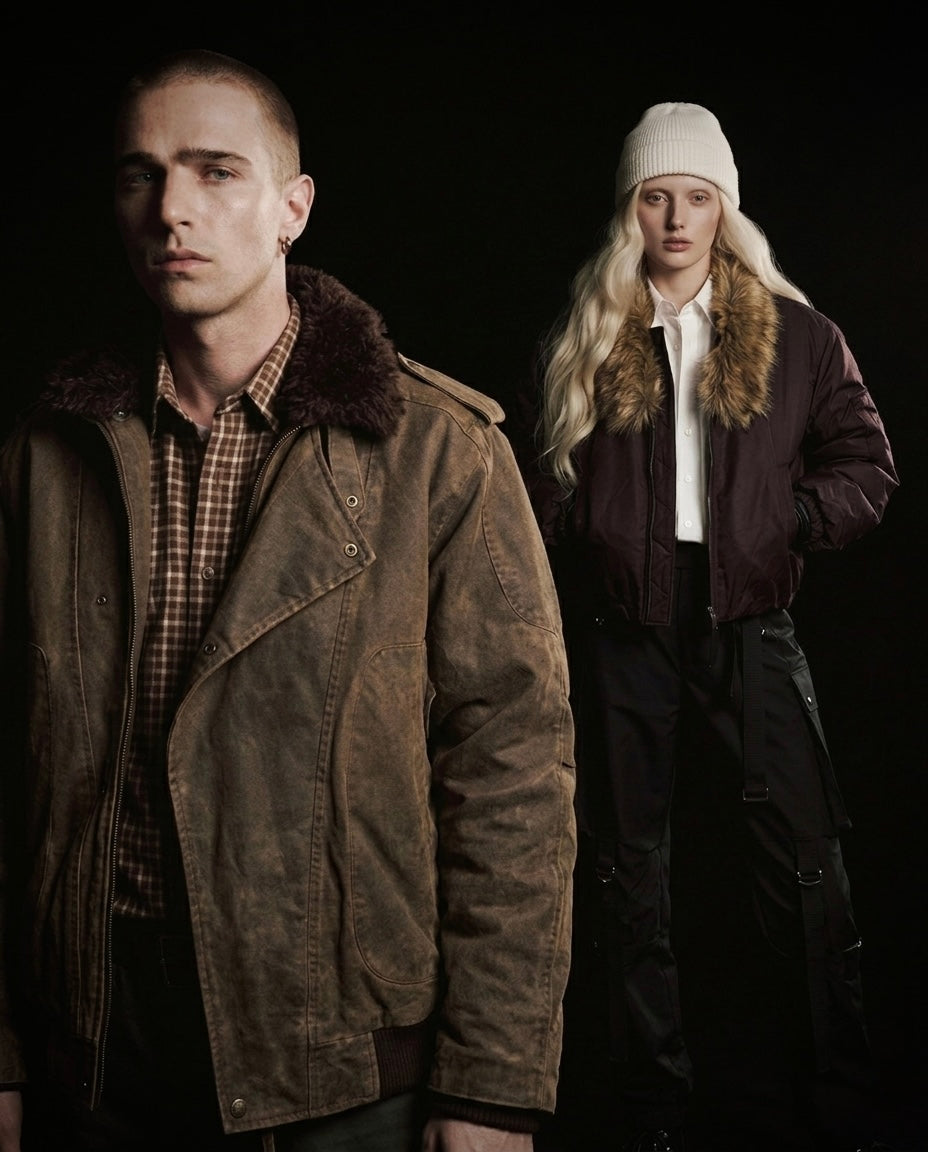
4. Black Fur-Collar Jacket + Washed Jeans + Structured Boots

The collar does the talking here. A black jacket with a plush trim, washed jeans and clean structured boots gives you texture near the face and a relaxed line below. You can leave the rest of the outfit straightforward without making it feel plain.
Choose a smooth dark knit or tee beneath the jacket, depending on the weather and the garment's construction. A modest crewneck lets the collar sit clearly. Check the jacket fastened so you can see whether the inner neckline stays comfortable beneath the trim.
Washed grey or charcoal jeans create a visible break from the black upper half. A relaxed straight or gently wide leg works well when the jacket finishes around the waist. Keep the jeans' distressing restrained if the collar already has a strong texture.
Structured boots give the lower half a firmer ending. A squared or substantial rounded toe can both work, with the jean hem set to reveal enough of the shoe. Choose a sole that supports your actual plans rather than judging it only by how heavy it looks.
Keep the bag strap away from the fullest collar area where possible. A hand-carried bag or a lower crossbody position can let the trim keep its shape. A simple beanie may work for warmth, but you do not need another dramatic texture beside the collar.
OFFCULTURE's Off/Sc Fur Collar Cropped Leather Puffer Jacket is a current candidate for this direction. The catalog specifically identifies faux fur and a PU faux-leather outer. Use those stated details for that garment and compare its measurements with the inner layer you expect to wear.
Swap the plush-collar jacket for a plain bomber and a soft dark scarf if that fits your wardrobe better. Keep the washed jeans and defined boots, and you retain the main tonal and proportion relationships. The combination works well when you want a black jacket to carry an evening look with minimal extra styling.
5. Long Black Outer Layer + Grey Knit + Wide Trousers

A long black coat changes the winter silhouette completely. Instead of concentrating volume at the waist, it draws a line down the body and lets a softer grey knit appear inside. Wide trousers keep the result relaxed, particularly when the footwear stays clear beneath the hem.
Choose a coat suited to your weather, with enough room for the knit through the shoulders and sleeves. Let the grey layer sit comfortably around the neck without filling the coat collar. A simple crewneck or modest mock neck usually keeps the arrangement easy.
Wear black or charcoal wide trousers that fall without catching on the coat's lining. Check the outfit while walking and sitting, especially if the coat has a narrow opening or a strong back vent. You want the clothes to move independently rather than pulling each other into place.
Ankle boots or substantial Derby shoes make a good ending under the long shape. Set the trouser hem to clear the floor and keep some toe visible. A little less stacking often makes the longer coat feel calmer and more deliberate.
Use a bag with a shape that contrasts gently with the soft knit and long coat. A compact rectangle or a simple structured tote can do that without adding colour. Keep the scarf modest if the coat and knit already cover the neck comfortably.
Try the coat closed before judging the outfit. The trousers and shoes still need to create a good lower outline when the grey knit disappears from view. If the result feels too heavy, clean up the trouser hem or choose a slightly narrower leg.
Swap the wide trousers for relaxed straight ones if that suits your day better, or use a cardigan instead of the knit for an extra removable stage indoors. This version of men's winter street style offers a different shape from the shorter jackets above. You can keep the black outerwear habit while giving the rest of the wardrobe a new line to follow.
Choose a Black Jacket by the Job It Will Do
Start with the conditions and the routine. A short jacket may suit frequent sitting and active movement, while a longer coat can give more coverage on a walk. Read the actual insulation, shell and lining information before deciding which piece belongs in your winter rotation.
Think about the layer you will wear most often underneath. If that is a substantial hoodie, check the jacket's sleeve and collar room. If you prefer fine knits, you may want a cleaner outer shape. The right garment should make your usual combination easier to wear.
Look at the jacket's length beside your favourite trouser rise. A cropped hem and a lower-rise jean may expose more waist than you expect when you move. A higher rise or a longer base can solve that, while a different jacket length may suit your preferences more naturally.
Consider how the jacket works with a bag. Strong shoulders, large collars and thick padding can all change where a strap sits. Try the bag over the complete outfit and adjust it before deciding the combination feels comfortable for a long day.
For cold winter outfits for men with a streetwear direction, function comes from the actual garment system. Add appropriate coverage where you need it and keep the silhouette within that choice. A black jacket remains a useful starting point because it can join many outfits, but it still needs to suit the conditions.
Make Dark Layers Visible Through Surface and Length
You can keep most of the palette black without making every piece look identical. Washed denim, a smooth knit and a coated jacket reflect light differently. Use that difference to separate the layers, especially when the cuts are generous.
Place a charcoal knit near the face if you want a softer break beneath a black jacket. Put the tonal contrast in the trousers if you prefer the upper half to stay continuous. You can do both, but choose the strongest change where you want the attention.
Watch the visible inner hem below a shorter jacket. A small strip can show the layering clearly; several long hems can make the waist feel crowded. Try removing one visible layer before adding an accessory to solve the outfit.
When the lower half feels too heavy, check how much trouser gathers over the shoe. A wide leg can look controlled with a cleaner break, while a narrower leg can still look cluttered if it stacks excessively. Length and width work together.
Look at the outfit in daylight and under ordinary indoor light. Black surfaces can merge differently across settings, and a phone camera may lose details your eyes can see. Judge the clothes as clothes first, then adjust the photograph if you want to document them.
Make the Fit Work While You Move
Stand, sit and reach forward in the full layer stack. Check whether the jacket hem rises, the hoodie pulls at the neck or the trousers expose more ankle than you intended. Small adjustments at those points can make the outfit feel much more settled.
Use socks that work with the trouser and shoe when seated. Choose footwear you already trust if the day involves a long walk or queue. A solid-looking boot can still fit badly, and a dramatic sole cannot replace comfort over several hours.
Keep the waist comfortable through every layer. A base, tucked knit and thick belt can all gather in the same place beneath a short jacket. Try a thinner base or a looser tuck if the outfit feels bulky when you sit.
Plan the indoor version too. When you remove the jacket, the knit or sweatshirt should still sit well with the trousers. Check the neckline and hem without the outside layer so you can enjoy the outfit after arriving.
Repeat a successful combination with a small change rather than starting over every morning. A different jean wash, a smoother knit or another shoe can give you variety while keeping a proportion you already trust. That is a useful way to build a winter wardrobe around one black jacket.
For a broader view of the silhouettes behind these combinations, read the main streetwear outfit guide and use the black jacket as your winter starting point.
Let the Jacket Set the Direction
Choose the black outer layer that suits your day, then answer its shape with the trousers and shoes. A short puffer can handle a generous leg; a textured collar benefits from a quieter neckline; a long coat needs a clean ending below. Each choice gives the same colour a different role.
Try the look closest to your existing wardrobe and change only one relationship at a time. Check the jacket closed, sit down and take a short walk in the shoes. The version that remains comfortable through those ordinary movements is the one you will actually wear again.
When you need a different outer shape, compare OFFCULTURE's current jackets with the layers and measurements you already know. Choose for the outfit you want to wear tomorrow.
Read more

You leave in a jacket, spend lunch carrying it and wish you had brought a warmer layer by the time you head home. Autumn likes to turn a simple outfit into a small logistics problem. Getting dresse...

A blazer can look perfectly good and still make you feel as though you should be holding a meeting agenda. Usually, the surrounding pieces are doing that. Change the trouser, the layer at the neck ...