

Winter Streetwear Outfits With Cargo Pants
Winter is a question of proportion
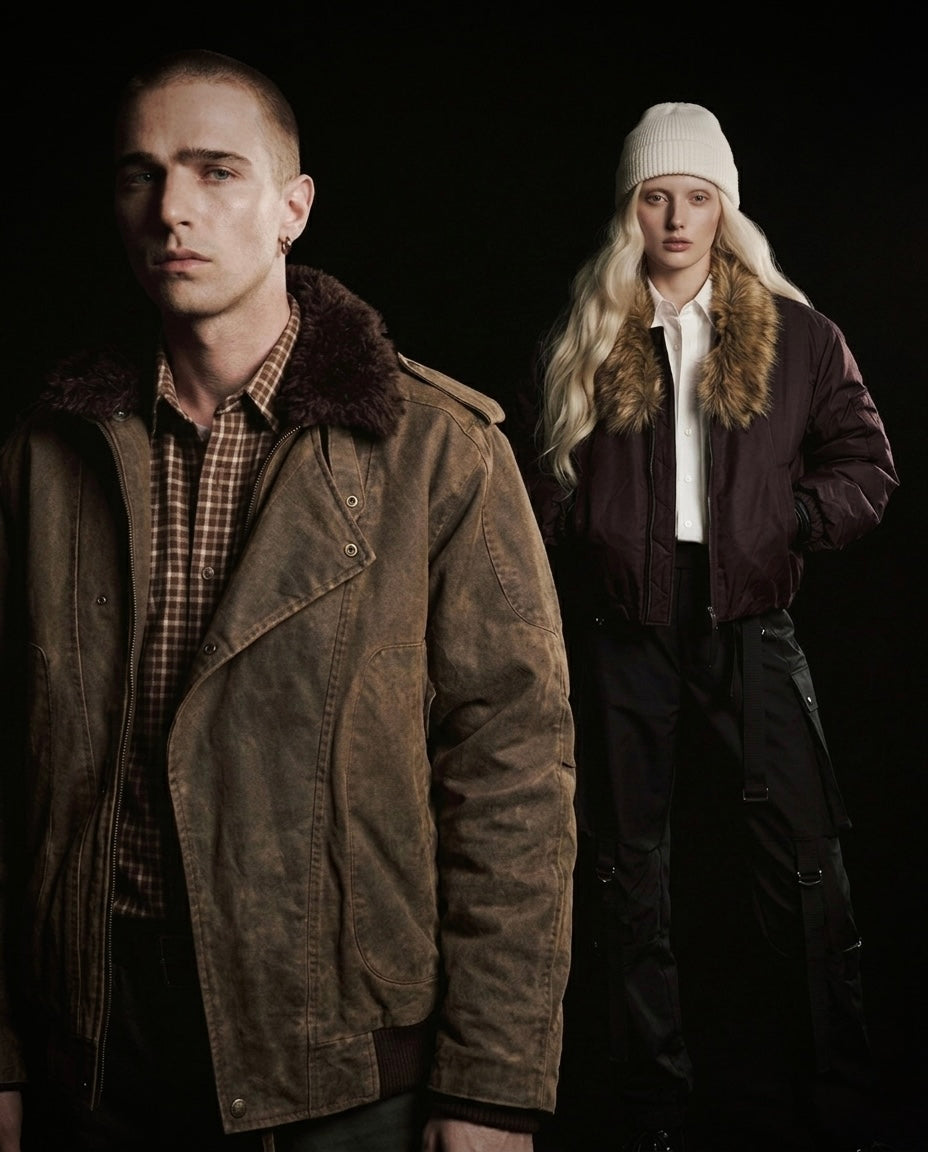
Cargo trousers arrive in winter with a useful contradiction. They are practical in spirit, with pockets that suggest preparedness, but their extra seams and volume can make an outfit feel busy before you have added a coat, scarf, or the weather itself. The solution is not to treat them as a uniform. It is to decide what should lead: a blunt outer layer, a wide leg, a long coat, or a small, deliberate detail. Then give the other pieces a job that does not compete.
That is the logic behind these five combinations: boxy parka, straight cargos and chunky boots; cropped puffer, wide cargos and fine hoodie; black bomber, olive cargo trousers and fitted thermal; long overcoat, clean cargos and leather-look boots; technical-looking jacket, dark cargos and plain knit cap. Each builds a different outline, and each asks for a different relationship between hems, layers and shoes. None needs to be copied literally. The point is to understand how the silhouette holds together when you move, sit, or take off the outer layer.
“Winter” also needs a little scrutiny. A garment’s name or appearance cannot tell you, by itself, how warm or weather-resistant it is. Check the actual product information and dress for the conditions you expect to meet. Styling can make a sensible outfit; it cannot repeal the forecast.
What follows is less a shopping prescription than a way to look at clothes already in your wardrobe. Start with shape, check the fit in motion, and resist the temptation to solve every imbalance by adding another detail. Cargo pockets are already making a persuasive case for themselves.
1. Give the parka room to be boxy

A boxy parka, straight cargos and chunky boots make a convincing cold-weather outline because each piece has a clear boundary. The parka gives the upper body a firm, roomy shape; the straight leg keeps the trousers from ballooning into a second outer layer; and the boots provide enough visual weight to meet the jacket without making the outfit feel top-heavy. The appeal is direct, not delicate. It works for an ordinary day of walking, commuting or meeting friends when ease matters more than a carefully arranged impression.
The useful question is where the parka ends in relation to the cargo pockets. If the jacket hem and pocket placement bunch together, the midsection can look crowded. If the hem falls well above the pockets, the trousers may read as a separate block. Neither is automatically wrong, but the relationship should feel intentional when you look at the whole outline, not only the jacket in a mirror. A straight cargo leg helps here: it gives the eye a relatively calm line below the activity of the pockets and parka.
Under the outer layer, keep enough space for the clothes you actually wear in winter. A thick middle layer can change the parka’s shoulder and sleeve fit, so try the combination zipped or closed as you expect to wear it. If the coat pulls when you reach forward, the problem will not become charming outside. Equally, a very bulky hoodie may gather beneath a boxy jacket and make movement feel restricted. A lighter layer can preserve the coat’s shape, but warmth depends on the actual garments and conditions, not on the silhouette’s apparent toughness.
The boots should have a solid presence, but there is a limit. A substantial shoe gives a straight cargo hem somewhere to land; an especially heavy-looking boot paired with a long, loose break can bury the lower half. Check the cuffs while standing and walking, and keep them clear of wet pavement. The tradeoff is that chunky boots can make the outfit feel more utilitarian than you intended. A cleaner boot would soften it, though it would also reduce the grounded finish that makes this combination work. Choose based on the day, not on an imaginary rule about what cargos require.
2. Let the cropped puffer change the balance

A cropped puffer, wide cargos and fine hoodie reverse the proportions of the parka outfit. Rather than extending the outer line down the body, the puffer concentrates attention around the upper torso and leaves more of the trouser rise and leg visible. Wide cargos can meet that compact jacket with an appealing push and pull: volume below, rounded outerwear above, but with a clear break between them. A fine hoodie acts as a middle layer without necessarily adding the bulk of another heavy sweatshirt. The result suits informal plans where comfort is welcome and a sharper coat might feel overdressed.
The word “cropped” matters because the jacket’s hem becomes part of the outfit’s architecture. It can make the legs look longer by exposing more trouser, but the effect depends on where the hem actually sits on your body and where the trousers begin. Try the puffer with the cargos at their usual rise rather than adjusting everything for a mirror pose. When the hem rides up during movement, a visible layer beneath can be useful; if several long layers emerge at different lengths, the waist area may look untidy. The goal is not a mathematically exact line, only a line that still looks considered when you reach for a bag or sit down.
Wide trousers need a deliberate meeting with footwear. A clean break over the shoe preserves their shape; too much pooling can make the lower half seem heavier than the jacket. Shoes with some visual presence help carry the width, but they need not be exaggerated. A slimmer shoe can work if the trouser length is controlled and the leg does not swallow it. This is a useful place to make a small alteration or choose a hem that suits the shoes you actually wear. The jacket may be the most conspicuous piece, but the trouser-to-shoe relationship decides whether the whole outline feels settled.
There is a practical tradeoff to a short outer layer: it may leave more of the body exposed to wind than a longer coat, depending on its cut and construction. Do not mistake a padded appearance for a guarantee of insulation. Check the garment’s details and consider what the outfit needs for your climate. The fine hoodie can add a useful layer, but it should sit comfortably beneath the puffer rather than crowding the neckline. If its hood bunches, a different middle layer is a better fix than repeatedly tugging at the collar. Keep accessories quiet; the contrast between cropped outerwear and wide cargos already gives the outfit enough to say.
3. Use olive as the point of focus

A black bomber, olive cargo trousers and fitted thermal make a more contained proposition. The bomber supplies a compact, familiar outer silhouette; the olive trousers give the outfit its color and utility; and the fitted thermal keeps the layer beneath the jacket close to the body. Where the first two looks trade in larger shapes, this one relies on contrast: dark against muted green, outer volume against a relatively close base layer. It is well suited to a casual weekday or an evening when a coat would feel unnecessarily formal but a single thin layer would not be enough.
The fitted thermal is doing useful visual work, but fit should not be confused with compression. It should sit comfortably beneath the bomber and allow the arms to move without pulling across the shoulders or torso. A close layer can also keep fabric from bunching beneath a shorter jacket, making it easier to wear the bomber open or closed. If you need more insulation, add a layer that fits the available space rather than forcing a thicker top beneath a jacket that was never comfortable over it. The thermal’s exact warmth, like that of the other garments here, depends on its actual construction and product information.
Olive cargo trousers can draw attention because the color separates them from an all-black upper half. The pockets add further detail, so the jacket and base layer do not need to introduce competing hardware or graphics. A relatively clean bomber keeps the central idea legible. The risk is that a dark top and colored trousers can feel divided at the waist, especially if their lengths collide or the jacket covers most of the pocket area. Try the jacket open and closed. Open, it creates a visible vertical break; closed, it makes the olive leg a more distinct block. Which version works depends on the jacket’s hem and how you prefer to wear it.
Footwear can make this outfit read either more relaxed or more finished. A sturdy shoe reinforces the utilitarian trousers and gives the lower half enough weight; a simpler, lower-profile shoe can make the combination feel less workwear-coded, provided the hem does not collapse over it. In winter, consider the surfaces and conditions you will actually encounter rather than styling for a dry studio floor. This look is the easiest of the five to adapt if you want one recognizable color accent without turning the entire outfit into a color exercise. Its restraint is also its limitation: if you want a dramatic silhouette, the bomber and fitted base may feel too familiar. The trousers then have to carry the interest.
4. Let the overcoat draw a long line

A long overcoat, clean cargos and leather-look boots bring utility into contact with a more composed outer silhouette. The coat sets a long vertical line; the cargo trousers keep the outfit from drifting into conventional tailoring; and the boots make the finish feel deliberate without requiring formal shoes. “Clean cargos” here means letting the trousers read clearly as a shape, rather than piling on extra visual complications. This pairing can move comfortably from a weekday to dinner or an informal event where a bomber feels too casual, yet a full suit would be an unnecessary announcement.
The coat needs room over the layers you intend to wear. Check the shoulders, arms and front closure with the actual middle layer on; a coat that hangs well over a thin top may feel restrictive over a hoodie. When worn open, it frames the outfit beneath and lets the trouser line remain part of the composition. When closed, it simplifies the silhouette and makes the cargo details less prominent. Both are useful, but they serve different purposes. If the coat’s hem and the trouser pockets land close together, look at the whole outfit from the side as well as the front. A long outer layer can cover a lot, but it cannot make awkward bunching disappear.
The boots matter because they give the coat’s length a visual endpoint. A leather-look surface can sit neatly against the more casual character of cargo trousers, though “leather-look” describes an appearance and should not be read as a claim about composition. A boot with some substance helps the hem meet the ground confidently; an overly formal shoe may make the trousers feel like they belong to another outfit. At the other extreme, a very bulky boot can undermine the coat’s cleaner line. Test the combination with the trouser length you plan to wear. A defined break tends to make the relationship easier to read than a hem dragging over the boot.
There is a weather consideration, too. A long coat may cover more of the outfit, but its length alone does not establish warmth or protection. Check its actual specifications, then decide whether the planned layers are enough for the day. The tradeoff is that long outerwear asks for more attention when moving through crowds, getting on public transport or navigating wet streets. In return, it gives a simple cargo outfit a more elongated, considered shape. Keep the rest of the styling fairly quiet and let that contrast do the work: not “utility meets tailoring” as a slogan, but a practical trouser worn with a coat that changes its register.
5. Keep the technical mood understated

A technical-looking jacket, dark cargos and plain knit cap make the most pared-back outfit of the five. The jacket suggests a functional direction; the dark trousers keep the lower half visually continuous; and the plain cap gives the head a small, soft finish without introducing another loud graphic or shape. It is an easy formula for errands, travel or an outdoor day when you want the outfit to feel considered but not precious. The dark palette also makes the cargo pockets less insistent than they might be on a contrasting trouser.
“Technical-looking” is a styling description, not a performance promise. The appearance of a jacket cannot confirm that it is waterproof, wind-resistant, insulated or suitable for a particular temperature. Check its actual product information and dress accordingly. That distinction is especially useful when an outfit looks ready for difficult weather: a visual cue is not a substitute for a useful garment. If the jacket is lightweight, the outfit may need a warmer middle layer; if its fit is close, that layer must not make the sleeves or shoulders uncomfortable. A plain knit cap may add coverage, but it does not solve the rest of the weather equation.
Dark cargos let the jacket lead, but pocket placement and trouser volume still affect the silhouette. With a roomier leg, a controlled hem keeps the shoe visible enough to anchor the look. With a straighter cut, the footwear can show more clearly, creating a slightly sharper finish. Choose shoes for the surfaces and distance involved: a practical day outside may call for a more substantial sole, while a city day with little walking can take a cleaner shape. The point is not to assume that a technical jacket requires a particular kind of boot. It is to keep the proportions coherent and the choice useful.
The knit cap should be plain in the sense of being uncomplicated, not necessarily invisible. Its simplicity prevents the headwear from competing with the jacket’s functional cues and cargo pockets. If the jacket already has a high collar or hood, check how the cap and neckline sit together; crowded layers near the face can make a clean outfit feel fussy. This is the easiest look to adjust with what you own, and the easiest to make too anonymous. A small difference in trouser break, jacket length or footwear can give it character without adding ornament. Keep the changes purposeful, especially if the rest of the outfit is already dark.
The fit has to survive the walk home
The mirror is a useful starting point, but winter outfits need a more demanding fitting room. Raise your arms, sit, walk a few steps and close the outer layer over the clothes you plan to wear underneath. A shoulder that feels fine standing still may pull when reaching forward; a trouser hem that appears neat at rest may catch under a shoe when walking. These are not obscure technicalities. They determine whether an outfit stays comfortable after the first five minutes, which is longer than many mirrors can promise.
Start by choosing the leading silhouette. In the parka outfit, the outer layer is broad and the straight leg steadies it. With the cropped puffer, the shorter top and wide trousers are meant to share attention. The overcoat makes a long vertical line, so the trousers and boots should not become an unrelated pile at the bottom. Once that principal relationship is clear, adjust one thing at a time. If the outfit feels bottom-heavy, check the trouser length and shoe before reaching for a different hat. If the upper half feels crowded, reduce or change the middle layer rather than adding a scarf to the problem.
Cargo pockets are part of the fit, not decoration floating above it. Their position and volume affect the line through the hip and thigh, particularly beneath a jacket hem. When trying trousers, look at how the pockets sit standing and in motion, and check whether the fabric pulls when you use them. A pocket filled with a phone, keys and other everyday objects will hang differently from an empty one; consider what you will carry rather than assessing the trousers only in a showroom pose. If a pocket distorts the whole leg when used, that is useful information, not a personal failure to style it correctly.
Trouser length deserves the same attention as jacket length. A straight leg can show more of a boot and make the footwear feel intentional. A wide leg can work with a fuller shoe, provided the hem lands cleanly instead of collecting on top of it. There is no universal break that suits every cut, height or shoe. Compare the trousers with the pair you expect to wear most often, then consider whether the hem works with other footwear you own. This is one reason the same nominal size can behave differently from one cut to another: fabric, rise and leg shape change how the garment hangs. Check measurements where available rather than trusting a category name.
Layering should be tested as a system. The inner top should remain wearable when the coat comes off, particularly in a heated room or on public transport. The middle layer should fit beneath the outerwear without bunching at the neck or cuffs. If the outfit only looks coherent with every layer on, it may be relying too heavily on the coat. That can be entirely fine for a short, cold journey, but less practical over a full day. Also check the garment’s actual care and weather information. A thick appearance, a technical-looking finish or a long hem tells you something about style; it does not certify insulation, water resistance or durability.
Where to begin, and what to compare
If the appeal is a curved, roomy cargo shape, the washed multi-pocket curved cargo pants offer a specific silhouette to consider. Compare the listed fit, measurements and garment details with the way you want the trousers to fall, especially if you plan to wear them with boots. A curved leg will not behave exactly like a straight cargo or a wide one; the jacket length and shoe you pair with it matter. The name gives you a useful starting point, not a guarantee that the shape will suit every body or every outfit.
You can Shop OFFCULTURE® streetwear or browse compatible separates while thinking in terms of pieces rather than a preassembled look. The combinations in this article are styling ideas, not claims that each exact outfit is sold as a set. Check product images, measurements, material details and care information before deciding whether a garment can do the job you have in mind. When comparing trousers, note the rise and leg shape as well as the stated size. When comparing outerwear, consider what you need to fit beneath it and where its hem will land over your chosen bottoms.
For a closer look at how cargo, baggy denim and leather-look trousers change the outfit around them, consult our trouser and denim guide. For a broader discussion of balance, seasonal dressing and the relationship between essential pieces, the streetwear silhouette guide is a useful companion. The most valuable comparison is still the one you make in your own wardrobe: try a coat over your usual middle layer, then see whether the cargos and footwear hold their shape together. A reference can sharpen your eye, but it cannot take the walk for you.
Questions worth asking before you leave
What is the first decision when styling winter streetwear with cargo pants?
Decide which piece leads the silhouette: the jacket, the trousers or the long line of a coat. Then balance the other shapes around it. A cropped puffer and wide cargos can share volume because their proportions contrast; a boxy parka usually benefits from a straighter leg; a long overcoat can make a clean cargo shape feel more composed. After that, check the hem against the shoes. It is a more useful first move than adding accessories at random.
Which cargo shape works best in winter?
There is no single best cut. Straight cargos are relatively easy to pair with a boxy jacket and substantial boots. Wide cargos create a more pronounced shape, particularly under a cropped puffer, but need a considered trouser break. Cleaner, less visually crowded cargos suit a long overcoat when you want the coat’s line to remain clear. Compare measurements and try the trousers with the footwear you expect to wear; the same label size does not guarantee the same drape across different cuts.
Are these outfits warm enough for winter?
Not automatically. The outfit descriptions explain silhouette and styling, not verified insulation or weather performance. Check the details of each garment and layer for your local conditions. A puffer-shaped jacket is not, by appearance alone, proof of a particular warmth level; a technical-looking jacket is not necessarily waterproof. If you are unsure, prioritize the garment information and the forecast over the visual impression.
What shoes work with cargo trousers?
Choose shoes in proportion to the leg and useful for the ground you will cover. A chunky boot can anchor a straight or wide cargo, while a cleaner boot can make the long-coat combination feel more refined. A slimmer shoe can also work with a wide leg if the hem is controlled. Try the full outfit standing and walking: the right choice is the one that supports the trouser line without being swallowed by it or overpowering it.
Can the same cargos work with different coats?
Yes, if the cut and length cooperate. A single pair can look more utilitarian under a parka, more relaxed with a cropped puffer, or more deliberate beneath a long overcoat. The middle layer may need to change with the coat, especially around the shoulders and neckline. Think of the trousers as a consistent base, not a fixed uniform; altering the upper silhouette and footwear can shift the whole outfit’s character.
Wear the idea, not the photograph
The strongest winter cargo outfit is rarely the one with the most pieces. It is the one whose lengths, volumes and footwear make sense together, and that still feels comfortable once you stop posing. Start with the clothes you will actually wear, check how they move, and let one clear silhouette do the talking. The pockets have already volunteered for enough.
Read more

The blazer leaves office styling behind in five pairings: vintage tee and faded jeans; a cropped jacket with wide trousers and low sneakers; an oversized cut with a tank and cargos; a hoodie beneat...

Without a tie, the blazer’s neckline can come from a rollneck, heavy tee, cream sweater or mock neck. The five combinations range from charcoal tailoring and boots to a relaxed black blazer with de...