

Winter Jacket Outfits by Hem Length and Collar Shape
The jacket you wear most often can make half your wardrobe feel wrong. The jeans suddenly look too narrow, the knit bunches at the shoulder and your favourite shoes disappear under a different hem. Usually, the jacket has changed the proportions and the rest of the outfit has not caught up.
These winter jacket outfits start with that outside shape. A cropped puffer, a plush-collar jacket and a long coat each ask for a different relationship with trousers and layers. Once you understand the relationship, you can stop trying six bottoms before leaving the house.
You will find five complete combinations here, with practical alternatives for pieces you already own. The focus stays on how the jacket changes the outfit, including what happens when you close it. Pick the silhouette that suits your day, check its actual construction for the weather and give the lower half a little attention.
1. Cropped Puffer + Relaxed Black Denim + Lug Boots

A cropped puffer gives wide denim some breathing room. By ending around the waist or upper hip, the jacket leaves more of the trouser visible and makes the whole outfit feel less bundled. You get a clear change in shape between the padded torso and the falling leg.
Start with black jeans that sit comfortably at your natural chosen rise. The waistband should remain covered when you move, even if the jacket finishes high. A slightly longer fitted base can protect that space without creating a broad stripe beneath the puffer.
Choose a modest sweatshirt or fine knit underneath. When the outside garment already carries volume, a very thick hoodie can crowd the sleeves and push the collar forward. Try the jacket fastened with the inner layer before deciding that the size works.
Lug boots give the relaxed denim something solid to land on. Let the jeans make a soft break over the upper rather than gathering in several folds around the sole. A heavy boot works visually here, but check grip and comfort separately from the appearance of the tread.
Keep the accessories close to the body: a compact bag, gloves you can use and a simple beanie if you need one. A long loose scarf can blur the cropped jacket's clean outline. Tuck it inside when the neckline allows, or choose a shorter wrap that stays secure.
If your puffer reaches the hip, keep the denim relaxed but reduce the width slightly. If you own straight black jeans, wear those and let the jacket do more of the work. A cropped shape is one option for the relationship, rather than a requirement to replace an otherwise useful coat.
Try this combination for a day involving walking, errands and time indoors. The puffer carries the outside look, while the simple knit and denim remain complete after you take it off. That gives you an outfit with a practical second chapter.
2. Fur-Collar Jacket + Fitted Knit + Wide Trousers

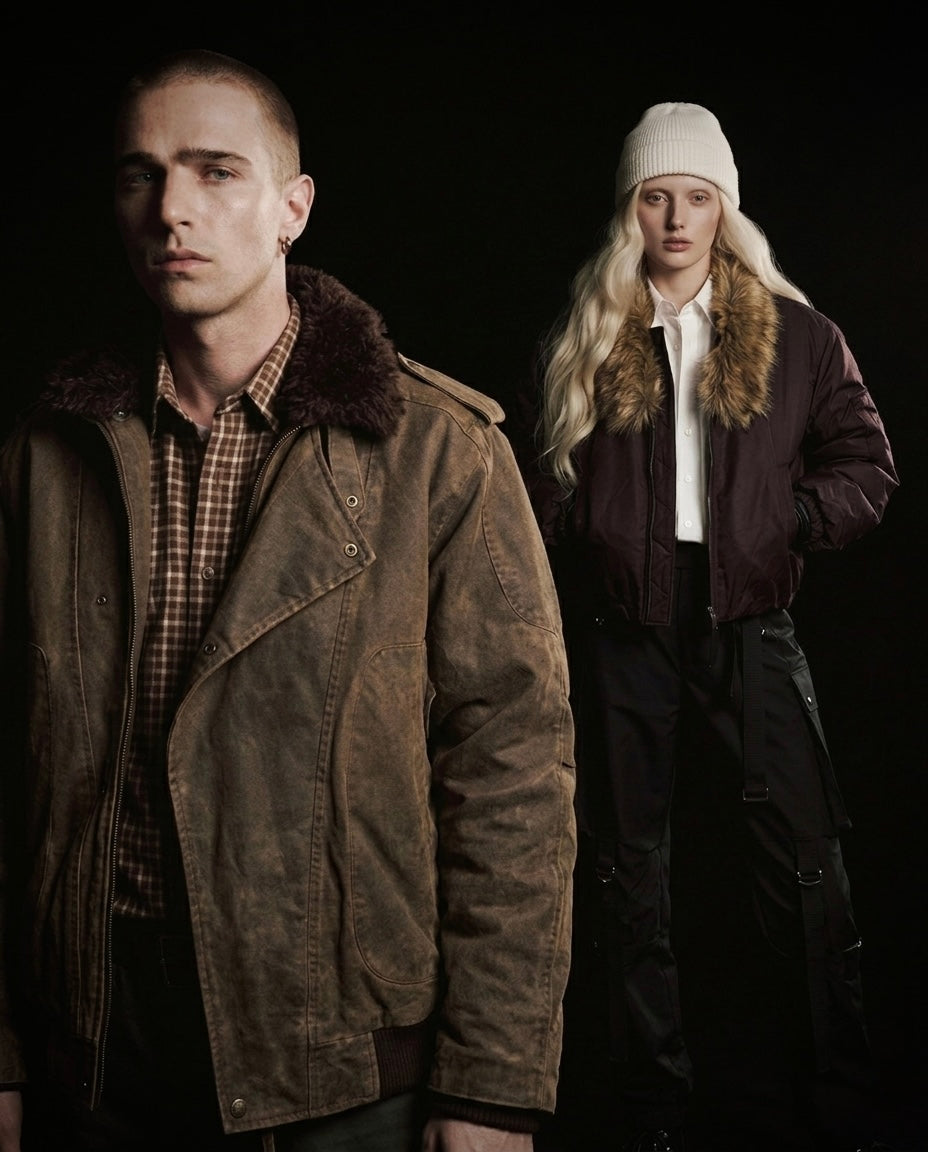
A plush collar changes the mood before you add a single accessory. It brings texture near the face and makes a simple trouser-and-knit combination feel more considered. Give the collar room to do that work instead of surrounding it with other bulky details.
Wear a smooth, relatively fitted knit under a cropped or upper-hip jacket. A crewneck or modest mock neck usually sits cleanly beneath a broad collar. Pick black wide trousers with a drape that contrasts with the jacket's more substantial outline.
Check the waistband with the jacket both open and closed. If the trouser has deep pleats, make sure the jacket hem does not sit directly on their fullest point. A small difference in rise or jacket length can help the fabric fall without pushing outward.
Boots with a square or rounded substantial toe suit the wider hem. Keep enough of the toe visible to define where the trousers end. A slimmer ankle boot also works if the trouser hangs cleanly over it, particularly when you want the outfit to feel quieter.
Use a short shoulder bag that stays below the collar or carry a small bag by hand. A wide strap crossing the textured area can drag it out of shape. Keep necklaces simple and avoid adding a second dramatic neckline unless you enjoy the extra volume.
OFFCULTURE's Off/Sc Fur Collar Cropped Leather Puffer Jacket gives you a relevant reference for this combination. The catalog specifies a PU faux-leather outer, padded lining and faux-fur collar. Those are garment details, rather than a promise that every jacket with a similar surface offers the same warmth.
For winter jacket outfits for women, men or anyone building a shared wardrobe, fit matters more than the label on the category page. Compare the shoulder, sleeve and chest measurements with the knit underneath. You can recreate the same balance using a plain-collar bomber and a textured scarf if that is what you own.
3. Dark Leather-Look Jacket + Heavy Knit + Soft Trousers

The appealing part of winter outfits with a leather jacket often comes from the difference between surfaces. A smooth dark exterior makes a substantial knit feel softer and gives relaxed trousers a firmer outline. The appearance works even when the actual jacket material differs, so read the specific composition before buying.
Choose a jacket with enough room for the knit at the upper arm. A roomy chest does not help much if the sleeve squeezes the jumper into ridges. Try reaching across your body and bending your elbows before deciding the layers fit together.
Keep the knit's hem close to the jacket hem or let it extend just a little below. A long, thick jumper under a very short jacket creates a larger visual band around the hips. That can work, but it deserves a deliberate choice rather than a last-minute compromise.
Soft dark trousers balance the jacket's sharper finish. Pick a pair with enough room through the seat and thigh to stay comfortable with a tucked base layer. If you choose a wool-like appearance, check the composition rather than assuming the look tells you the fiber.
Wear ankle boots that disappear neatly under the trouser, with socks covering the leg when you sit. A dark brown jacket can work beautifully with charcoal trousers and a black knit if you repeat the warmer tone in a small bag or belt. You do not need a perfectly matched set of accessories.
This combination suits conditions where the particular jacket and knit provide enough coverage. Add a suitable outer coat or choose a different jacket when they do not. A glossy surface cannot supply insulation just because it looks sturdy in a photograph.
Swap the heavy knit for a finer one plus a comfortable base if the sleeves feel crowded. You keep the soft-versus-smooth contrast with less bulk. The best oversized leather-look jacket outfits for winter leave space for movement as well as the layers you can see.
4. Statement Deconstructed Puffer + Plain Cargo Pants

When the jacket has an asymmetric closure or an unusual shoulder, let the trousers stay easy to understand. A statement puffer already gives the outfit a focal point. Plain cargos add a useful lower shape without competing for attention at every seam.
Start with a dark base layer and a simple knit or sweatshirt. Choose cargos with a relaxed leg, restrained pocket volume and minimal extra straps. A black, charcoal or muted grey palette lets the jacket's construction show clearly, especially if it has a diagonal front.
Follow the garment's intended closure rather than inventing a more dramatic arrangement. A puffer that pulls across one side may simply need a different size or a thinner layer underneath. The shape should let you breathe, reach your bag and sit down without constant adjustment.
Keep the trouser waist and upper pockets relatively clear. If the jacket finishes at the hip, overfilled cargo pockets can prop its hem outward. Carry heavier essentials in a small bag and let the pockets contribute their shape without becoming storage compartments for the whole day.
Choose a substantial boot or a simple closed trainer suited to the conditions. A very busy shoe can take attention away from the outerwear, while a tiny low-profile shoe may disappear under the trouser. Check the complete silhouette from a few steps back rather than judging each garment separately.
OFFCULTURE currently lists the Script-X Deconstruct Crop Puffer as an active product, with an asymmetric front noted in its description. Treat it as a candidate for this styling direction and compare its actual measurements with your intended layers. The full outfit does not depend on buying a matching set.
If you already own an unusual jacket, try it with your plainest dark trousers first. Add only the accessory you need, such as a small crossbody bag or a practical hat. You will see the jacket more clearly and spend less time persuading the rest of the outfit to cooperate.
5. Oversized Long Coat + Hoodie + Boots

A long coat gives you a different kind of presence from a short puffer. Its uninterrupted line can bring a relaxed hoodie and trousers together, especially when you want coverage without a highly padded outline. The important part is room through the shoulders and sleeves.
Choose a hoodie with a relatively manageable hood and a hem that sits within the coat. Wear relaxed straight or wide trousers underneath, keeping the waistband comfortable when you sit. Dark grey beneath black creates enough separation to see the layers without changing the mood.
Try the coat with the hoodie hood out and then tucked inside if the collar allows it. Keep whichever version lies comfortably and does not pull the neckline backward. There is no styling prize for a hood that keeps pushing the coat away from your neck.
Lace-up boots provide a solid ending under a long coat, while a clean Chelsea boot can make the same outfit feel slightly sharper. Adjust the trouser length to the actual shoe. A change of sole height can turn a controlled break into a hem that drags through water.
Make sure you can use the coat's pockets without lifting the hoodie awkwardly. If the coat has a belt, try a loose knot or wear it open indoors, but close the garment outside whenever your conditions call for it. The outfit should remain coherent when the front disappears.
For a wardrobe-friendly alternative, use a coat you already wear for work and change the trousers and shoes. The hoodie shifts the tone immediately. A plain crewneck sweatshirt works if the collar becomes crowded, keeping the relaxed note with less fabric around the neck.
This is a good route for days that move between a commute, a meal and a late trip home. You get a proper outside layer and a comfortable outfit underneath. Choose the coat's construction for those conditions, then enjoy the longer shape it gives the clothes you already like.
Choose Jacket Length Before Choosing Another Pair of Trousers
A jacket ending at the waist exposes more of the leg; one finishing around the hip adds another block of fabric above it. Neither automatically looks better. The useful question is whether you like where the hem divides the outfit and whether it works when you move.
Try a cropped jacket with a higher-rise trouser if you want continuous coverage at the waist. Try a hip-length jacket with a cleaner trouser leg if the lower half feels crowded. For a long coat, look at the trousers below the coat hem as well as the outfit with the coat open.
Avoid changing three variables at once when something looks wrong. Keep the jacket and shoes, then try one different trouser width. If that helps, you have learned something you can repeat rather than arriving at a good outfit by accident.
Use the side view to assess the jacket's back hem. Some shapes sit higher at the front, and a front-facing product image can hide that difference. Check whether the back clears the seat, catches on a bag or gathers above the waistband.
Your preferred length may also depend on what you do all day. A very long coat can feel awkward when you cycle or climb into low seats. A short jacket can expose your lower back when you reach forward, so test the movement your routine actually involves.
Read the Construction Before Making a Warmth Decision
The word winter appears in plenty of outfit descriptions, but the garment needs to earn the job in your own climate. Read the stated shell, lining and insulation information, then check closures, cuffs and coverage. If a listing leaves a detail unclear, ask before treating it as a cold-weather staple.
Down, synthetic padding, a soft lining and an unlined shell describe different constructions. The exterior appearance alone cannot settle which one suits your day. A jacket with a substantial collar may still leave the body lightly insulated, while a smooth minimal coat may hide a more substantial interior.
For winter outfits with a down jacket, check the actual product specification rather than borrowing the term from a similar-looking puffer. Avoid assuming that every padded garment contains down. That small distinction keeps both your shopping decision and your expectations grounded.
Check the care label before choosing a piece you expect to wear constantly. A surface finish, a plush trim and a tailored construction may require different treatment. You want a jacket you can maintain within your routine, with enough time to dry or rest between wears when necessary.
If you carry a bag daily, consider where the strap will rub. Coated surfaces, textured collars and raised details may react differently to repeated friction. Look for care guidance from the maker and choose a bag position that leaves the garment comfortable on your body.
Make One Jacket Work Through Several Occasions
Keep the jacket and change the layer nearest the face first. A hoodie gives a long coat a relaxed feel, a fine knit makes it quieter and a plush collar over a simple crewneck creates a stronger evening frame. You can change the mood without rebuilding the whole wardrobe.
Next, change the trouser finish. Washed denim makes a structured jacket feel easier; smooth tailoring brings a puffer into a more considered combination. Keep the fit relationship you already know works, so the change adds variety without creating another proportion problem.
Finally, think about the footwear your plans require. A concert, an outdoor queue and a seated dinner can all begin with the same jacket, but the shoes may need to change. Plan the hem around the most demanding part of the day and carry a smaller bag when the venue calls for it.
For winter outfits with a brown jacket, use charcoal or black as a steady base and repeat brown only if it helps. Black winter jacket outfits can take more contrast in the denim or knit. Both approaches work because the outerwear stays connected to the clothes beneath it.
If you are still deciding which kind of jacket belongs in your wardrobe, use the jacket-type outfit guide to compare the broader categories before choosing the proportions here.
Give Your Jacket a Better Supporting Cast
Choose the jacket for its real job, then style around its length, volume and neckline. A cropped puffer likes a clear waistband relationship; a textured collar benefits from a simple knit; a long coat needs enough room for the layers that make it useful. Those decisions travel across brands and budgets.
Try your most-worn winter jacket with one of the five combinations before buying another piece. Close it, reach for your bag and check the trouser hem over the shoes. If one part feels wrong, change that part first.
When you do need something new, start with the missing shape in your wardrobe. OFFCULTURE's outerwear can provide a focal point, while your existing denim, knitwear and boots supply the rest of the outfit.
Read more

Winter has a way of turning a good outfit into a zip, a scarf and two eyes. You choose the right trousers, get the hem exactly where you want it, then add the only coat that keeps you comfortable a...

An oversized sweater should feel generous. That is the whole attraction: room through the body, sleeves you can settle into and enough drape to make ordinary trousers interesting. The trouble start...