

Winter Layering Outfits for Men With Baggy Pants
Winter Layering Outfits for Men With Baggy Pants
Baggy trousers change the arithmetic of winter dressing. They occupy more space around the legs, interrupt the line between body and shoe, and make every hem in the upper half feel more consequential. Add a hoodie, knit or padded jacket and the question is no longer simply whether each piece looks good on its own. It is whether the outfit has room to move, a clear centre of gravity and enough distinction between layers to look intentional rather than accumulated. The best starting point is not a rule about slim tops or matching colours. It is a decision about which part of the silhouette should lead.
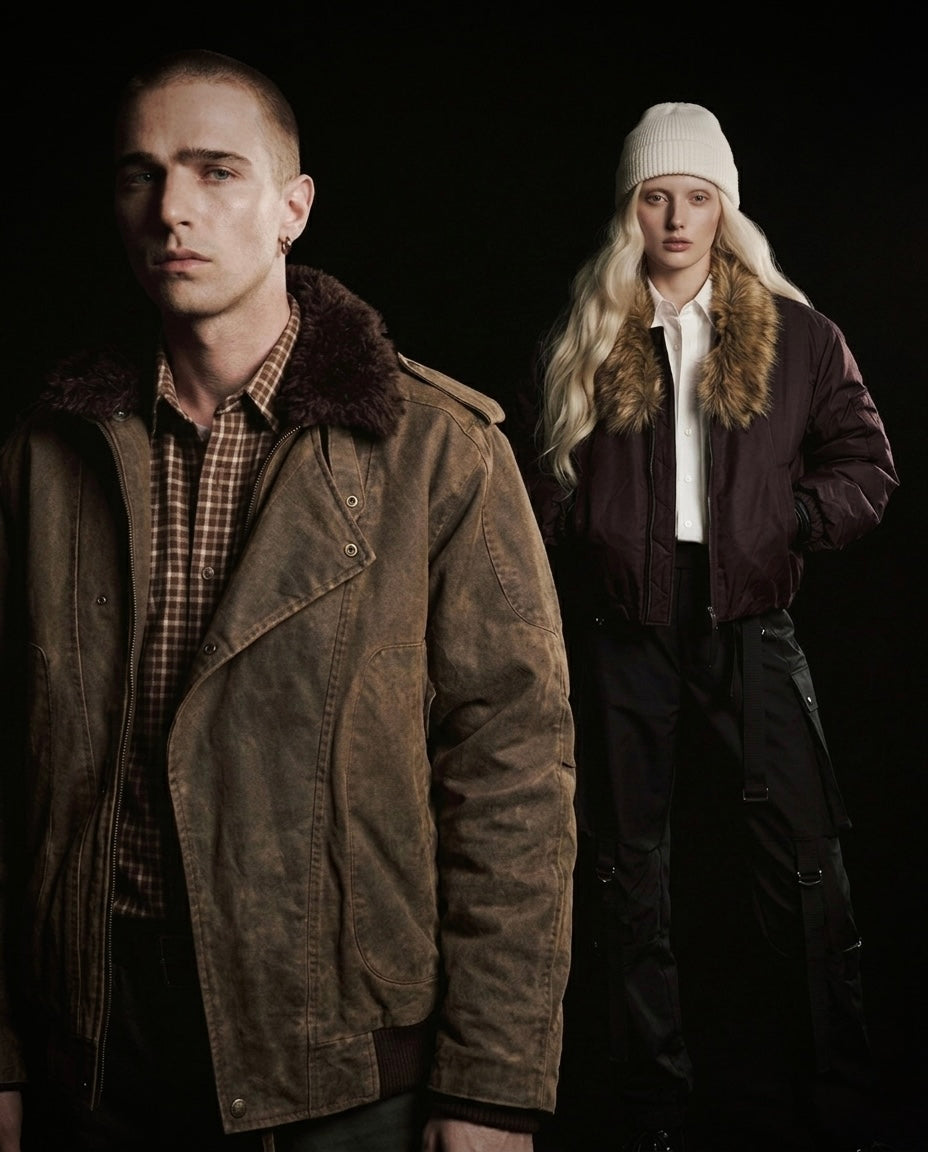
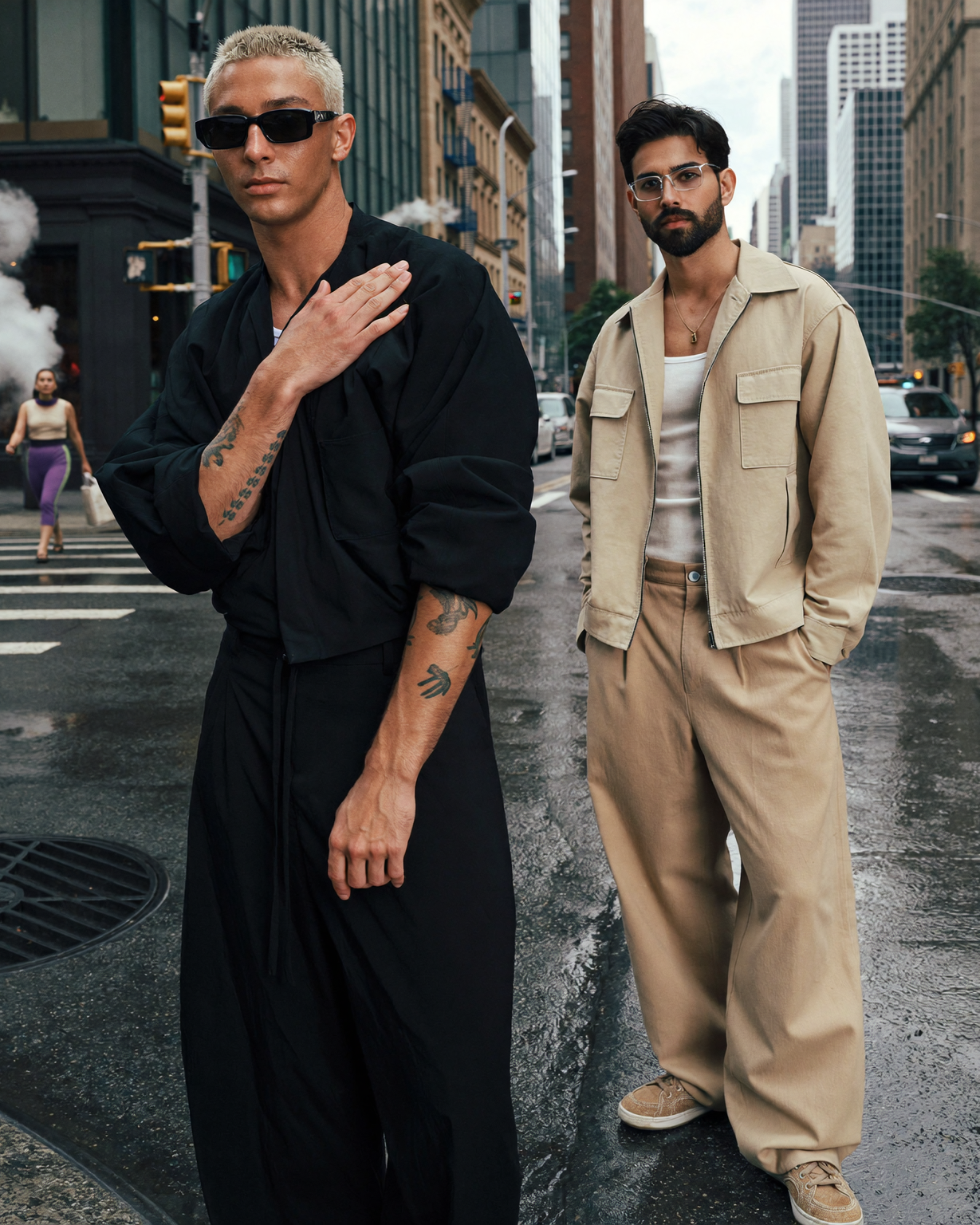
The five outfits here take different routes through that decision: a compact jacket lets denim speak; a long coat gives wide legs a strong vertical counterline; a boxy bomber makes utility the focus; a short puffer concentrates volume above the waist; and an overshirt with a cardigan builds a quieter, more adjustable outline. None is a fixed uniform. The point is to notice what each combination asks of the pieces around it, then adapt those proportions to the clothes, weather and movement your actual day requires.
Begin with the layer closest to the body, but judge the result from head to toe. A thin knit that sits cleanly beneath an open coat can become bulky under a tightly cut jacket. A generous trouser leg may look balanced with a substantial shoe, yet swallow a low-profile sneaker if the hem is too long. And a coat that seems right while standing still can pull across the back once you reach forward or carry a bag. Check shoulder seams, sleeve reach, outerwear length and trouser break together. The goal is not to eliminate volume. It is to decide where the volume belongs.
Winter also asks for honesty about function. A photograph cannot tell you whether a garment is warm enough, water-resistant or comfortable over the layers you plan to wear. Those qualities depend on the specific piece, its construction and your conditions. Treat the looks as proportion studies, not claims about performance or matching sets. For more background on choosing leg shapes and outfit balance, see our trouser and denim guide. The useful question throughout is simple: when you add another layer, does the silhouette become more deliberate, or merely larger?
Five Ways to Build the Outfit
1. Compact insulated jacket, black hoodie and baggy jeans
A compact jacket and a black hoodie make a strong frame for baggy jeans because the outfit distributes its volume unevenly on purpose. The upper layers sit close enough to keep the torso readable, while the denim gives the lower half a broader, more relaxed sweep. That contrast is the styling decision, not an instruction to buy a smaller jacket. There should still be room across the shoulders and upper back for the hoodie, with sleeves that do not ride uncomfortably when you reach forward. A jacket that fits over a T-shirt but compresses the hoodie changes the way you stand, and the strain will show before any proportion does.
The hood needs particular attention. Let it sit flat against the back of the jacket collar rather than bunching into a thick roll around the neck. If it is large, check the jacket from the side and back; if the two layers crowd each other, try a less bulky hoodie or wear the hood outside only if the jacket collar allows it to lie neatly. Keep the hoodie hem from extending far below the jacket unless that deliberate strip of black is part of the look. A small, clean reveal can separate layers. A long, uneven one can make the torso seem accidentally extended.
Baggy jeans bring the outfit its character, so consider their wash and break before reaching for accessories. Dark denim makes the transition from jacket to trouser feel quiet and continuous. A more visibly washed pair introduces texture and can lift an otherwise dark outfit, particularly when the hoodie and jacket are plain. At the ankle, aim for a break that rests on the shoe without collapsing into folds. A sturdy sneaker or boot gives the leg opening somewhere to land; a narrow shoe can disappear under excess fabric. Try the jeans with the footwear you expect to wear, then sit and walk in them. The hem should not drag, and the rise should remain comfortable under the hoodie.
This is the most adaptable of the five combinations because each piece can work separately. On milder days, remove the jacket and let the hoodie stand on its own; indoors, the jeans still make sense with a crewneck or overshirt. If the jacket feels too cropped against your proportions, choose one that reaches a little farther over the waist rather than increasing every layer at once. Use the streetwear silhouette guide to compare how different upper and lower shapes change the read of a look, then trust the fit test over the photograph.

2. Long overcoat, thin knit and wide dark denim
A long overcoat changes the way wide dark denim reads. Instead of treating the coat as a large top half balanced by large trousers, think of its length as a vertical line running through the outfit. The open front reveals the knit and waist, while the long sides give the wide legs a frame. That line can make a roomy silhouette feel composed, but it depends on the coat ending at a useful point. A hem around the knee or lower leg creates a different impression from one around mid-thigh; neither is automatically correct. Check the coat against your height and the trouser rise, and make sure its length does not catch awkwardly against the denim as you walk.
The thin knit is doing practical work as well as visual work. It gives the coat a clean layer to open over, without adding a second bulky shape at the waist. “Thin” describes the role in the outfit, not a promise about warmth: check the garment itself and add layers appropriate to the conditions. At the shoulders, the coat needs enough ease to sit over the knit without tugging. When buttoned, it should close without pulling into diagonal lines; when open, it should fall rather than flare away from the body. The sleeves need to reach the wrist with your arms relaxed, leaving enough room to move without swallowing your hands.
Dark denim supports the long, uninterrupted mood, though small shifts in colour can keep the outfit from becoming a single block. A knit in a lighter shade gives the eye a central landing point. A deeper tone makes the look more restrained, especially if the coat and denim are not exactly the same colour. Resist adding contrast everywhere. One clear difference between coat, knit and trousers is often enough.
The hem-to-shoe relationship matters more here than it may appear. Wide denim can cover much of the footwear, but it should not pile heavily over the instep or scrape the ground. Choose a shoe with enough visual presence to meet the trouser opening, then check the outline from the side. A clean break makes the long coat feel intentional; a dragging hem weakens the whole vertical line. This combination is useful when you want coverage and a calmer outline, but it is not a substitute for weather-specific outerwear. Wear the coat that suits the day, and keep a shorter jacket in rotation when length or movement becomes inconvenient.

3. Boxy bomber, thermal top and relaxed cargos
The bomber and cargos share a useful quality: both can carry a lot of visual information without requiring elaborate styling. The jacket establishes a compact, squared-off upper shape; the cargos broaden the leg and introduce pockets and seams. A close thermal top keeps those two pieces from competing for space around the body. Its job is to make the layers manageable, not to turn the outfit into a tight-versus-loose formula. Choose a base that lets you raise your arms and bend without pulling at the shoulders, then put the bomber on over it and repeat the movement test.
The jacket hem deserves a close look because cargo pockets add their own interruptions along the thigh. If the bomber ends directly across a prominent pocket, the two edges can make one busy horizontal band. That may suit a deliberately utilitarian outfit, but it can also make the midsection seem crowded. Try a slightly different jacket length or a cargo pocket placement that sits clearly above or below the hem. Avoid solving every clash by sizing up: excess fabric at the body can blur the bomber’s shape and still leave the pocket in the same visual position. The better adjustment is often a different proportion.
Relaxed cargos work best here when the pocket volume lies flat enough for ordinary movement. Check that the pockets do not bulge simply because you have filled them with everyday objects. If you need to carry several items, consider a bag instead of making both thighs heavier. The leg should have room through the seat and upper thigh, with a line that remains comfortable when seated. A drawcord or adjustable hem, if the particular garment has one, can change the way the trouser meets the shoe, but do not assume every cargo is designed to be cinched. Let the product’s actual construction guide you.
Footwear can either underline the utility mood or calm it. A substantial boot makes a clear endpoint beneath a roomy leg. A sneaker creates a more casual finish, especially if its shape is not so narrow that the cargo hem overwhelms it. Try the footwear before deciding whether the trousers need hemming. The jacket should also accommodate whatever you wear beneath it on a genuinely cold day; a close thermal base alone does not make the outfit suitable for every winter condition. Inspect the actual garment details and dress for your climate.
This outfit has a different pace from the overcoat-and-denim look. Its strength is not a long, uninterrupted line but several practical shapes held in relation. Keep colours fairly disciplined if the pockets and seams are already drawing attention. One muted contrast between jacket and trousers can provide definition without turning every detail into a focal point. For a wardrobe alternative, compare relaxed cargos with wide-leg pants and relaxed trousers, looking for a cut that gives you the ease you need without excessive pocket bulk.

4. Short puffer, clean sweater and chunky boots
The short puffer concentrates attention around the chest and waist. That makes the clean sweater important: it gives the jacket a composed layer to open over or sit above, rather than adding another complicated surface to the upper body. A simple neckline helps the outfit retain a clear centre. The sweater should allow comfortable shoulder movement and sit smoothly at the waist; if it bunches beneath the puffer, the jacket can push it into an untidy roll. Check how the two hems relate when you stand naturally. A narrow glimpse of knit beneath the jacket can be deliberate, while a long, uneven tail may make the upper layers seem disconnected.
A shorter padded jacket also exposes more of the trouser rise than a long coat does. That gives baggy pants a chance to establish their full shape, but it means the jacket’s hem needs to land where it supports rather than hides that shape. If it finishes high above the waistband, the look may feel sharply cropped. If it covers too much of the rise, the jacket can erase the proportion that makes the roomy leg work. The right position depends on your torso, the trouser’s rise and how the jacket sits when zipped. Try it in both open and closed positions, and sit down once before deciding. A flattering standing photograph is not enough.
Chunky boots give the broad leg a solid endpoint. They can also make the whole outfit feel heavier if the puffer, sweater and trouser fabric are already visually dense. Think in terms of distribution: a substantial shoe can balance a wide hem, while a less bulky boot may make a cleaner line beneath an especially broad leg. Avoid letting denim stack into a deep accordion over the boot. If the trousers are too long, shortening them can improve both movement and proportion without changing their intended width.
The sweater can add quiet contrast through colour rather than pattern. A pale or mid-tone knit beneath a darker jacket draws the eye down the open front. If your jacket has a strong colour, a restrained sweater and dark trousers can prevent the outfit from becoming a series of competing blocks. Conversely, a tonal combination can look deliberate if the hems and textures remain distinct. Do not rely on apparent puffiness as evidence of a garment’s insulation or protection. Read the product information, consider your local conditions and add or remove layers accordingly.
For a softer, less workwear-leaning variation, keep the same short outer length and boot proportion but substitute dark, simple trousers for cargos or heavily detailed denim. The silhouette survives; the mood changes. That is a useful test of whether a purchase belongs in your wardrobe. If the jacket only works with one exact trouser, it may be a more limited choice than its photograph suggests.

5. Dark overshirt, cardigan and roomy trousers
The overshirt and cardigan make a more adjustable kind of winter outfit. Neither needs to impose a rigid outline: the cardigan can soften the torso, while the overshirt gives the layers a firmer edge. Together they create depth through opening and overlap rather than bulk alone. Start with a cardigan that lies comfortably over the base layer, then check whether the overshirt closes without pulling across it. If you prefer to wear the overshirt open, test whether its fronts hang evenly on either side of the cardigan. The outfit should still look considered when you move, not only when each layer has been arranged for a photograph.
There are two useful ways to handle the cardigan. Worn open, it creates vertical lines beneath the overshirt and leaves the waist relatively relaxed. Fastening one or two middle buttons can give the torso a more defined centre, though too much fastening beneath a close overshirt may cause bunching. Try it both ways while seated and standing. If the knit gathers under the waistband or lifts at the back, reconsider the length or thickness of one layer. The aim is a comfortable, clean overlap, not an immaculate stack that only works with your arms at your sides.
Roomy trousers make the look feel grounded, but they do not need to be extremely wide to do so. A straight, relaxed leg can be easier to style beneath two soft upper layers than a very broad cut, especially if the overshirt itself is generous. Look at the side view: does the trouser fall from the hip, or does it balloon where the cardigan and overshirt end? A trouser with pleats may add useful shape at the waist, while a simpler front can keep the layered torso from feeling overworked. Compare the actual garment measurements and rise rather than treating “roomy” as a reliable size description.
This is the least protective-looking combination, which is not the same as a claim about its warmth. An overshirt may work as a layer in mild conditions and be insufficient as an outer garment in colder, windier or wet weather. Add a coat when the day calls for it, or choose another outer layer rather than expecting the cardigan to solve every problem. The outfit remains useful indoors and during milder stretches because each component can be worn independently.
Keep the colours close enough that the layers feel related, but make sure their edges remain visible. A dark overshirt over a lighter cardigan gives the eye a readable centre; a tonal palette can work if there is a difference in surface or value. Shoes can be quieter than in the cargo or puffer outfits. A simple boot or sturdy sneaker is enough, provided the trouser hem falls cleanly over it. The OFFCULTURE® knitwear collection offers pieces to compare for this kind of layered role; check the product details and measurements rather than assuming any knit will fit beneath an overshirt.

The Proportions That Make Baggy Pants Work
Shoes are the last connection, not an afterthought. A wide hem needs enough shoe beneath it to feel supported, but that does not mean every baggy trouser requires a huge boot. Try the whole outfit and observe whether the shoe disappears, anchors the leg or interrupts it. If the hem catches on the shoe, adjust the trouser length or choose footwear with a shape that lets the fabric fall. Change one variable at a time. Altering the hem before reconsidering accessories is usually more useful than adding a hat or bag to distract from a proportion problem.
Layer for the Day, Not Just the Photograph
Comfort has specific points of failure. The shoulder seam may pull when you reach, the sleeve may expose the wrist, the trouser rise may pinch when seated, or the cuff may catch on a watch. Notice these before considering whether an outfit is “oversized.” There is a difference between intentional ease and excess that interferes with ordinary movement. Check pockets with your hands inside them, too. Full pockets can change the fall of a jacket or weigh down one side of a cargo trouser. If you regularly carry more than a phone and keys, a bag can be a better answer than asking every garment pocket to carry the load.
Weather protection cannot be inferred from an outfit’s name or appearance. Padded-looking outerwear is not automatically warm enough for your conditions, and a sturdy-looking shoe is not automatically suited to rain or ice. Consult the information for the specific garment and footwear, and make conservative choices when conditions demand it. These photographs offer styling relationships, not performance guarantees. A coat over the overshirt-and-cardigan combination can preserve its layered look while adding an outer layer for the journey outdoors. On a milder day, the overshirt may be enough. Let the forecast and your route decide.
Pieces Worth Comparing Before You Buy
A useful purchase solves more than one outfit problem. Before choosing a knit, ask whether it will fit beneath a coat, sit cleanly under a bomber and work on its own indoors. Before choosing baggy trousers, ask whether their rise and length suit both the boots and shoes you already wear. Browse compatible fall-winter separates with those questions in mind. Product pages can help you inspect garment photographs, listed measurements and care information. They cannot guarantee how the item will fit you, and the photographs in this feature do not imply that the pictured garments are sold together as sets.
For a sharper trouser option, consider OFFLIMITS pleated wide-leg trousers as a point of comparison with denim, cargos and more casual pants. Pleats alter the front of a trouser and can add definition around the waist, so check how they sit when you stand and sit. For an easier, more casual alternative, compare the grey arc wide-leg sweatpants with the compact-jacket and hoodie silhouette. Read the specific product details and measurements before deciding how either piece might work in your wardrobe. Neither product is a substitute for checking the exact cut, length or care requirements.
The wider bottom collection is useful when you want to compare relaxed trousers across different styling roles. Do not shop for width alone. Consider the shape from hip to hem, how the waistband sits beneath a sweater and whether the opening works with your footwear. A trouser that looks expansive in a studio image may be more restrained on your frame, or the reverse. Measurements help you make a better-informed choice, but trying a garment on and moving in it remains the decisive test.
Questions Men Ask About Winter Layering With Baggy Pants
How do I keep layered outfits comfortable without losing the oversized look?
What shoes look best with baggy pants in winter?
Should a winter jacket cover the waistband?
Are these five outfits warm enough for winter?
There is no universal answer because warmth depends on the specific garments, their construction, your climate and how long you will be outdoors. A photograph cannot confirm insulation, wind protection or resistance to rain. Check each product’s information and add an appropriate outer layer when the conditions require one. The overshirt and cardigan look, for example, may suit milder weather or indoor layering, while a long coat can provide more coverage if its actual design and specifications meet your needs. Dress for the day you have, not the season label alone.
A Wardrobe That Moves
The point of baggy trousers is not to make every other garment wide in response. It is to create a silhouette with room, then give that room a shape. A short jacket can make the rise visible; a long coat can set a vertical counterline; a cardigan can soften the outline; a bomber can sharpen it. The best version is the one that still works after you walk, sit, take off a layer and head back into the cold.
For more ways to read these proportions, explore our trouser and denim guide alongside the streetwear silhouette guide. Then return to your own wardrobe and make one measured change at a time: adjust the hem, change the shoe, or try a different outer length. Winter style is less a matter of adding one more layer than of knowing which line you want the layers to leave behind.
Read more

One black biker jacket, five different autumn moods: faded jeans and boots, charcoal cargos and a mock neck, wide grey trousers, a cream knit with denim and dark pleats with simple sneakers. This g...
Baggy denim reads intentional when volume has a counterpoint. This guide builds five fall looks, from a relaxed denim jacket and heavy tee over black jeans to a black blazer with a vintage tee and ...