
Winter Layering Outfits That Keep Your Shape, Even Four Layers Deep
Winter layering has a well-known side effect: you start the morning looking like a person and end it looking like a stack of laundry with a face. Every extra layer adds a little bulk, and by layer four your outline has quietly left the building.

It doesn't have to go that way. The best winter layering outfits follow a simple logic: thin close to the body, thicker as you move outward, and every layer ending at a slightly different point. Get that right and you can wear four layers without anyone guessing.
This guide explains the base, middle and outer layer framework, five complete outfits that put it to work, and how to keep shoulders, cuffs and hems balanced. We'll keep it honest too: no warmth ratings, no temperature promises, just layering principles that make outfits work better.
The Practical Three-Layer Outfit Framework
Every good winter outfit has three jobs: a base that sits close to the body, a middle that adds insulation and texture, and an outer layer that blocks wind and defines the silhouette.
The base layer should be thin and close-fitting. Think fine long-sleeves, thin turtlenecks or fitted tees. Its job is to sit smoothly under everything else, so avoid anything bulky or loose here.
The middle layer adds depth. Knits, cardigans, hoodies and overshirts live here. This is where you can add texture and color, because it often shows at the collar, cuffs or hem.
The outer layer sets the shape. Coats, puffers, bombers and blazers live here, and this is the layer people see first. Choose it based on the silhouette you want, whether that's long and vertical, short and boxy or structured and sharp.
Thin to thick, close to loose. That one rule prevents most layering problems. When a thick layer sits under a thin one, the thin one strains and wrinkles; when layers go from thin to thick, everything lies smoothly.
1. Turtleneck + Structured Blazer + Long Coat

This is winter layering at its most polished, three tailored layers that stay sleek and look like you have your life very much together.
The Script-X Turtleneck Base Top is our pick for the base, a relaxed heathered knit with a contrast cowl neck built for layering. Layer a structured black blazer over it, like the Niche Padded Shoulder Zip Blazer, then a long coat over both, worn open. Add straight black trousers and sleek boots. One accessory: a long scarf tucked inside the coat's opening.
Each layer should be slightly bigger than the one beneath. The turtleneck sits close, the blazer fits comfortably over it and the coat has room for both. If the coat strains at the shoulders over the blazer, size up or choose a softer blazer.
Why a turtleneck instead of a shirt? A turtleneck adds a warm collar without needing a tie or scarf, and it creates a clean column from chin to chest. A shirt adds more formality but can bunch under a blazer and coat.
Wear the coat open whenever you can. It shows the blazer and turtleneck underneath, which turns the layering into the feature rather than something hidden.
Coat length matters too. A coat that ends at the knee or below creates a long, elegant line over straight trousers. A shorter coat can work, but it should still cover the blazer's hem completely, or the layers start fighting.
On a budget? Any fine turtleneck, a thrifted blazer and the coat you already own can recreate this exactly. The magic is in the sizing order, not the price tags.
The payoff: a polished winter outfit for work, dinners and cold commutes that keeps a sharp silhouette even three layers deep.
2. Relaxed Hoodie + Oversized Bomber Puffer + Wide-Leg Jeans

The streetwear winter uniform, and for good reason. A hoodie under a puffer handles cold days, looks relaxed and feels like wearing a very stylish blanket.
Our outer layer is the Xequation Motor Bomber Jacket, a boxy cropped puffer bomber with a detachable hood, so your hoodie's hood can take its place. Wear it over a relaxed hoodie like the Spliced Hoodie, hood pulled out over the collar, with wide-leg jeans and chunky sneakers or boots. One accessory: a beanie that matches the hoodie color.
Pull the hood out over the jacket collar. A hood tucked inside a puffer adds bulk at the neck and pushes the collar up awkwardly. Pulled out, it frames your face and makes the layering visible and intentional.
Hoodie versus knit under a puffer? A hoodie is casual, streetwear-friendly and easy to wear. A knit is softer and dressier, and it creates a more polished look. If you're heading to a casual day out, the hoodie wins.
Wide-leg jeans balance the puffer's volume, so the outfit looks consistently relaxed from top to bottom. Slim jeans under a big puffer can make the top half look much heavier.
Check the cuffs. The hoodie sleeves should end inside the puffer sleeves, or peek out just slightly. Hoodie cuffs bunching out past the jacket look messy.
Color tip: a gray or cream hoodie under a black puffer breaks up the dark volume and brightens your face on gray days. A black hoodie keeps everything sleek and tonal, which looks great but hides the layering a little.
The payoff: a comfortable, relaxed winter outfit that handles errands, commutes and cold weekends.
3. Fitted Base + Thick Cardigan + Cropped Puffer + Charcoal Wide Trousers

This is the softer side of winter layering. A thick cardigan under a cropped puffer adds warmth and texture, and charcoal wide trousers keep the silhouette balanced.
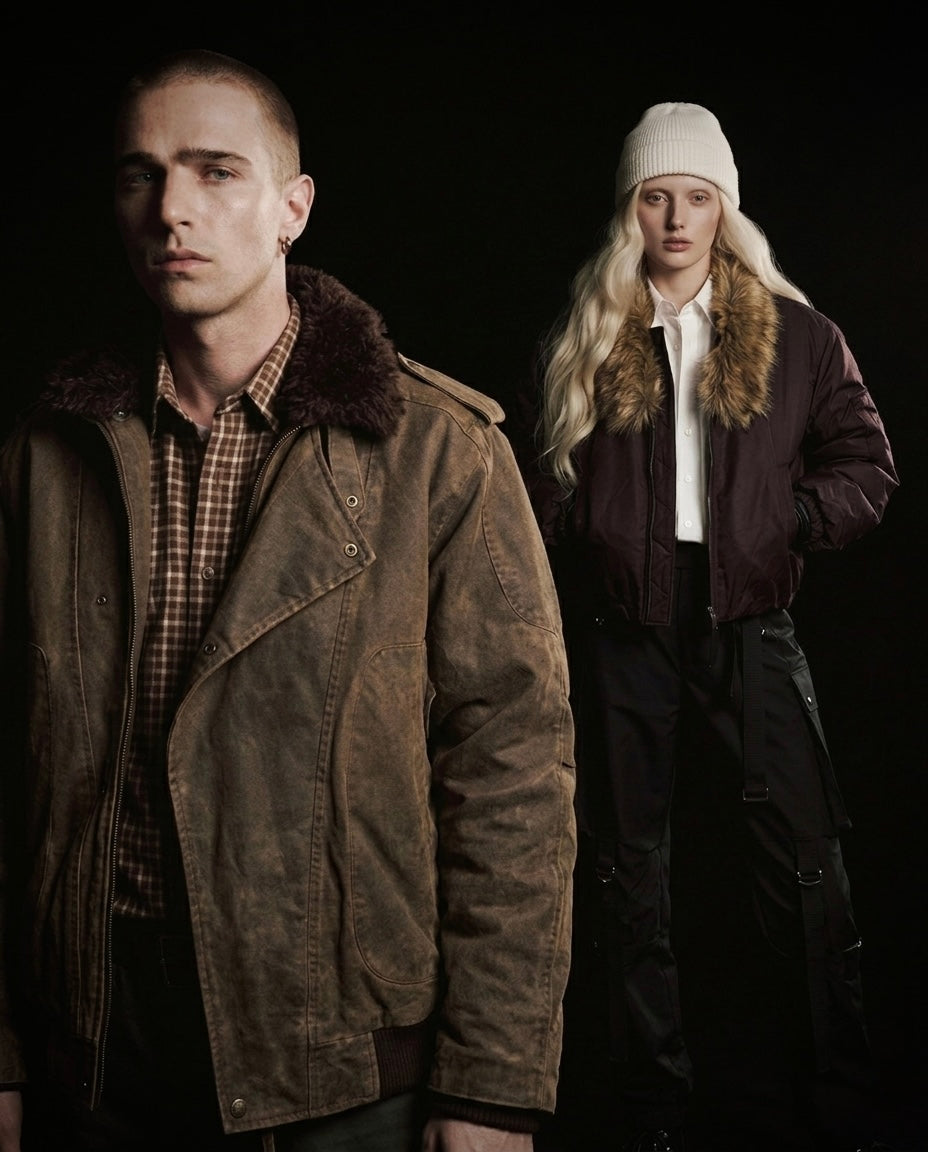
Start with a fitted long-sleeve or thin turtleneck as the base, then add a cozy cardigan like the Script-X Argyle Zip Wool Cardigan. Top it with a cropped puffer like the Xculture Barn Fur Pilot Puffer, with its plush fur scarf collar, and finish with charcoal wide trousers and boots. One accessory: a soft scarf in a neutral tone.
The cardigan should end around the same point as the cropped puffer, or slightly below. If the cardigan is much longer than the jacket, it hangs out awkwardly. If it's the same length or a little longer, it creates a soft, layered hem.
Cardigan versus sweater under a puffer? A cardigan can be worn open or closed, which helps you adjust warmth indoors. A sweater is warmer and simpler, but harder to adjust when you move inside.
Charcoal wide trousers are the perfect bottom here. They're softer than black, balance the cropped puffer's volume and pair with almost any cardigan color.
Indoors, take off the puffer and keep the cardigan on. The fitted base and cardigan still look complete without the outer layer.
This look also proves you don't need a long coat to stay covered. The cropped puffer protects your core, the cardigan adds depth and the wide trousers keep the lower half from feeling exposed. Very sensible, very cute.
The payoff: a soft, cozy and practical winter outfit that adapts from cold streets to warm cafés.
4. The All-Black Five-Piece Stack

For people who dress in all black, winter layering is a texture game. Five black pieces, five different surfaces, zero flat-looking outfits.
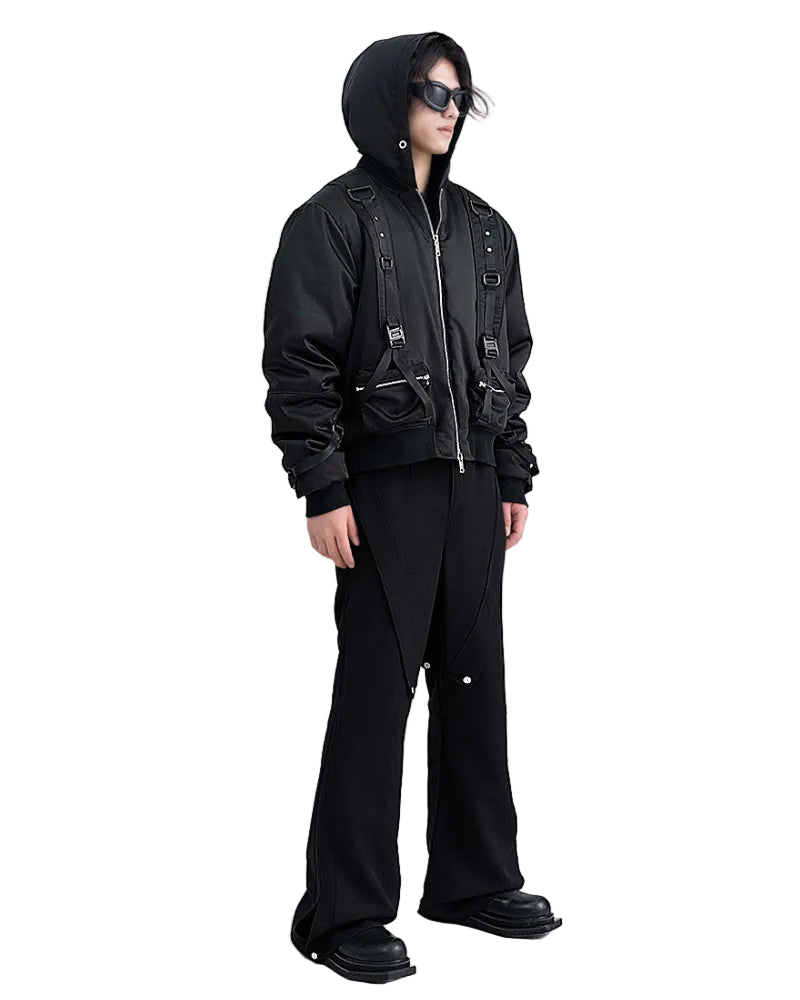
Start with a thin black base like the Washed Gradient Dark Longsleeve Tee, then a black knit, an overshirt such as the Sanded Asymmetric Strap Long Sleeve, and a textured outer layer like the Detachable Hooded Bomber Jacket in black faux leather. Add black trousers and black boots. One accessory: a black scarf with a different texture, like ribbed or brushed.
Vary the surface of every layer. A smooth base, a ribbed knit, a matte overshirt and a textured coat look completely different side by side, even in the same color. Matching textures merge into one flat block.
Why five layers instead of three? In cold weather, more thin layers often feel better than fewer thick ones, and they're easier to adjust. In all black, they also create depth and detail that a single heavy coat can't.
Let the layers peek out at the collar and cuffs. Visible edges show the texture differences, which is where the outfit's interest lives.
Size each layer carefully. The coat needs room for everything underneath, so try it on with the full stack before committing.
Indoors, peel back to the knit and base, or keep the overshirt on as a light jacket. Every combination of these layers looks complete, which is the real advantage of a well-built stack.
The payoff: a detailed all-black winter outfit that looks rich and considered, never flat.
Shop the look
5. Three-Layer Commuter Outfit + Wide Black Cargo + Boots

This is the outfit for walking to work, waiting at bus stops and moving through the city on cold days. It's practical, warm and still looks great.
Start with a long-sleeve base layer, add a heavier knit or zip sweater as the middle and a jacket with good coverage as the outer layer, like the Off/Sc Bomber Hybrid Jacket with its storm placket and fleece-lined hood. Pair them with wide black cargo pants like the Wide Leg Cargo Parachute Pants and sturdy boots like the Black Strap Biker Work Boots. One accessory: gloves, because cold hands ruin any outfit.
Choose a middle layer you can adjust. A zip sweater or open cardigan lets you cool down on a crowded train without taking off your jacket. A pullover is warmer but harder to adjust quickly.
Wide cargo pants are perfect for commuting. The pockets hold small essentials, the wide leg gives room for a thermal layer underneath and the black color hides dirt and splashes.
Boots should have grip and enough height to keep slush out of your socks. A boot with a lug sole balances wide cargo and handles icy pavements better than sneakers.
Keep the trouser hem clear of the ground. Wide cargo that drags through wet streets will soak up water and look messy by lunchtime.
Think of this as the outfit that survives the whole day: a freezing platform, an overheated train, a chilly walk at 6 p.m. It isn't glamorous, but it is quietly excellent, and quietly excellent is the whole point of winter dressing.
The payoff: a practical, comfortable winter outfit that keeps you moving and looking good on even the coldest commutes.
Shop the look
Layering by Weather: Cold and Dry, Cold and Wet, Just Plain Gray
Not all winter days ask for the same layers. Cold and dry days reward texture: knits, brushed fabrics and wool-look coats all shine, and you can wear coats open more often because wind is the main issue.
Cold and wet days call for outer layers with good coverage and shoes with grip. Keep trouser hems off the ground, choose a bag with a closure and save delicate knits for the middle layer where the coat protects them.
Mild, gray days are perfect for two layers rather than three. A fitted base and a cardigan, or a turtleneck and a blazer, look sharp without overheating you by lunch.
Dress for the coldest part of your day, then make sure you can remove a layer. That one habit handles nearly every winter forecast.
Winter Layering for People Who Dress in All Black
All-black layering has its own rules, because you can't rely on color to separate the layers. Texture, length and fit do the work instead.
Vary textures: smooth, ribbed, matte, glossy and brushed fabrics all look different in black. Stagger lengths: let each layer end at a different point so the edges are visible. Mix fits: a fitted base, a relaxed middle and a structured outer layer create depth.
Outfit 4 is the template, and our darkwear style guide covers black-on-black texture in more depth.
How to Keep Shoulders, Cuffs and Hemlines Balanced
Three areas make or break any layered outfit. Get them right and you can wear four layers without looking bulky.
Shoulders: Each layer's shoulder should sit slightly outside the one beneath. If an outer layer's shoulder sits inside the middle layer's, it'll strain and wrinkle.
Cuffs: Inner sleeves should end inside or just at the outer sleeve. Bunched cuffs poking out look messy, while a small, neat peek of knit looks intentional.
Hemlines: Stagger them. A base that's slightly longer than the middle, a middle that's slightly longer or shorter than the outer, or a deliberate cropped outer over a longer knit all look considered. Same-length hems merge into one block.
Common Winter Layering Mistakes
Putting the thickest layer underneath. A chunky sweater under a slim coat strains every seam and wrinkles the coat. Move the bulk outward or choose a roomier outer layer.
Matching every hem. When the base, middle and outer layer all end at the same point, the outfit merges into one block. Stagger at least one hem.
Forgetting about indoors. If the middle layer only works under a coat, you'll look half-dressed the moment you walk inside. Choose middle layers that look complete on their own.
Skipping the extremities. A warm torso doesn't help much if your hands and ears are freezing. Gloves, a beanie and a scarf earn their place.
Choosing Colors for Layered Outfits
Layering gets much easier with a tight palette. Black, charcoal, gray, cream and brown all work together, so you can mix layers without worrying about clashes.
Use the middle layer for contrast. A cream or gray knit between a black base and a black coat creates a visible stripe of color at the collar and cuffs. It breaks up dark outfits and makes the layering easy to see.
If you prefer tonal outfits, stay in one color family and vary textures instead. Charcoal on gray on black looks rich and calm.
Layering Outfits Winter Cold Weather: Practical Tips
When the weather gets truly cold, a few practical habits help. Cover your extremities: gloves, a beanie and a scarf make a bigger difference to comfort than an extra layer on your torso. Check product specifications: warmth depends on materials and construction, so read the product details. Plan for indoors: choose a middle layer that looks good on its own, because you'll spend part of the day without your coat.
Winter Layering Outfits for Women, Men and Everyone
Winter layering outfits women searches often feature cardigans under cropped jackets and wide trousers, while men's searches lean toward hoodies under puffers and long coats over blazers. But all five outfits here work for anyone.
Winter layering outfits street style isn't about gender; it's about proportion. Choose the outfit whose shape suits you and adapt the details.
Shop Layer by Layer
Build your winter layering wardrobe one layer at a time. Start with a good base, like a fine turtleneck or fitted long-sleeve, then a versatile middle layer, then an outer layer that defines your silhouette.
Our knitwear outfit guide covers middle layers in depth, the jacket outfit guide covers outer layers and the coat outfit guide covers longer winter outerwear.
Winter Layering Questions, Answered
How many layers should I wear in winter?
Three is the standard: base, middle and outer. In very cold weather, add thin extra layers rather than one bulky one.
How do I layer without looking bulky?
Go thin to thick, close to loose. Stagger your hems and make sure each layer's shoulders sit slightly outside the one beneath.
What's the best base layer for winter?
A thin, close-fitting long-sleeve or turtleneck. It should sit smoothly under everything else.
Can I layer a hoodie under a coat?
Yes. Pull the hood out over the collar to reduce bulk and make the layering look intentional.
What's the best middle layer for winter?
An adjustable one, like a cardigan or zip sweater. It adds depth and lets you cool down indoors without taking off your coat.
How do I dress for days spent indoors and outdoors?
Choose an outer layer that's easy to remove and a middle layer that looks complete on its own. That way your outfit still works once the coat comes off.
Can I layer a blazer under a coat?
Yes. Wear a thin base like a fine turtleneck, then the blazer, then a coat with enough room in the shoulders for both. Keep the coat open to show the layers.
The Takeaway
Winter layering isn't about piling on clothes; it's about building them in the right order. Thin to thick, close to loose, with staggered hems and balanced shoulders.
Your next move: try your current winter outfit with the thin-to-thick rule and stagger one hemline. If you need a missing layer, the Fall/Winter edit is a good place to start.
Read more

Five complete fall leather jacket outfits with every piece accounted for: a cropped black biker with gray jeans, an oversized faux-leather coat, brown leather with washed black denim, a waxed moto ...

Choose the coat's silhouette first and winter outfits stop looking shapeless. Five complete looks built on a long coat, a shaggy faux-fur patchwork coat, a cropped puffer, a reversible corduroy-and...